Welcome to SCBWI-MI's Book Birthday Blog!
Where we celebrate new books from Michigan's authors and illustrators.
Congratulations to Ian Tadashi Moore on the release of his new book, Where All The Little Things Live!

Congratulations on the release of Where All the Little Things Live! Can you tell us a little bit about what inspired this story, and how it’s connected to your previous book Tamaishi?
Thank you! It’s been a long journey to get finally get to this point. Naio the feather is my one of my favorite characters from Tamaishi. She played a specific side role in that book — a direct metaphor for having “light thoughts” and a symbol of calm and serenity. Initially I didn’t like the idea of some kind of origin story for her — it seemed better to leave her character wrapped in mystery than explain it.
One afternoon while sitting at a book event and the traffic was slow, I started dreaming up ideas on how she came to be.
My first ideas were pretty rough. Over time and iteration, I sketched out the story that it is now. It reminds me that all ideas are valid and valuable, no matter what you think of them at the time.
The main story arc of Where All the Little Things Live takes place before the events in Tamaishi, and as such Naio is much more unsure of herself and far less serene. But we learn how all that changed.
Thank you! It’s been a long journey to get finally get to this point. Naio the feather is my one of my favorite characters from Tamaishi. She played a specific side role in that book — a direct metaphor for having “light thoughts” and a symbol of calm and serenity. Initially I didn’t like the idea of some kind of origin story for her — it seemed better to leave her character wrapped in mystery than explain it.
One afternoon while sitting at a book event and the traffic was slow, I started dreaming up ideas on how she came to be.
My first ideas were pretty rough. Over time and iteration, I sketched out the story that it is now. It reminds me that all ideas are valid and valuable, no matter what you think of them at the time.
The main story arc of Where All the Little Things Live takes place before the events in Tamaishi, and as such Naio is much more unsure of herself and far less serene. But we learn how all that changed.

Concept sketches for a few of Ian's characters
You’ve mentioned before that when you speak in classrooms, you’ll often talk about resilience, and finding your own voice. Can you tell us a little bit about how these things factor into your own creative process?

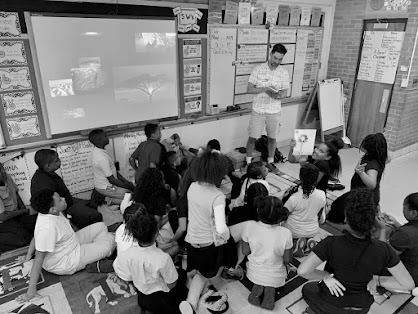
When I speak of resilience, I talk about my own evolution as an artist, and the evolution of each piece of art. I start with a book I wrote and illustrated back in 3rd grade, which shows how my drawing has evolved. I demonstrate how my book illustrations started from a little frenetic scribbles and evolved through self-critique and iteration.
Imposter syndrome is very real, and the world is filled with immensely talented writers and illustrators. To focus on all of that is overwhelming to me still. I have to revisit old work to remind myself of how far I’ve come and what I’m capable of doing — sometimes when I look at pieces I get this odd feeling like someone else must have drawn it. Even though that thought is completely irrational, it’s how deep the imposter syndrome can go. But I think you can get past it by giving yourself permission to just draw.
It’s important to observe the work of other artists and learn what you can from them, but you don’t have to be like anyone else. You have a voice, and you have to work to hear it and find it — sometimes this takes a long time, and it’s different for everyone. I hope that I can help some students rediscover this, or maybe never lose it in the first place.
This is your third book backed through Kickstarter. Why do you use this process to get your books out there? Would you recommend it to other indie authors?
In 2010, my band at the time wanted to record an album. We were an unknown, cerebral, prog-rock-jazz band. The idea of approaching recording companies was not really an option, but we felt we had something worth recording. We turned to crowdfunding and it worked! Our fanbase found us and we recorded and produced our first (and frankly only) album.
When I decided to write Zōsan in 2015, I remembered this. The circumstances were similar. I’m an unknown author who decided to write and illustrate a book at nearly 40. I quickly gathered that querying and agents would take months, if not years, with no guarantees of success, and I wasn't really sure if I wanted to make anything of a career out of this. But I also realized at that I didn’t intend for my book to be for a broad audience. So what to do?
Back in 2004, I wrote what you might consider my first book. I had compiled artwork by my then 5-year old niece and wrote a short rhyming story about her middle name, Miyume (未夢 “Beautiful Dream”). Back then it was just for us: there were four copies made, hand bound.
With Zōsan, I wanted to make something like that again — a limited run for my sons and future generations.
But then a small development made that more difficult. A friend of mine told me “I can’t wait to read your story”. Except at that time there was no story, really. Zōsan was a picture book illustrating a short Japanese folk song. Her comment made me realize there was a longer narrative. Before long, my 40-word picture book grew into a 5000-word short story.
Despite that, I didn’t want to give up on my printing ideals. It wasn’t something I could afford to just pay for outright. The letterpress printer I was in touch with brainstormed ways to get it done. In the end, she found Charles of Eberhardt Press, who is still doing short-run offset work—a bit of an outlier in the print world these days. The idea was that the offset copies would help cover the costs of making the limited run letterpress book.
In 2010, my band at the time wanted to record an album. We were an unknown, cerebral, prog-rock-jazz band. The idea of approaching recording companies was not really an option, but we felt we had something worth recording. We turned to crowdfunding and it worked! Our fanbase found us and we recorded and produced our first (and frankly only) album.
When I decided to write Zōsan in 2015, I remembered this. The circumstances were similar. I’m an unknown author who decided to write and illustrate a book at nearly 40. I quickly gathered that querying and agents would take months, if not years, with no guarantees of success, and I wasn't really sure if I wanted to make anything of a career out of this. But I also realized at that I didn’t intend for my book to be for a broad audience. So what to do?
Back in 2004, I wrote what you might consider my first book. I had compiled artwork by my then 5-year old niece and wrote a short rhyming story about her middle name, Miyume (未夢 “Beautiful Dream”). Back then it was just for us: there were four copies made, hand bound.
With Zōsan, I wanted to make something like that again — a limited run for my sons and future generations.
But then a small development made that more difficult. A friend of mine told me “I can’t wait to read your story”. Except at that time there was no story, really. Zōsan was a picture book illustrating a short Japanese folk song. Her comment made me realize there was a longer narrative. Before long, my 40-word picture book grew into a 5000-word short story.
Despite that, I didn’t want to give up on my printing ideals. It wasn’t something I could afford to just pay for outright. The letterpress printer I was in touch with brainstormed ways to get it done. In the end, she found Charles of Eberhardt Press, who is still doing short-run offset work—a bit of an outlier in the print world these days. The idea was that the offset copies would help cover the costs of making the limited run letterpress book.
I admit it was a pretty crazy idea. But with Kickstarter, I figured I had nothing to lose. If I didn’t make the funding goal I wouldn’t lose anything besides time, and then I’d try something else. So I shot for the moon… and it worked!

It’s worth mentioning that my second kickstarter actually failed; The goals were too much, the timing wrong, and the setup not as well conceived. But after a few weeks of reconfiguring, I rebooted and it worked! That helped me print Tamaishi, and now my fourth kickstarter helped me print Little Things.
But whatever your goals, I would highly recommend an indie author try a crowdfunding campaign.
There are many paths to success, and what success means is entirely up to the writer. For me, this was the best path. I think if you’re clear about your goals, take the time to properly convey those goals honestly to your Kickstarter audience, and of course hustle a bit to get the word out, you can achieve your goals on your terms.
What was your experience like working with an independent printer? Do you have any advice to other authors looking to do small print runs, or work with a small business to create their physical copies?
I want to have a personal connection with my collaborators, given the nature of my projects. For Zōsan, I got a tour of their workspaces, talked with them about the love of the craft. I got to know them all as artists and individuals and lucky for me, they were all a good fit. We built mutual trust. That gave me assurance that it would work out well and fostered the relationships that would continue for two more books. No matter what your goals, I think knowing your printer helps.
If your goal is to just get your work in a tangible medium, there are tons of options. My path might not be the right one for everyone.
Small print runs can be achieved through digital printing. I think this is going to be the solution for many. One color digital prints are pretty approachable. Full color printing is significantly more expensive per copy, but if you don’t want more than a couple hundred it still probably makes the most sense.
Even better, print on demand doesn’t even require an upfront cost: upload your book, and you only pay for each copy sold. The print quality is pretty good—Tamaishi is on Amazon KDP—and that whole process makes certain aspects of this really easy.
I want to have a personal connection with my collaborators, given the nature of my projects. For Zōsan, I got a tour of their workspaces, talked with them about the love of the craft. I got to know them all as artists and individuals and lucky for me, they were all a good fit. We built mutual trust. That gave me assurance that it would work out well and fostered the relationships that would continue for two more books. No matter what your goals, I think knowing your printer helps.
If your goal is to just get your work in a tangible medium, there are tons of options. My path might not be the right one for everyone.
Small print runs can be achieved through digital printing. I think this is going to be the solution for many. One color digital prints are pretty approachable. Full color printing is significantly more expensive per copy, but if you don’t want more than a couple hundred it still probably makes the most sense.
Even better, print on demand doesn’t even require an upfront cost: upload your book, and you only pay for each copy sold. The print quality is pretty good—Tamaishi is on Amazon KDP—and that whole process makes certain aspects of this really easy.
Eberhardt Press printing the cover for Where All the Little Things Live. Find more of Ian's process on his instagram: @iantm_books
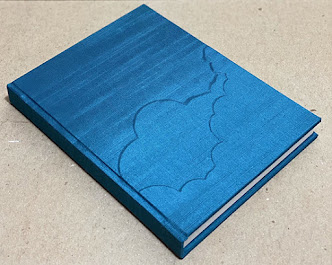 Ian explains the inspiration for this specially bound version of Little Things, made with Windy Weather Bindery: "Part of my dream with my books is to have a few special copies for future generations in my family to have. I had a book in second grade made, hand sewn, of a story I wrote back then. I still have it. When I decided to write in earnest I wanted to make something similar. I found a book binder in Michigan who is making them for me. I’ve had all my books bound this way in small runs."
 Where All the Little Things Live is also the third book you’ve created that includes an audiobook CD. What do you like about audiobooks that motivates you to create them alongside your printed copies?
I have some old cassettes of audiobooks I had as a kid. One was a production of Alice in Wonderland. There were others like “The Cask of Amontillado” and “The Tinder Box”. All of them used multiple voice actors, incidental music and immersive sound design. I was captivated by all of them, I’m surprised I didn’t ruin the tapes listening to them so much.
Audiobooks let me dive into lots of the things I like to do. They allow younger readers to experience the story without being able to read the words, and the sound design creates a different kind of experience, one left to the mind’s eye.
But I also see it as a historical artifact: a way for my kids and future generations to hear my voice, both literally in terms of the audio recording and figuratively in how I see the world. All of my audiobooks have my voice, my wife’s voice, friends and family and even my two sons. It’s not an entirely happy thought, but I think of these as part of what my sons will have left of me when I’m gone.
I have some old cassettes of audiobooks I had as a kid. One was a production of Alice in Wonderland. There were others like “The Cask of Amontillado” and “The Tinder Box”. All of them used multiple voice actors, incidental music and immersive sound design. I was captivated by all of them, I’m surprised I didn’t ruin the tapes listening to them so much.
Audiobooks let me dive into lots of the things I like to do. They allow younger readers to experience the story without being able to read the words, and the sound design creates a different kind of experience, one left to the mind’s eye.
But I also see it as a historical artifact: a way for my kids and future generations to hear my voice, both literally in terms of the audio recording and figuratively in how I see the world. All of my audiobooks have my voice, my wife’s voice, friends and family and even my two sons. It’s not an entirely happy thought, but I think of these as part of what my sons will have left of me when I’m gone.

From what I’ve heard of your audio book, you do a beautiful job of mixing narration with background music and subtle sound effects! Can you tell us a little about what your recording setup and process looks like?
Thank you!
I have a recording booth setup in my basement for minimal noise, though this kind of sound isolation can be achieved through a few pieces of plywood and some decent acoustic foam padding placement and a decent mic. Software can do a lot now to further clean up the background noise.
When it comes to creating these, it’s a process of layering and listening, a long process where I get to wear a lot of different hats.
I always start with the narrator. I read and record, editing on the fly; you just don’t really know what a sentence sounds like until you try and read it.
Next I use an audio editor — in my case Logic Pro, but there are a number of multi track editors out there — to rough out all the narration.
After that comes character voices. I’ll either record them myself or work with a collaborator. I’m fortunate to have an actress in the house, and many friends who help me out here. I even got my kids involved in the last two books. The characters now fall in line with the narrator. I put in gaps and time the dialogue, using scratch tracks of me if I don’t have other actors’ recordings yet.
As I add in character voices I start working on the sound design. Sound effects add a lot of dimension for the listener. They come from paid services but I also try and record them myself if I can. For instance, I needed a sound of a crab popping out of a shell that was too tight: I recorded myself popping a glass pop bottle with water in it.
At this point there’s more culling of passages that make sense when reading but not when listening. I suppose I could go through the trouble of plotting out a whole screenplay, but I’m more of a panster and this process is so much more active and visceral for me. When listening I can decide if that description is redundant or whether it could be painted with sound instead.
Now I’ve ended up with rough cuts of chapters. I listen to the these… a lot. I listen to them on my drive to and from work, with and without headphones to hear how they sound. I listen to them as I fall asleep, paying close attention to the timing of dialogue, placement of sound effects, the sound balance and whether things are clear or muddy.
Finally comes the music — at least the rest of it. Throughout the rest of this process, I spend some time figuring out a central melody or theme to work with. For Zōsan, it was relatively easy. The story was inspired by a Japanese folk song, so I used that melody. For Tamaishi and Little Things, I played around on the piano to find a theme I liked. I worked out the music for the opening scene and largely leave it alone until I’m mostly done with everything else. By that point I’ve been listening and gathering musical ideas in my head as I listen.
Some the music is me sitting down one day and improvising something along with it. That wouldn’t be as possible before the chapters are roughed out. The dialogue and soundscapes do a lot of the work of shaping the mood; now what’s left is further shaping that emotional tone through music.
I still have a lot of work to do for the music of Little Things, but I love the theme in place now. I has a longing, unresolved chord progression that fits well with Naio’s character. I’m looking forward to getting to the music part of things.
Thank you!
I have a recording booth setup in my basement for minimal noise, though this kind of sound isolation can be achieved through a few pieces of plywood and some decent acoustic foam padding placement and a decent mic. Software can do a lot now to further clean up the background noise.
When it comes to creating these, it’s a process of layering and listening, a long process where I get to wear a lot of different hats.
I always start with the narrator. I read and record, editing on the fly; you just don’t really know what a sentence sounds like until you try and read it.
Next I use an audio editor — in my case Logic Pro, but there are a number of multi track editors out there — to rough out all the narration.
After that comes character voices. I’ll either record them myself or work with a collaborator. I’m fortunate to have an actress in the house, and many friends who help me out here. I even got my kids involved in the last two books. The characters now fall in line with the narrator. I put in gaps and time the dialogue, using scratch tracks of me if I don’t have other actors’ recordings yet.
As I add in character voices I start working on the sound design. Sound effects add a lot of dimension for the listener. They come from paid services but I also try and record them myself if I can. For instance, I needed a sound of a crab popping out of a shell that was too tight: I recorded myself popping a glass pop bottle with water in it.
At this point there’s more culling of passages that make sense when reading but not when listening. I suppose I could go through the trouble of plotting out a whole screenplay, but I’m more of a panster and this process is so much more active and visceral for me. When listening I can decide if that description is redundant or whether it could be painted with sound instead.
Now I’ve ended up with rough cuts of chapters. I listen to the these… a lot. I listen to them on my drive to and from work, with and without headphones to hear how they sound. I listen to them as I fall asleep, paying close attention to the timing of dialogue, placement of sound effects, the sound balance and whether things are clear or muddy.
Finally comes the music — at least the rest of it. Throughout the rest of this process, I spend some time figuring out a central melody or theme to work with. For Zōsan, it was relatively easy. The story was inspired by a Japanese folk song, so I used that melody. For Tamaishi and Little Things, I played around on the piano to find a theme I liked. I worked out the music for the opening scene and largely leave it alone until I’m mostly done with everything else. By that point I’ve been listening and gathering musical ideas in my head as I listen.
Some the music is me sitting down one day and improvising something along with it. That wouldn’t be as possible before the chapters are roughed out. The dialogue and soundscapes do a lot of the work of shaping the mood; now what’s left is further shaping that emotional tone through music.
I still have a lot of work to do for the music of Little Things, but I love the theme in place now. I has a longing, unresolved chord progression that fits well with Naio’s character. I’m looking forward to getting to the music part of things.
Where All the Little Things Live has also been announced as a winner of the Honorable Mention in both Best Illustration and Chapter Books in the 2020 Royal Dragonfly Awards! What does this achievement mean to you, and the work that you’ve put into your books?
This was a tough question for me. I wondered about why I sought an award at all, but I felt good about this particular book, and I guess I wanted to see if I was kidding myself.
I think as writers—as creatives, really—we all want some degree of validation because it doesn’t always come from within. At least, it doesn’t for me. I had and have a lot of self doubt. Part of that is coming at this “late”, and without much formal training or history.
I thought if I won an award, it might be a way of getting the attention potential readers at in person books events (remember those)? Readers are busy, there are lots of books. I struggle with how to convince them to read mine, like everyone does.
Getting the support on Kickstarter was one way of getting some outside encouragement. People appreciated the work I put into these books enough that they contributed and helped bring them to life. When people take the time and energy to review my books, that’s another form of validation.
So I essentially see these awards as two-word reviews, a signal that the judges who read my work enjoyed it and recognized the time and effort I put into it.
Nothing particularly magic happened after that. It felt great. But I realized I don't like the idea of always looking towards external motivation, e.g. awards. I’d prefer to foster intrinsic motivation. That is, after all, what drew me back to writing and illustrating in the first place. I just wanted to create.
So while I absolutely appreciate the award, and it means a lot to have that external recognition, moving forward I want to remain focused on my personal goals: having a personal project to work on, focus on enjoying the process regardless of reception, and work towards creating books made for my sons and future generations of my family.
This was a tough question for me. I wondered about why I sought an award at all, but I felt good about this particular book, and I guess I wanted to see if I was kidding myself.
I think as writers—as creatives, really—we all want some degree of validation because it doesn’t always come from within. At least, it doesn’t for me. I had and have a lot of self doubt. Part of that is coming at this “late”, and without much formal training or history.
I thought if I won an award, it might be a way of getting the attention potential readers at in person books events (remember those)? Readers are busy, there are lots of books. I struggle with how to convince them to read mine, like everyone does.
Getting the support on Kickstarter was one way of getting some outside encouragement. People appreciated the work I put into these books enough that they contributed and helped bring them to life. When people take the time and energy to review my books, that’s another form of validation.
So I essentially see these awards as two-word reviews, a signal that the judges who read my work enjoyed it and recognized the time and effort I put into it.
Nothing particularly magic happened after that. It felt great. But I realized I don't like the idea of always looking towards external motivation, e.g. awards. I’d prefer to foster intrinsic motivation. That is, after all, what drew me back to writing and illustrating in the first place. I just wanted to create.
So while I absolutely appreciate the award, and it means a lot to have that external recognition, moving forward I want to remain focused on my personal goals: having a personal project to work on, focus on enjoying the process regardless of reception, and work towards creating books made for my sons and future generations of my family.
What’s on the horizon for you, any new projects in the works? Where can our readers learn more about you?
Finishing the audio book is first — I still have a lot of work to do! After that I want to make more time for creative nourishment. I’d like to take some online writing courses, work on my digital painting and draw more for it’s own sake.
I have a handful of other nascent ideas from children’s poetry to a graphic novel. I’d like to spend more time seeing where those ideas take me. I might return to a collaboration I put on hold with another author. Being able to just focus on illustration felt freeing. But I had to pause that in order to have any hope of finishing Little Things.
Most importantly, I’d like to read more writers’ work. I’m a believer in input = output, and I want to pull in ideas from everywhere again and let them synthesize into my next project. I’ve been so focused on completing this book and I don’t have much bandwidth for that; this isn’t my full time thing, and it’s taken everything I have to finish it.
You can find me in several places: iantm.com is my linktree of sorts. I have a “create” blog (iantm.com/create), my books site (iantm.com/books) and a blog there (iantm.com/books/blog). I also have accounts on twitter (iantm_books), instagram (iantm_books) and facebook (iantm.books).
Right now it doesn’t feel like I have another book in me waiting to be written. But I said that when I finished Tamaishi, and now Little Things is in print. I suspect eventually I’ll find the words and lines for another book. Meanwhile, I like being able to do it at my own pace.
Finishing the audio book is first — I still have a lot of work to do! After that I want to make more time for creative nourishment. I’d like to take some online writing courses, work on my digital painting and draw more for it’s own sake.
I have a handful of other nascent ideas from children’s poetry to a graphic novel. I’d like to spend more time seeing where those ideas take me. I might return to a collaboration I put on hold with another author. Being able to just focus on illustration felt freeing. But I had to pause that in order to have any hope of finishing Little Things.
Most importantly, I’d like to read more writers’ work. I’m a believer in input = output, and I want to pull in ideas from everywhere again and let them synthesize into my next project. I’ve been so focused on completing this book and I don’t have much bandwidth for that; this isn’t my full time thing, and it’s taken everything I have to finish it.
You can find me in several places: iantm.com is my linktree of sorts. I have a “create” blog (iantm.com/create), my books site (iantm.com/books) and a blog there (iantm.com/books/blog). I also have accounts on twitter (iantm_books), instagram (iantm_books) and facebook (iantm.books).
Right now it doesn’t feel like I have another book in me waiting to be written. But I said that when I finished Tamaishi, and now Little Things is in print. I suspect eventually I’ll find the words and lines for another book. Meanwhile, I like being able to do it at my own pace.

Naio the feather doesn't quite fit in.
She gazes at the clouds each morning, feeling lost and out of place. A sudden icy storm sweeps her into sky, where she discovers the truth of who she is and true nature of the clouds.
A little bit about the author:
Ian Tadashi Moore is a father, designer, musician, and artist from southeast Michigan. He grew up talking to the bugs in the back lawn and plinking melodies on piano keys. He likes the sounds words make and will probably never act his age. He has written and illustrated three books, Zōsan (2015), Tamaishi (2018), and Where All the Little Things Live (2020). iantm.com/books