Friday, April 17, 2015

Success Story: My Near-Death Adventures (99% True!) by Alison DeCamp

Alison DeCamp is a newly-published Michigan author, and we're celebrating her success! Her debut middle grade novel, MY NEAR-DEATH ADVENTURES (99% True!), was released on February 24 by Crown Books for Young Readers/Random House. I asked her to tell us about her book and her journey to publication. Here's Alison:

MY NEAR-DEATH ADVENTURES (99% True!) is the story of Stanley Slater, an 11 y.o. boy spending the winter of 1895 in a lumber camp in the U.P. with an overbearing Granny, a meddling cousin, his sweet mother, and a mess of quirky lumberjacks (one of whom may be a cold-blooded killer. Or a pirate.). Stan is on a quest to a) prove his manliness, and b) find his “long-lost” father, the man he recently thought was “dearly departed.” He has quite the over-active imagination which can be seen in the pages of his embellished scrapbook—almost 200 19th century images are interwoven into the book. 

I’ve had the seed of an idea (a boy in a lumber camp) swimming around in my brain for years, but in the fall of 2012 I ordered myself to actually sit down and write the story. I had very little idea what I was doing, but I had witnessed my wonderful friend’s journey (Kate Bassett - WORDS AND THEIR MEANINGS) and, with her encouragement, felt like the time was right. I won’t belabor the details (let’s just say it was a learning process!), but by March of 2013 I had an agent (the fantastic Sarah Davies of the Greenhouse Literary Agency) and by the first of August (after many more months of revision) I had a three book deal with Phoebe Yeh of Crown Books for Young Readers. 

How did you find your agent? 
I found my agent the old-fashioned way—a query letter. Kate Bassett had already signed with Sarah the previous summer so I knew how Sarah worked (she is not one to give undue compliments, but is an exceptional professional and wonderful editor), and I knew I would love her as an agent, but I was scared to query her right away. I waited until I thought I’d be getting an offer of representation from another agent (who was also really lovely but didn’t specialize only in children’s books), queried Sarah and then nudged her with my other offer. Oh my gosh! I’m just now realizing how calculating that all sounds! It honestly wasn’t.

What has been surprising or challenging about your experience? 
I know it shouldn’t be surprising, but the kid lit community always impresses me with how giving it is. From the minute I started this process, people have been so kind. I think the challenges lie in the amount of waiting. I signed with Random House in August of 2013 and my book came out in February 2015. In the meantime there have been many times where I needed to hurry up and wait. I’m also surprised at the learning curve—I have no idea what I’m doing. In some ways it will be a relief to no longer be a debut author. 

What's next for you? 
I am working on book 2. Same characters, different setting (St. Ignace, where I grew up. Although I didn’t grown up there in 1895.). And I signed for a third book as well, but I’m not sure what they’re intending for that one. 


Alison DeCamp grew up in the U.P., attended Michigan State University, taught for eight years in Pellston (which, she was surprised to find out, has more than an airport), and spent the last 16 years raising two children. She loves dogs but not dog hair, the thought of exercise, reading everything from labels to dictionaries to novels (with a special love for kids’ books). MY NEAR-DEATH ADVENTURES is her first book. 


Find Alison here:

And here's a fun trailer for her book: 


Coming up on The Mitten blog: Wired for Story book review and another Member Spotlight - it could be you!

Are you registered for the Hook of the Book spring conference? It's only a few weeks away!


Happy reading!

Kristin Lenz

Friday, April 10, 2015

Beyond the Book Part 2: Queries by Dawne Webber

Query Letter. Two unassuming words that those of us who have fought in the query trenches regard with awe and dread. The query letter is the tool necessary to introduce your MG, YA or picture book to an agent or editor.

Literary agents receive almost 200 unsolicited (meaning the agent didn’t request them) queries per week. Welcome to the slush pile. To escape the dreaded slush, your query needs to stand out. In a good way.

What a successful query letter does:
  • Sets up the stakes of the novel.
  • Makes the reader care about the characters.
  • And most importantly, entices an agent or editor to read more.

What a query letter is not:
  • A synopsis of your book.
  • A sales pitch detailing why your novel is guaranteed to be a million seller.
  • An entreaty begging for representation/publication.


Basically, you have a standard query format to follow and 250-350 words to sell your novel.

  • Hook: A very interesting 100-200 word paragraph showing what your main character wants most in the world, and what’s standing in the way.
  • Brief Bio: This is not a personal bio. It’s a writing bio. And if you haven’t been published or won major awards or prizes, writing a bio can be intimidating. For help, click here.
  • Conclusion: Information about your book, including genre/category, word count, title/subtitle, and a brief thank you for their time and consideration.
  • Picture books should have a brief hook and include the book’s complete text. If you’re an author/illustrator you’ll need to include a dummy, which is a mock-up of the book.

The problem is you can ask ten different agents what they want to see in a query and you’ll get six different answers. For example, many agents prefer the above format, but just as many like a query to open with word count and genre. In the end, you’ll decide which format is right for you.

Some things I discovered trekking along the learning curve:

Comps: Comps are published books you cite in your query that compare to yours. I suggest not including comps unless the agent specifically asks for them. Your choices might come across as arrogant—My novel is The Fault in Our Stars meets The Hunger Games. Also, an agent may dislike an author or book you compare to your own, giving that agent a less than positive impression.

Personalizing the query: I’ve spent hours researching agents, uncovering personal tidbits to work into my query. It didn’t seem to get me any more requests than the queries I didn’t personalize. Unless an agent specifically mentions they like personalized queries, I suggest not wasting valuable word count on too much schmoozing. The exception is in the salutation which should be addressed to a specific agent.

Show, don’t tell: Duh. As a writers, we can chant that in our sleep. I was positive all six revisions of my query SHOWED. They just weren’t getting much interest from agents. So I sent the query to Query Drill (a query critique site) and got a reply that opened my eyes: 

I need something that stands out to love a query: the writer's voice, a great plot or (preferably) both. Your voice is the standard I'm-a-querying-author voice, which doesn't automatically mean a rejection--at least, it wouldn't for me, if I were an agent. What *does* result in a rejection is nothing for me to sink my teeth into. Don't be coy!

Meaning— you’re telling me. I want you to show me. Ouch. That’s exactly what I thought I’d been doing. I closed my eyes, took a deep breath, and muttered, “It’s worth it. It’s worth it. It’s worth it.” Then I rewrote it. Query #7 as I fondly call it, enticed my agent to want to read more and eventually sign me. You can read the query here.

If you have any questions or advice to share, we’d love to hear from you in the comment section.

Picture book query resources:

General query resources:

Query critiquing resources:

Dawne Webber is represented by Steven Chudney of The Chudney Agency. Ask Me to Wait, her YA contemporary novel, is currently on submission. Dawne lives in Troy with her husband and five children. They keep her sane amid the insanity of writing. You can learn more about Dawne at DawneWebber.


Did you miss the introduction of Dawne's Beyond the Book series? Go here to read her first post, and stay tuned for Part 3 next month. Coming up on The Mitten blog: a Middle-Grade Success Story, Wired for Story book review, and another Member Spotlight - it could be you!

Happy reading,
Kristin Lenz


Thursday, April 2, 2015

Featured Illustrator Diana Magnuson


MEET DIANA


This questionnaire goes back to a popular parlor game in the early 1900s. Marcel Proust filled it out twice. Some of our questions were altered from the original to gain more insight into the hearts and minds of our illustrators. We hope you enjoy this way of getting to know everybody.


1. Your present state of mind?

Excitement. I’m in a life-changing transition with my art, my thinking and my focus.

2. What do you do best?

Currently: Allegorical-nature-activist illustrations and writing intermingled with magical realism.

3. Where would you like to live?

Right here in Marquette near Lake Superior surrounded by woods, rivers, cliffs, and gardens —or outside Seattle with its ‘Irish’ climate of misty forests and cool, soft rains.


4. Your favorite color?

Whatever the current art wants. Personally? —Blue-green or a sunset’s salmon orange-pink.


5. Three of your own illustrations:

Eden II


May's Garden


Seahag Ocean Tunnel


6. Your music?

Opera in my studio —and Leonard Cohen

7. Your biggest achievement?

I thought it would be my art milestones (97 workbooks, education and trade picture books), but it’s my family. We are blessed with an incredible, learning and sharing relationship with our two adult children and their spouses —and two infant granddaughters who out-energize us.
Learning to consistently think critically and to love a good challenge. My creative forces increased. Before, I often spent 85% of my time drawing and 15% designing/thinking. Now, it’s 40% drawing and 60% designing/thinking. I write three sequential columns —project parameters in the first and then any images/ideas that pop into my head for the next two columns; sketch multiple thumbnails and prepare value roughs. For the final art, each step is done with as much full awareness and openness to what the story and art want as I can muster.

8. Your biggest mistake?

I could always draw well, but I didn’t always implement critical thinking. Likely the TV that kept me company in my studio to dull the mind gremlins got in the way.

9. Your favorite children's book when you were a child?

Anderson and Grimm fairy tales. I also read every book on animals in the elementary school libraries.

10. Your main character trait?

Wide-ranging curiosity.
I’m fascinated by human behavior. Facial expression and body language are important in my art. It seems that in our hyper-speed world the instinctual ability to read those expressions is being lost.


11. What do you appreciate most in a friend?

Loyalty, curiosity, empathy, openness, problem-solving abilities and depth.

12. What mistakes are you most willing to forgive?

Those efforts resulting from #11

13. Your favorite children's book hero?

Actually my favorites are in animation: Po in Kung Fu Panda and Hiccup in How to Train Your Dragon. Both struggle yet continue to hold onto their dreams.

14. What moves you forward?

Humor, nature, and learning. The ‘dark side’ attracts me. My concern about the environment has skyrocketed, most likely connected to the arrival of my two granddaughters.

15. What holds you back?

Finally, nothing. At 60, I found confidence and at long last, an ego. I am much relieved to no longer sabotage myself. I can work through and past doubt, when it shows it’s gleeful face.

16. Your dream of happiness?

Writing and illustrating my own books: I submitted one in February and the 2nd is within a month of readiness. The third is fomenting.
Finishing a series of paintings inspired by my concerns over environmental degradation.

17. The painter/illustrator you admire most?

Gennady Spirin: his Russian traditional art training, his research, and his focus.

18. What super power would you like to have?

A magic wand to vaporize weapons around the world and replace damaged environments with healthy habitats —for all species.

19. Your motto?

Eyes Wide Open

20. Your social media?

I cancelled with my agent in December to develop own marketing including my website and Facebook. Because my work is very detailed, it’s also time-consuming and since I like in-depth illustrations about life, various social media sites seem too limited. We’ll see. I do appreciate Arthur Levine saying it’s okay that one of his writers doesn’t do social media.


Thanks to all the good folks at SCBWI and a huge thank-you to my critique group. I hope to see you all at the October conference!

www.dianamagnuson.com

Friday, March 27, 2015


Hugs and Hurrahs! 

Our SCBWI Michigan folk have certainly been busy since January! And what better time to hand out some much-deserved “Hugs and Hurrahs” than right now, when spring is “bustin’ out all over!” So, without further ado, here’s all the fantastic publishing news from our amazing members around the Mitten! Enjoy!

Kirbi Fagan is certainly an illustrator on the move! Her artwork is currently featured in the March issue of Imagine FX Magazine. She was also the winner of the “Reckless Deck Challenge” via “Art Order,” and was recently accepted into “Infect by Art Volume 3.” Read a recent interview of Kirbi on Elusive Muse here http://elusivemu.se/kirbi-fagan/. You make us proud Kirbi!


Three Cheers for Kris Remenar whose debut picture book, GROUNDHOG’S DILEMMA, will be available on December 1 of this year! The book is being published by Charlesbridge, and just so happens to be illustrated by Kris’s wonderful husband and award-winning artist, Matt Faulkner! Congratulations you two! Oh, and if a debut picture book isn’t enough, Kris also recently signed with Fuse Literary where she’s represented by Gordon Warnock and Sara Sciuto. Way to go Kris!


The amazing Monica Harris sold a puzzle, CHICKEN COOP CRACK-UPS, to Highlights Magazine. She also sold her book, THE MYSTERY OF CRYTOGRAPHY, to Schoolwide, Inc as an ebook. Monica's Korean publisher, Caramel Tree Publishing, bought 4 additional books to join the others, and Data Recognition Corporation bought three of her assessment pieces for Nebraska (two informative and one narrative). So happy for you Monica! 


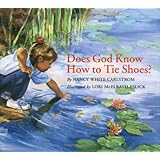
Hats off to Lori Eslick whose artwork will be on exhibit in Whitehall Michigan’s Arts Center of White Lake. The show runs May 18-June 5, 2015, and features much of Lori’s original art from her picture books, DOES GOD KNOW HOW TO TIE SHOES, IF JESUS CAME TO MY HOUSE, BAREFOOT, READ FOR ME MAMA, as well as many other pieces. We’re so proud of you Lori! Here’s a link to find out more: http://www.artswhitelake.org/#!calendar/cpsj


Congratulations to Danielle Hammelef for her recently-published four-book set, AWESOMESPECIAL Effects, from Capstone Press (January 2015). These books feature a rare, behind-the-scenes look at stunts, physical effects, computer-generated effects and make-up. We’re giving Danielle a standing ovation for this one!


Nancy Shaw’s hilarious sheep are back! Sheep Go to Sleep, illustrated by Margot Apple and published by Houghton Mifflin Harcourt, will be available on May 5, 2015. So happy for you Nancy!


Neal Levin has been as busy as a bee this spring! Here is a list of all his good news:  

  • "10 Simple Ways You Can Help Others" cartoon was published in the December 2014/January 2015 issue of Boys' Quest.
  • "10 Unusual Facts About Animals" cartoon was published in the December 2014/January 2015 issue of Hopscotch.
  • Cartoon drawing activity "Creature Creations" was published in the December 2014/January 2015 issue of Hopscotch.
  • Neal’s poem "Retired Tires,” celebrating American Recycles Day (November 15) was published in The Poetry Friday Anthology For Celebrations, a bilingual (English and Spanish) collection of poems about holidays and commemorative events, compiled by Sylvia Vardell and Janet Wong (Pomelo Books).


Way to go Neal!


Janet Ruth Heller participated in Artifactory: Poems about Kalamazoo and Kalamazoo History at the Kalamazoo Valley Museum on Sunday, February 22, 2015. At this free event, Janet, along with other Kalamazoo-area writers read poems about items in the Kalamazoo Valley Museum collections, the Kalamazoo area and local history. Kalamazoo Valley Museum curator Tom Dietz commented on the poems, gave details about Kalamazoo history, and showed slides of relevant artifacts. Attendees received a free booklet of the poems. The event took place in the Mary Jane Stryker Theater and was co-sponsored by Friends of Poetry.

Janet also read poetry and spoke about "Dramatic Monologues in Contemporary Jewish Poetry" on a Panel about dramatic monologues at the College English Association Conference in Indianapolis on March 26. She will also participate in a panel discussion of "Recent Trends in Creative Nonfiction" at the Association of Writers & Writing Programs Conference (AWP) in Minneapolis on April 9, 2015 from 3 to 4:15 p.m. Congratulations on all these amazing speaking engagements Janet!


Shutta Crum's latest book UH-OH! (Random House/Knopf) will be released April 14th.
Illustrated by the Crystal Kite winner,Patrice Barton. (For the 2011 publication MINE! Also by Shutta.) in UH-OH! the pair of toddlers from MINE! are back in another nearly wordless romp. Booklist says: “. . .perfect for a quietly adventurous, windblown day at the beach . . . this is marvelous for practicing inference and prediction with prereaders." Bravo Shutta!


Buffy Silverman had 2 poems, "At the Seder" celebrating Passover and "At the Farmer's Market" celebrating National Farmers' Market Week, published in THE POETRY FRIDAY ANTHOLOGY FOR CELEBRATIONS. The book is a bilingual (English and Spanish) collection of poems about holidays and commemorative events, compiled by Sylvia Vardell and Janet Wong (Pomelo Books). Buffy is currently one of the “final four” poets in Ed Decaria’s annual March Madness Poetry contest on the Think. Kid,Think! website. You can vote for your favorite poems here: http://www.thinkkidthink.com/ignominious-vs-iridescent/
Congratulations Buffy!   


Rhonda Gowler Greene is happy to report that her No Pirates Allowed! Said Library Lou has been nominated for the 2016 Bill Martin, Jr. Picture Book Award by the Kansas Reading Association. The book has also been nominated for state reading awards in Florida and Nebraska. And her latest book, Only God Can Make a Kitten, will be followed by a companion book. She recently signed a contract to write Only God Can Make a Puppy. That’s awesome Rhonda!


Thanks to everyone for sending in their fantastic news (some of you twice:)! We have so much to be proud of in our Michigan SCBWI Chapter! Send all your Hugs and Hurrahs news to Patti Richards at pgwrites5@gmail.com (note new email address).


Friday, March 20, 2015

Beyond the Book – The Path to Traditional Publishing by Dawne Webber


My first novel was finished. I found myself at the self-publish or traditional publish fork in the road. I decided the traditional publishing route was best for me. The hard part was over! Now, I had only to get my manuscript into the hands of editors. I knew I had to write a query letter, but that was all I knew. I went to the bookstore and from the myriad of books about querying, chose one to be my query bible. I crafted the perfect query and sent it to thirteen editors a la Stephenie Meyer. Who needed an agent? If she could do it without one, so could I.

Rejections trickled in, and my confidence was shaken. I’d heard about Query Shark, the query critiquing blog of literary agent Janet Reid. I’d send her my query. She’d love it and affirm its perfection. After all, I’d faithfully followed all the steps in my query bible. Then, with confidence restored, I’d continue querying.

Unfortunately, the pre-requisite to submitting to Query Shark was to read through the entire archives. So, I rolled my eyes and began to read. I soon realized that I’d nailed it, but not in the way I’d hoped. My query was a perfect example of how not to write a query.

There was much more to this publishing thing than I’d ever imagined, and I have quite an imagination. I’m a writer, after all.


The Submission Process
I was back where I’d started, query-less and unsure. Getting my book into the hands of a reader was going to be a daunting task. Here’s a brief outline of the process:

1. Prepare a submission package.
2. Research literary agents or editors.
3. Decide on a system that will keep a list of agents/editors you’d like to query and track your submissions. The reality is you are going to send out too many queries to keep track of in your head.
4. Dive into the query trenches!

Literary Agent vs. Editor
Before tackling anything, I had to decide if I wanted to submit to literary agents or continue submitting to acquisitions editors. The consensus is that a writer benefits from signing with an agent first, but ultimately it’s a personal choice. As with the decision to go the traditional route or self-publish, each author needs to consider their needs, goals, and aspirations for the future.
  • Literary agent – As your representative in the literary market, your agent may offer editorial guidance, establish contacts for you with editors and publishers, explain the language of contracts and negotiate contract terms, sell the rights to your work, and help you find new opportunities for publishing. From Poets & Writers.
  • Acquisitions editor – Finds new authors and promotes writers he thinks will be profitable for the publisher. Writers and agents typically submit manuscripts to the acquisitions editor.* The acquisitions editor, especially for fiction, may follow a manuscript from submission to publication, suggesting plot-level changes to bring the story in line with the publisher’s vision for the product line. From The Editor’s Blog
*There are publishers and editors that accept queries from un-agented authors.

The learning curve for the submission process was huge. At times, I felt I was barreling along it on a tricycle. I persevered and eventually signed with an agent. In the hope of helping others along the learning curve, each month I’ll post about a different aspect of the submission process.

Every writer’s journey to publication is unique and I hope you’ll share your thoughts with us. What has your experience been?

Additional resources:


Dawne Webber is represented by Steven Chudney of The Chudney Agency. Ask Me to Wait, her YA contemporary novel, is currently on submission. After raising $5000 on Indiegogo, she attended a writers’ conference in NYC (New York Pitch Conference). She got to listen to tryouts for the musical The Lion King while perfecting her book pitch. Dawne lives in Troy with her husband and five children. They keep her sane amid the insanity of writing. You can learn more about Dawne at DawneWebber.


Look for Part 2 of Dawne's Beyond the Book series here on The Mitten blog in April.

SCBWI-MI's Frida Pennabook answered questions about self-publishing vs traditional publishing a few months ago. Read her advice columns on our blog here and here.

Coming up on The Mitten blog: Hugs and Hurrahs and a new Featured Illustrator. That means we'll have a new blog banner in April!

Have a great weekend!

Kristin Lenz

Friday, March 13, 2015

Expressing Character Emotion by Ann Finkelstein

Expressing character emotion is one of the most challenging and important aspects of writing fiction. For a scene to succeed, the reader must feel what the character feels. When I was asked to give a short presentation on expressing emotion, I hesitated until I realized it gave me an excellent excuse to re-read some of my favorite novels. My talk expanded into a blog series in which I identified four (often overlapping) techniques. For additional explanations and examples, please follow the links to my blog.

Describe What the Character Experiences
With this approach, the writer depicts the action and the character’s response while counting on the reader’s shared experiences to fill in the emotional blanks.

In The Folk Keeper by Franny Billingsley, fifteen-year-old Corinna catches a fish in her bare hands.

“I pulled it from the water, feeling it turn inside my grasp. I smelled it, which was innocent enough, wasn’t it, merely smelling a fish? But one thing leads to another, for I drew it near my nose, which is near my mouth, which then opened. I felt the fish struggling between my lips, my tongue curling eagerly to fold it in.
What was I doing? I flung it back.”

At that point in the story, Corinna doesn’t know she’s a selkie, but she feels the pull of the sea and the desire to do seal-like things. Few readers have ever considered eating a living fish, yet most of us have been tempted to do something we know is wrong. The little string of excuses rings true. Billingsley makes the rationalizations even more effective by her use of questions. 


Character’s Thoughts
Internal monologue or interiority gives the reader a direct window into the character’s thoughts. It provides an opportunity for the writer to develop the character’s voice and personality.

In Road to Tater Hill, Edith Hemmingway tells the story of 11-year-old Annie who is grieving for her stillborn baby sister, Mary Kate. Annie meets a reclusive old woman who introduces her to dulcimer music, and they sing together.

“We both laughed at the end, and suddenly I realized this was the first time I had been happy since Mary Kate had died. Good thing no one lived close enough to hear us singing and making so much noise.”

Many of us have experienced a twinge of guilt for feeling joy when we’re supposed to be sad, but this passage is memorable because of the twist. Annie doesn’t feel guilty for her happiness. Instead, she’s concerned about disturbing the grieving adults who populate her world. She’s worried about appearing shallow and uncaring.

Body Language and Gestures
The way a character moves tells much about his or her personality. Some characters have nervous mannerisms, while others carefully prevent themselves from making extraneous movements. Character motion is also a way to display the feelings of non-point-of-view characters without drawing the reader’s attention too far from the emotion of the protagonist. Perhaps the most exquisite use of character gestures is to describe an emotion that is too intense for the character to express in words.

In Kathi Appelt’s midgrade novel, The Underneath, the old hound dog, Ranger, is owned by a psychopath named Gar Face. Sabine is a kitten who lives with Ranger under Gar Face’s house.

“Normally a hound who has been kicked with a steel-toed boot yelps out in pain, cries in agony. But Ranger was done with crying. He had not a single whisper of a cry inside him. His throat was too raw, his voice was too tired, he could not raise his head to bay a single note, not one. He dragged himself back under the house. He could not cry out loud. But tears splashed onto his silky ears. Sabine, smallest of all, tasted the salt as she licked them.”

Is your heart broken? Mine is. When Appelt tells us all the things Ranger doesn’t do, the scene becomes more poignant. The reader despairs with Ranger as he drags himself under the house.

Unique Characters
The best expressions of emotion give the reader insight into the character’s distinctive personality. These passages convince the reader not only to spend valuable time with the character, but to remember him or her when the book is finished.

In Jandy Nelson’s young adult novel, I’ll Give You the Sun, thirteen-year-old Noah is intimidated by his macho, athletic father. In this scene, Noah’s father objects when his mother talks about a visitation from their deceased grandmother.

“It’s important to let the kids know you mean all this metaphorically, honey,” he says sitting straight up so that his head busts through the ceiling. In most of my drawings, he’s so big, I can’t fit all of him on the page, so I leave off the head.”

Most of us will admit to being intimidated by an authority figure at some point in our lives. Noah imagines the head of his larger-than-life father busting through the ceiling and being too huge to fit on the page. That speaks volumes about Noah, his artistic skill and the domineering father.

To conclude, I’ll quote literary agent Donald Maass, “More than plot, we crave meaning and emotion. We want to experience something, not just be entertained.”

The references I used to develop this post can be found here.

When Ann Finkelstein isn’t writing or photographing weird ice formations, she tutors for the ACT. What would you like to know about commas, angles or speed-reading?

Her blog is Words and Pixels. Please visit her website.


Coming up on The Mitten blog: Beyond the Book - The Path to Traditional Publishing, Hugs and Hurrahs (Send your good news to Patti Richards at info@pgwrites.com by March 25th), a new Featured Illustrator, and a Michigan Middle Grade Success Story!

Have a great weekend!
Kristin Lenz


Friday, March 6, 2015

Small Press Success: Nola Gals by Barbara Rebbeck

I was cleaning out my office the other day and came across this note from years ago when the SCBWI-MI newsletter was printed on actual paper and mailed out to members who paid for a subscription. 

Authors and illustrators often included nice notes and postcards of art with their checks. This note came from Barbara Rebbeck who had noticed that we lived only two blocks apart! We've been encouraging each other in our writing and publishing pursuits ever since.

When Barbara told me her YA novel would be published by a small press, I asked her to share her story. Here's Barbara:

NOLA Gals is the story of two fourteen-year-old girls, Essence and Grace, who are tossed together in the wake of Hurricane Katrina when Essence is evacuated to Houston. She attends the private school, St. Catherine’s where things don’t go well. She walks right into a wall of prejudice. Grace, at first spoiled, and also forced to go to school there because of her poor behavior at a public school, changes as she stands up for Essence. The classic, To Kill a Mockingbird enters almost as a third character when both girls read it and learn valuable lessons they apply to their current lives.


I began writing the novel once I retired from teaching. My brother was very ill at the time, and I would help him out during the day, and then go over to a family cottage at night and write alone. The writing helped me accept the bleakness of the day as I watched my brother lose his battle with cancer.

The first character to make my acquaintance was Mimmi, the stubborn old New Orleans lady. Then she introduced me to her granddaughter, Essence. Next Grace popped into my head, and I knew Hurricane Katrina would soon roar her way into the girls’ lives. At first I planned that the girls would lead parallel lives and never meet, but Essence needed help, and although Grace was an unlikely rescuer, the two soon met in the Astrodome in Houston. 

Mockingbird started out as a throwaway summer reading assignment for Grace, but that soon changed. I did a ton of research, actually my favorite part of writing. I have two crates of books, articles, CDs and DVDs that make up the Source List at the end of the novel. I also had four former students relive their memories of first reading Mockingbird for the Afterword. My book partly became a homage to the classic.

I began the novel in 2007, originally hoping it could be a contender for the Delacorte Prize. I was naïve. I started the long slog to find an agent or publisher, a very frustrating five-year quest. I rarely got past the query letter, a format I have grown to hate. My favorite rejection letter began “Dear Author, Please don’t think this is a form letter…”  

I was not getting any younger, but I was definitely frazzled. A friend had published her novel with a fledgling small press, Neverland Publishing. She urged me to continue the search for an agent, but the wind was long gone from my sails, and I was ready to go small press. I knew the bias out there, but I wanted to see my NOLA gals in print. Neverland was willing to take a chance on a YA novel with no vampires or aliens or plagues. Publishing with Neverland has been an encouraging experience from editing to release and promo. No advance, however, with a small press, but lots of individual attention.

The most surprising aspect of publishing has been the faith and support from everyone. I wrote the novel in a variety of genres and kept a journal of my writing process in hopes of visiting classes with it. I am already booked in classes before the teachers have even read the book.

What’s next? I have another YA novel about Vietnam that is in revision. Some have suggested a sequel to NOLA. But mostly I will be in classrooms sharing the gals. I am working on lesson plans for the novel that will be available on my website.

Barbara Rebbeck attended EMU and Oakland U and taught English and French for many years. She has published poetry, essays and professional articles. NOLA Gals is her first novel. She is past-president of the Michigan Council of English Teachers. She loves to travel, especially to London where her record for seeing theatre is nine plays in ten days.


Smaller presses are gaining prominence and earning accolades, including recent Caldecott and Printz honors. Read more in Publisher's Weekly: Small But Mighty Presses Prevail at ALA Awards.

Are you considering submitting your work to a smaller press? Start your research at the resource library at www.scbwi.org, and be sure to check the Writer's Beware website.

Coming up on The Mitten blog: Writing character emotions, another round of Hugs and Hurrahs (Send your good news to Patti Richards (info@pgwrites.com) by March 25th to be included), and a new Featured Illustrator!

Subscribe to our chapter blog and you'll never miss a post. Simply enter your email under the "Follow by email" heading at the top of the blog's sidebar.

Have a great weekend!

Kristin Lenz