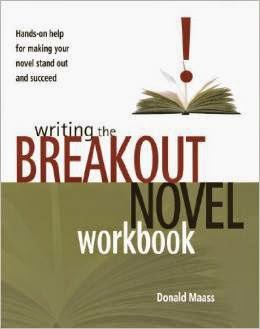
Expressing character emotion is one of the most challenging and important aspects of writing fiction. For a scene to succeed, the reader must feel what the character feels. When I was asked to give a short presentation on expressing emotion, I hesitated until I realized it gave me an excellent excuse to re-read some of my favorite novels. My talk expanded into a blog series in which I identified four (often overlapping) techniques. For additional explanations and examples, please follow the links to my blog.
Describe What the Character Experiences
With this approach, the writer depicts the action and the character’s response while counting on the reader’s shared experiences to fill in the emotional blanks.

“I pulled it from the water, feeling it turn inside my grasp. I smelled it, which was innocent enough, wasn’t it, merely smelling a fish? But one thing leads to another, for I drew it near my nose, which is near my mouth, which then opened. I felt the fish struggling between my lips, my tongue curling eagerly to fold it in.
What was I doing? I flung it back.”
At that point in the story, Corinna doesn’t know she’s a selkie, but she feels the pull of the sea and the desire to do seal-like things. Few readers have ever considered eating a living fish, yet most of us have been tempted to do something we know is wrong. The little string of excuses rings true. Billingsley makes the rationalizations even more effective by her use of questions.
Character’s Thoughts
Internal monologue or interiority gives the reader a direct window into the character’s thoughts. It provides an opportunity for the writer to develop the character’s voice and personality.

“We both laughed at the end, and suddenly I realized this was the first time I had been happy since Mary Kate had died. Good thing no one lived close enough to hear us singing and making so much noise.”
Many of us have experienced a twinge of guilt for feeling joy when we’re supposed to be sad, but this passage is memorable because of the twist. Annie doesn’t feel guilty for her happiness. Instead, she’s concerned about disturbing the grieving adults who populate her world. She’s worried about appearing shallow and uncaring.
Body Language and Gestures
The way a character moves tells much about his or her personality. Some characters have nervous mannerisms, while others carefully prevent themselves from making extraneous movements. Character motion is also a way to display the feelings of non-point-of-view characters without drawing the reader’s attention too far from the emotion of the protagonist. Perhaps the most exquisite use of character gestures is to describe an emotion that is too intense for the character to express in words.

“Normally a hound who has been kicked with a steel-toed boot yelps out in pain, cries in agony. But Ranger was done with crying. He had not a single whisper of a cry inside him. His throat was too raw, his voice was too tired, he could not raise his head to bay a single note, not one. He dragged himself back under the house. He could not cry out loud. But tears splashed onto his silky ears. Sabine, smallest of all, tasted the salt as she licked them.”
Is your heart broken? Mine is. When Appelt tells us all the things Ranger doesn’t do, the scene becomes more poignant. The reader despairs with Ranger as he drags himself under the house.
Unique Characters
The best expressions of emotion give the reader insight into the character’s distinctive personality. These passages convince the reader not only to spend valuable time with the character, but to remember him or her when the book is finished.

“It’s important to let the kids know you mean all this metaphorically, honey,” he says sitting straight up so that his head busts through the ceiling. In most of my drawings, he’s so big, I can’t fit all of him on the page, so I leave off the head.”
Most of us will admit to being intimidated by an authority figure at some point in our lives. Noah imagines the head of his larger-than-life father busting through the ceiling and being too huge to fit on the page. That speaks volumes about Noah, his artistic skill and the domineering father.
To conclude, I’ll quote literary agent Donald Maass, “More than plot, we crave meaning and emotion. We want to experience something, not just be entertained.”
The references I used to develop this post can be found here.

When Ann Finkelstein isn’t writing or photographing weird ice formations, she tutors for the ACT. What would you like to know about commas, angles or speed-reading?
Her blog is Words and Pixels. Please visit her website.
Coming up on The Mitten blog: Beyond the Book - The Path to Traditional Publishing, Hugs and Hurrahs (Send your good news to Patti Richards at info@pgwrites.com by March 25th), a new Featured Illustrator, and a Michigan Middle Grade Success Story!
Have a great weekend!
Kristin Lenz
Coming up on The Mitten blog: Beyond the Book - The Path to Traditional Publishing, Hugs and Hurrahs (Send your good news to Patti Richards at info@pgwrites.com by March 25th), a new Featured Illustrator, and a Michigan Middle Grade Success Story!
Have a great weekend!
Kristin Lenz