Friday, March 27, 2015


Hugs and Hurrahs! 

Our SCBWI Michigan folk have certainly been busy since January! And what better time to hand out some much-deserved “Hugs and Hurrahs” than right now, when spring is “bustin’ out all over!” So, without further ado, here’s all the fantastic publishing news from our amazing members around the Mitten! Enjoy!

Kirbi Fagan is certainly an illustrator on the move! Her artwork is currently featured in the March issue of Imagine FX Magazine. She was also the winner of the “Reckless Deck Challenge” via “Art Order,” and was recently accepted into “Infect by Art Volume 3.” Read a recent interview of Kirbi on Elusive Muse here http://elusivemu.se/kirbi-fagan/. You make us proud Kirbi!


Three Cheers for Kris Remenar whose debut picture book, GROUNDHOG’S DILEMMA, will be available on December 1 of this year! The book is being published by Charlesbridge, and just so happens to be illustrated by Kris’s wonderful husband and award-winning artist, Matt Faulkner! Congratulations you two! Oh, and if a debut picture book isn’t enough, Kris also recently signed with Fuse Literary where she’s represented by Gordon Warnock and Sara Sciuto. Way to go Kris!


The amazing Monica Harris sold a puzzle, CHICKEN COOP CRACK-UPS, to Highlights Magazine. She also sold her book, THE MYSTERY OF CRYTOGRAPHY, to Schoolwide, Inc as an ebook. Monica's Korean publisher, Caramel Tree Publishing, bought 4 additional books to join the others, and Data Recognition Corporation bought three of her assessment pieces for Nebraska (two informative and one narrative). So happy for you Monica! 
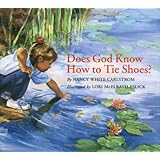

Hats off to Lori Eslick whose artwork will be on exhibit in Whitehall Michigan’s Arts Center of White Lake. The show runs May 18-June 5, 2015, and features much of Lori’s original art from her picture books, DOES GOD KNOW HOW TO TIE SHOES, IF JESUS CAME TO MY HOUSE, BAREFOOT, READ FOR ME MAMA, as well as many other pieces. We’re so proud of you Lori! Here’s a link to find out more: http://www.artswhitelake.org/#!calendar/cpsj


Congratulations to Danielle Hammelef for her recently-published four-book set, AWESOMESPECIAL Effects, from Capstone Press (January 2015). These books feature a rare, behind-the-scenes look at stunts, physical effects, computer-generated effects and make-up. We’re giving Danielle a standing ovation for this one!


Nancy Shaw’s hilarious sheep are back! Sheep Go to Sleep, illustrated by Margot Apple and published by Houghton Mifflin Harcourt, will be available on May 5, 2015. So happy for you Nancy!


Neal Levin has been as busy as a bee this spring! Here is a list of all his good news:  

  • "10 Simple Ways You Can Help Others" cartoon was published in the December 2014/January 2015 issue of Boys' Quest.
  • "10 Unusual Facts About Animals" cartoon was published in the December 2014/January 2015 issue of Hopscotch.
  • Cartoon drawing activity "Creature Creations" was published in the December 2014/January 2015 issue of Hopscotch.
  • Neal’s poem "Retired Tires,” celebrating American Recycles Day (November 15) was published in The Poetry Friday Anthology For Celebrations, a bilingual (English and Spanish) collection of poems about holidays and commemorative events, compiled by Sylvia Vardell and Janet Wong (Pomelo Books).


Way to go Neal!


Janet Ruth Heller participated in Artifactory: Poems about Kalamazoo and Kalamazoo History at the Kalamazoo Valley Museum on Sunday, February 22, 2015. At this free event, Janet, along with other Kalamazoo-area writers read poems about items in the Kalamazoo Valley Museum collections, the Kalamazoo area and local history. Kalamazoo Valley Museum curator Tom Dietz commented on the poems, gave details about Kalamazoo history, and showed slides of relevant artifacts. Attendees received a free booklet of the poems. The event took place in the Mary Jane Stryker Theater and was co-sponsored by Friends of Poetry.

Janet also read poetry and spoke about "Dramatic Monologues in Contemporary Jewish Poetry" on a Panel about dramatic monologues at the College English Association Conference in Indianapolis on March 26. She will also participate in a panel discussion of "Recent Trends in Creative Nonfiction" at the Association of Writers & Writing Programs Conference (AWP) in Minneapolis on April 9, 2015 from 3 to 4:15 p.m. Congratulations on all these amazing speaking engagements Janet!


Shutta Crum's latest book UH-OH! (Random House/Knopf) will be released April 14th.
Illustrated by the Crystal Kite winner,Patrice Barton. (For the 2011 publication MINE! Also by Shutta.) in UH-OH! the pair of toddlers from MINE! are back in another nearly wordless romp. Booklist says: “. . .perfect for a quietly adventurous, windblown day at the beach . . . this is marvelous for practicing inference and prediction with prereaders." Bravo Shutta!


Buffy Silverman had 2 poems, "At the Seder" celebrating Passover and "At the Farmer's Market" celebrating National Farmers' Market Week, published in THE POETRY FRIDAY ANTHOLOGY FOR CELEBRATIONS. The book is a bilingual (English and Spanish) collection of poems about holidays and commemorative events, compiled by Sylvia Vardell and Janet Wong (Pomelo Books). Buffy is currently one of the “final four” poets in Ed Decaria’s annual March Madness Poetry contest on the Think. Kid,Think! website. You can vote for your favorite poems here: http://www.thinkkidthink.com/ignominious-vs-iridescent/
Congratulations Buffy!   


Rhonda Gowler Greene is happy to report that her No Pirates Allowed! Said Library Lou has been nominated for the 2016 Bill Martin, Jr. Picture Book Award by the Kansas Reading Association. The book has also been nominated for state reading awards in Florida and Nebraska. And her latest book, Only God Can Make a Kitten, will be followed by a companion book. She recently signed a contract to write Only God Can Make a Puppy. That’s awesome Rhonda!


Thanks to everyone for sending in their fantastic news (some of you twice:)! We have so much to be proud of in our Michigan SCBWI Chapter! Send all your Hugs and Hurrahs news to Patti Richards at pgwrites5@gmail.com (note new email address).


Friday, March 20, 2015

Beyond the Book – The Path to Traditional Publishing by Dawne Webber


My first novel was finished. I found myself at the self-publish or traditional publish fork in the road. I decided the traditional publishing route was best for me. The hard part was over! Now, I had only to get my manuscript into the hands of editors. I knew I had to write a query letter, but that was all I knew. I went to the bookstore and from the myriad of books about querying, chose one to be my query bible. I crafted the perfect query and sent it to thirteen editors a la Stephenie Meyer. Who needed an agent? If she could do it without one, so could I.

Rejections trickled in, and my confidence was shaken. I’d heard about Query Shark, the query critiquing blog of literary agent Janet Reid. I’d send her my query. She’d love it and affirm its perfection. After all, I’d faithfully followed all the steps in my query bible. Then, with confidence restored, I’d continue querying.

Unfortunately, the pre-requisite to submitting to Query Shark was to read through the entire archives. So, I rolled my eyes and began to read. I soon realized that I’d nailed it, but not in the way I’d hoped. My query was a perfect example of how not to write a query.

There was much more to this publishing thing than I’d ever imagined, and I have quite an imagination. I’m a writer, after all.


The Submission Process
I was back where I’d started, query-less and unsure. Getting my book into the hands of a reader was going to be a daunting task. Here’s a brief outline of the process:

1. Prepare a submission package.
2. Research literary agents or editors.
3. Decide on a system that will keep a list of agents/editors you’d like to query and track your submissions. The reality is you are going to send out too many queries to keep track of in your head.
4. Dive into the query trenches!

Literary Agent vs. Editor
Before tackling anything, I had to decide if I wanted to submit to literary agents or continue submitting to acquisitions editors. The consensus is that a writer benefits from signing with an agent first, but ultimately it’s a personal choice. As with the decision to go the traditional route or self-publish, each author needs to consider their needs, goals, and aspirations for the future.
  • Literary agent – As your representative in the literary market, your agent may offer editorial guidance, establish contacts for you with editors and publishers, explain the language of contracts and negotiate contract terms, sell the rights to your work, and help you find new opportunities for publishing. From Poets & Writers.
  • Acquisitions editor – Finds new authors and promotes writers he thinks will be profitable for the publisher. Writers and agents typically submit manuscripts to the acquisitions editor.* The acquisitions editor, especially for fiction, may follow a manuscript from submission to publication, suggesting plot-level changes to bring the story in line with the publisher’s vision for the product line. From The Editor’s Blog
*There are publishers and editors that accept queries from un-agented authors.

The learning curve for the submission process was huge. At times, I felt I was barreling along it on a tricycle. I persevered and eventually signed with an agent. In the hope of helping others along the learning curve, each month I’ll post about a different aspect of the submission process.

Every writer’s journey to publication is unique and I hope you’ll share your thoughts with us. What has your experience been?

Additional resources:


Dawne Webber is represented by Steven Chudney of The Chudney Agency. Ask Me to Wait, her YA contemporary novel, is currently on submission. After raising $5000 on Indiegogo, she attended a writers’ conference in NYC (New York Pitch Conference). She got to listen to tryouts for the musical The Lion King while perfecting her book pitch. Dawne lives in Troy with her husband and five children. They keep her sane amid the insanity of writing. You can learn more about Dawne at DawneWebber.


Look for Part 2 of Dawne's Beyond the Book series here on The Mitten blog in April.

SCBWI-MI's Frida Pennabook answered questions about self-publishing vs traditional publishing a few months ago. Read her advice columns on our blog here and here.

Coming up on The Mitten blog: Hugs and Hurrahs and a new Featured Illustrator. That means we'll have a new blog banner in April!

Have a great weekend!

Kristin Lenz

Friday, March 13, 2015

Expressing Character Emotion by Ann Finkelstein

Expressing character emotion is one of the most challenging and important aspects of writing fiction. For a scene to succeed, the reader must feel what the character feels. When I was asked to give a short presentation on expressing emotion, I hesitated until I realized it gave me an excellent excuse to re-read some of my favorite novels. My talk expanded into a blog series in which I identified four (often overlapping) techniques. For additional explanations and examples, please follow the links to my blog.

Describe What the Character Experiences
With this approach, the writer depicts the action and the character’s response while counting on the reader’s shared experiences to fill in the emotional blanks.

In The Folk Keeper by Franny Billingsley, fifteen-year-old Corinna catches a fish in her bare hands.

“I pulled it from the water, feeling it turn inside my grasp. I smelled it, which was innocent enough, wasn’t it, merely smelling a fish? But one thing leads to another, for I drew it near my nose, which is near my mouth, which then opened. I felt the fish struggling between my lips, my tongue curling eagerly to fold it in.
What was I doing? I flung it back.”

At that point in the story, Corinna doesn’t know she’s a selkie, but she feels the pull of the sea and the desire to do seal-like things. Few readers have ever considered eating a living fish, yet most of us have been tempted to do something we know is wrong. The little string of excuses rings true. Billingsley makes the rationalizations even more effective by her use of questions. 


Character’s Thoughts
Internal monologue or interiority gives the reader a direct window into the character’s thoughts. It provides an opportunity for the writer to develop the character’s voice and personality.

In Road to Tater Hill, Edith Hemmingway tells the story of 11-year-old Annie who is grieving for her stillborn baby sister, Mary Kate. Annie meets a reclusive old woman who introduces her to dulcimer music, and they sing together.

“We both laughed at the end, and suddenly I realized this was the first time I had been happy since Mary Kate had died. Good thing no one lived close enough to hear us singing and making so much noise.”

Many of us have experienced a twinge of guilt for feeling joy when we’re supposed to be sad, but this passage is memorable because of the twist. Annie doesn’t feel guilty for her happiness. Instead, she’s concerned about disturbing the grieving adults who populate her world. She’s worried about appearing shallow and uncaring.

Body Language and Gestures
The way a character moves tells much about his or her personality. Some characters have nervous mannerisms, while others carefully prevent themselves from making extraneous movements. Character motion is also a way to display the feelings of non-point-of-view characters without drawing the reader’s attention too far from the emotion of the protagonist. Perhaps the most exquisite use of character gestures is to describe an emotion that is too intense for the character to express in words.

In Kathi Appelt’s midgrade novel, The Underneath, the old hound dog, Ranger, is owned by a psychopath named Gar Face. Sabine is a kitten who lives with Ranger under Gar Face’s house.

“Normally a hound who has been kicked with a steel-toed boot yelps out in pain, cries in agony. But Ranger was done with crying. He had not a single whisper of a cry inside him. His throat was too raw, his voice was too tired, he could not raise his head to bay a single note, not one. He dragged himself back under the house. He could not cry out loud. But tears splashed onto his silky ears. Sabine, smallest of all, tasted the salt as she licked them.”

Is your heart broken? Mine is. When Appelt tells us all the things Ranger doesn’t do, the scene becomes more poignant. The reader despairs with Ranger as he drags himself under the house.

Unique Characters
The best expressions of emotion give the reader insight into the character’s distinctive personality. These passages convince the reader not only to spend valuable time with the character, but to remember him or her when the book is finished.

In Jandy Nelson’s young adult novel, I’ll Give You the Sun, thirteen-year-old Noah is intimidated by his macho, athletic father. In this scene, Noah’s father objects when his mother talks about a visitation from their deceased grandmother.

“It’s important to let the kids know you mean all this metaphorically, honey,” he says sitting straight up so that his head busts through the ceiling. In most of my drawings, he’s so big, I can’t fit all of him on the page, so I leave off the head.”

Most of us will admit to being intimidated by an authority figure at some point in our lives. Noah imagines the head of his larger-than-life father busting through the ceiling and being too huge to fit on the page. That speaks volumes about Noah, his artistic skill and the domineering father.

To conclude, I’ll quote literary agent Donald Maass, “More than plot, we crave meaning and emotion. We want to experience something, not just be entertained.”

The references I used to develop this post can be found here.

When Ann Finkelstein isn’t writing or photographing weird ice formations, she tutors for the ACT. What would you like to know about commas, angles or speed-reading?

Her blog is Words and Pixels. Please visit her website.


Coming up on The Mitten blog: Beyond the Book - The Path to Traditional Publishing, Hugs and Hurrahs (Send your good news to Patti Richards at info@pgwrites.com by March 25th), a new Featured Illustrator, and a Michigan Middle Grade Success Story!

Have a great weekend!
Kristin Lenz


Friday, March 6, 2015

Small Press Success: Nola Gals by Barbara Rebbeck

I was cleaning out my office the other day and came across this note from years ago when the SCBWI-MI newsletter was printed on actual paper and mailed out to members who paid for a subscription. 

Authors and illustrators often included nice notes and postcards of art with their checks. This note came from Barbara Rebbeck who had noticed that we lived only two blocks apart! We've been encouraging each other in our writing and publishing pursuits ever since.

When Barbara told me her YA novel would be published by a small press, I asked her to share her story. Here's Barbara:

NOLA Gals is the story of two fourteen-year-old girls, Essence and Grace, who are tossed together in the wake of Hurricane Katrina when Essence is evacuated to Houston. She attends the private school, St. Catherine’s where things don’t go well. She walks right into a wall of prejudice. Grace, at first spoiled, and also forced to go to school there because of her poor behavior at a public school, changes as she stands up for Essence. The classic, To Kill a Mockingbird enters almost as a third character when both girls read it and learn valuable lessons they apply to their current lives.


I began writing the novel once I retired from teaching. My brother was very ill at the time, and I would help him out during the day, and then go over to a family cottage at night and write alone. The writing helped me accept the bleakness of the day as I watched my brother lose his battle with cancer.

The first character to make my acquaintance was Mimmi, the stubborn old New Orleans lady. Then she introduced me to her granddaughter, Essence. Next Grace popped into my head, and I knew Hurricane Katrina would soon roar her way into the girls’ lives. At first I planned that the girls would lead parallel lives and never meet, but Essence needed help, and although Grace was an unlikely rescuer, the two soon met in the Astrodome in Houston. 

Mockingbird started out as a throwaway summer reading assignment for Grace, but that soon changed. I did a ton of research, actually my favorite part of writing. I have two crates of books, articles, CDs and DVDs that make up the Source List at the end of the novel. I also had four former students relive their memories of first reading Mockingbird for the Afterword. My book partly became a homage to the classic.

I began the novel in 2007, originally hoping it could be a contender for the Delacorte Prize. I was naïve. I started the long slog to find an agent or publisher, a very frustrating five-year quest. I rarely got past the query letter, a format I have grown to hate. My favorite rejection letter began “Dear Author, Please don’t think this is a form letter…”  

I was not getting any younger, but I was definitely frazzled. A friend had published her novel with a fledgling small press, Neverland Publishing. She urged me to continue the search for an agent, but the wind was long gone from my sails, and I was ready to go small press. I knew the bias out there, but I wanted to see my NOLA gals in print. Neverland was willing to take a chance on a YA novel with no vampires or aliens or plagues. Publishing with Neverland has been an encouraging experience from editing to release and promo. No advance, however, with a small press, but lots of individual attention.

The most surprising aspect of publishing has been the faith and support from everyone. I wrote the novel in a variety of genres and kept a journal of my writing process in hopes of visiting classes with it. I am already booked in classes before the teachers have even read the book.

What’s next? I have another YA novel about Vietnam that is in revision. Some have suggested a sequel to NOLA. But mostly I will be in classrooms sharing the gals. I am working on lesson plans for the novel that will be available on my website.

Barbara Rebbeck attended EMU and Oakland U and taught English and French for many years. She has published poetry, essays and professional articles. NOLA Gals is her first novel. She is past-president of the Michigan Council of English Teachers. She loves to travel, especially to London where her record for seeing theatre is nine plays in ten days.


Smaller presses are gaining prominence and earning accolades, including recent Caldecott and Printz honors. Read more in Publisher's Weekly: Small But Mighty Presses Prevail at ALA Awards.

Are you considering submitting your work to a smaller press? Start your research at the resource library at www.scbwi.org, and be sure to check the Writer's Beware website.

Coming up on The Mitten blog: Writing character emotions, another round of Hugs and Hurrahs (Send your good news to Patti Richards (info@pgwrites.com) by March 25th to be included), and a new Featured Illustrator!

Subscribe to our chapter blog and you'll never miss a post. Simply enter your email under the "Follow by email" heading at the top of the blog's sidebar.

Have a great weekend!

Kristin Lenz

Friday, February 27, 2015

One-Liners Abound at New York Conference

What do you get when you plop a four-star Grand Hyatt Hotel on top of the world’s busiest train station?

You get a grandiloquent setting for the 16th Annual SCBWI Winter Conference, February 6-8, 2015 in New York City. I was lucky enough to be one of several hundred attendees, my way paid by the Tribute Fund, a grant that recognizes the service of the local volunteer members. 

On Friday, I attended a Writer’s Roundtable intensive, where 25 of the biggest names in publishing’s editors and agents sat at a round table with eight other writers and critiqued their first 500 words. It would take a whole blog post just to mention every name; suffice to say that I was honored to sit with Kate Sullivan, senior editor of Delacorte Press in the morning, and Molly Ker Hawn, an agent for the Bent Agency based in London in the afternoon.

That was just one of three intensive tracks on what was essentially a bonus day. The real conference kicked off on Saturday morning, and the list of keynote presenters is so long, and my word count so restricted, that each person only gets one sentence.

Anthony Horowitz said “Remember the first line is the line the reader will read in the store.” He followed that up with his first line of the first book in the Alex Rider series, "When the doorbell rings at 3 o’clock in the morning, it’s never good news.”

Next up was the Keynote Editor’s Panel. 
Justin Chanda said, “The business is cyclical; we need picture book readers to graduate to middle grade to young adult.”

Laura Godwin added that “It takes about $50,000 to start up a picture book: we’re not going to put up that investment lightly in our partnership with you.”

Beverly Horowitz said, “People love books for children who will grow up to be adult readers.”

And Stephanie Owens Lurie indicated that research suggested, “Kids prefer physical books.”

Our first breakout offered choices A-K, where agents, art directors and editors discussed “Seven Essentials You Need to Know About...” I chose Executive Editor Jordan Brown, who said “The Number One Rule with Writing: you can do whatever you want, as long as it works.”

After a lunch in the catacomb food court of Grand Central Station, we returned for another one of eleven breakout sessions. This time I chose Senior Editor Ben Rosenthal who discussed thrillers, “You need to hook immediately; you turn on the faucet, the reader can’t (and doesn’t want to) turn it off.”

More afternoon keynotes followed. Herve Tullet, a gangly French artist, talked about a transformative presentation where he “invited a child to draw wiz me, drawing scribbles zat became an idea; from zat scribble it became a story.”

Next, author Kami Garcia admitted she “broke a lot of rules writing for a group of teens, not writing to be published.”

Afterwards, illustrators displayed their portfolios during the Art Browse, followed by a Gala Dinner and Optional Socials (for those of us still standing).


SCBWI-MI Co-RAs, Carrie Pearson and Leslie Helakoski, with Taraneh Matloob, the winner of Shutta's NY Conference Scholarship. Congrats, Taraneh!


Sunday went by like a New York minute.

Legendary children’s writer (and SCBWI’s first Regional Advisor) Jane Yolen spoke briefly, urging the crowd “No more ‘starting,’ just do it.”

Author/illustrator Laura Vaccaro Seeger effectively demonstrated the magic of her concept picture books by showing them to the audience. She suggested journals for writers and artists “so you have a place to collect your thoughts, ideas and doodles.” But she went a step beyond and numbered the pages and made a table of contents, for easy brilliance retrieval.

Best-selling author James Dashner confessed, “My method has nothing to do with trends; I write stuff that’s cool to me...there’s no magical formulas, you just have to be passionate about it.”

The Keynote Agent’s Panel featured Barry Goldblatt (who appeared at an SCBWI-MI conference a few years ago with author and wife Libba Bray). He said that an agent’s job "is 24/7; it doesn’t ever turn off.”

Jennifer Laughran said a good query letter is “long enough to cover everything but short enough to get you interested, like a gray skirt.”

Tina Wexler advises writers she needs “writing with heart, not writing to pay the bills; I want passion and you on the page.”

Finally, Newbery Award winner Kwame Alexander sent the crowd out on a delirious note. He described his unlikely rise to fame as an author and poet. His secret? “You have to say ‘Yes!’”

New York City. Editors. Agents. Authors. Illustrators. It is an experience never to be forgotten. Make it a goal to go to at least one national SCBWI conference in your lifetime; it will transform you.


Charlie Barshaw is currently stitching together the tattered remains of his middle grade story about a squirrel invasion while fiendishly contemplating major surgery on a YA WIP. He’s also co-planning a spring conference with his wife, author/illustrator Ruth McNally Barshaw.


For more highlights of the NY conference and plenty of photos, visit the official SCBWI conference blog. But first, click on the links above because Charlie carefully collected all of them for you!


Coming up on The Mitten blog: small press success, writing character emotions, and another round of Hugs and Hurrahs. Send your good news to Patti Richards (info@pgwrites.com) by March 25th to be included.

Subscribe to our chapter blog and you'll never miss a post. Simply enter your email under the "Follow by email" heading at the top of the blog's sidebar.

Have a great weekend!

Kristin Lenz

Friday, February 20, 2015

Flashback Friday: Neal Levin's Kiddie Litter

We have 10 years of Neal Levin's Kiddie Litter cartoons in our SCBWI-MI newsletter archives. It's a shame to keep them tucked away. Enjoy these Friday funnies, and find more here.


Neal Levin writes short stories and poetry for children as well as drawing cartoons. His work has appeared in several national magazines and collections. You can find out more at www.neallevin.com


Coming up on The Mitten blog: coverage of the SCBWI New York conference, small press success, writing character emotions, and another round of Hugs and Hurrahs. Send your good news to Patti Richards (info@pgwrites.com) by March 25th to be included.

Subscribe to our chapter blog and you'll never miss a post. Simply enter your email under the "Follow by email" heading at the top of the blog's sidebar.

Have a great weekend!

Kristin Lenz

Friday, February 13, 2015

Working with a Foreign Market by Monica Harris

BUON GIORNO! SELAMAT DATANG!

I’ve had the good fortune of writing books for two Korean children’s publishing companies - TunTun Publishing and Caramel Tree. When fellow writers discover this, they are immediately curious about the experience. So I thought I’d share some of the questions I’ve been asked and some insight on the opportunities.

The first question is always – “Do you speak Korean?”
No, I do not speak Korean. Both companies are educational publishers who create educational English as a Second Language (ESL) programs. Their programs involve leveled reading books and teacher materials to help Korean kids from ages 3+ learn English.

How did you get your foot into the door?
It’s all about connections! For TunTun Publishing, I had met the SCBWI International Regional Advisor from Korea while attending the New York conference. She was an American living abroad due to her husband’s job. The editors at TunTun learned about her and reached out with a request for native English speaking writers who specifically wrote for kids. They wondered if she knew any. She certainly did! The Regional Advisor sent an email to several writers with the details on how to submit ideas. I jumped at the opportunity and BOOM! Six books later, my foot is no longer pinched by the door.


For Caramel Tree Publishing, it was again by making connections. While at the 2009 Los Angeles SCBWI conference, I attended a presentation on writing for foreign markets. One of the gentlemen sitting in the audience talked about his experience with the Korean market. After the presentation, we struck up a conversation. It turned out that he was the Vancouver-based English Editor with Caramel Tree Publishing. Over the next several years, I sent him stories, which I thought might fit into his program. He loved them all, but just couldn’t find a good fit within their current program. Luckily, he believed in me and was willing to take a risk. He presented my works to the Korean editorial group and stressed that I had the skills needed to be “part of the team.” The group agreed and took me on as one of their work-for-hire authors (2014). I am currently working on 16 books for their upcoming list!
Work-for-Hire? What does that mean?
Work for hire means the publisher gives me writing assignments. They are often subjects that the publisher needs in order to round out their ESL programs. I work under a contract, which requires revisions, illustration suggestions, and readability statistics. Deadlines are usually quite short and the pay is reasonable ($300-$500 per book project). My name appears on the book, but I do not earn royalties on sales. Each contract states how many complimentary copies I will receive but, because they’re sold in Korea, I don’t usually have an opportunity to buy additional copies for school visits. So I usually ask for 10 copies instead of the standard 2.

What have you learned from the experience?
  • When communicating with editors whose first language is not English, keep sentence structure simple. Email miscommunications usually occur because of basic misunderstandings in the language.
  • Research the culture you’re writing about. When writing a breakfast scene, for example, don’t assume that Korean kids eat cereal, oatmeal, or pancakes. Korean breakfasts are usually hot soup. Don’t be afraid to ask the editors for guidance. It isn’t seen as a weakness; it’s seen as respectful.
  • My teaching degree is valuable. (Which makes my father very happy!) Having an understanding of the learning process and making sure the books are in check with learning objectives has certainly given me a leg up.
  • That there’s an extra element of intrigue when you receive a package with foreign words and/or symbols on it. It makes me appear worldly, mysterious, and secretive to my mail carrier too. (wink wink)


NOTE: The title reads as “Good morning” in Italian and “Welcome” in Malay.  Because I know you were going to Google it anyways.  J

Monica writes picture books, puzzles/games, magazine stories and articles, nonfiction easy readers, and educational materials. She lives in Kalamazoo where she enjoys hiking and belly dancing. She is the author of 14 books (16 more to come) and more than 230 magazine pieces. She is also an instructor with the Institute of Children’s Literature. Learn more about Monica at her website: www.monicaharrisbooks.com


Coming up in the weeks ahead: take-aways from the SCBWI Winter Conference in New York, Small Press Success, Kiddie Litter cartoons, and another round of Hugs and Hurrahs. Subscribe to The Mitten blog and you'll never miss a post. Simply enter your email in the Follow by Email box at the top of the sidebar.