Friday, February 13, 2015

Working with a Foreign Market by Monica Harris

BUON GIORNO! SELAMAT DATANG!

I’ve had the good fortune of writing books for two Korean children’s publishing companies - TunTun Publishing and Caramel Tree. When fellow writers discover this, they are immediately curious about the experience. So I thought I’d share some of the questions I’ve been asked and some insight on the opportunities.

The first question is always – “Do you speak Korean?”
No, I do not speak Korean. Both companies are educational publishers who create educational English as a Second Language (ESL) programs. Their programs involve leveled reading books and teacher materials to help Korean kids from ages 3+ learn English.

How did you get your foot into the door?
It’s all about connections! For TunTun Publishing, I had met the SCBWI International Regional Advisor from Korea while attending the New York conference. She was an American living abroad due to her husband’s job. The editors at TunTun learned about her and reached out with a request for native English speaking writers who specifically wrote for kids. They wondered if she knew any. She certainly did! The Regional Advisor sent an email to several writers with the details on how to submit ideas. I jumped at the opportunity and BOOM! Six books later, my foot is no longer pinched by the door.


For Caramel Tree Publishing, it was again by making connections. While at the 2009 Los Angeles SCBWI conference, I attended a presentation on writing for foreign markets. One of the gentlemen sitting in the audience talked about his experience with the Korean market. After the presentation, we struck up a conversation. It turned out that he was the Vancouver-based English Editor with Caramel Tree Publishing. Over the next several years, I sent him stories, which I thought might fit into his program. He loved them all, but just couldn’t find a good fit within their current program. Luckily, he believed in me and was willing to take a risk. He presented my works to the Korean editorial group and stressed that I had the skills needed to be “part of the team.” The group agreed and took me on as one of their work-for-hire authors (2014). I am currently working on 16 books for their upcoming list!
Work-for-Hire? What does that mean?
Work for hire means the publisher gives me writing assignments. They are often subjects that the publisher needs in order to round out their ESL programs. I work under a contract, which requires revisions, illustration suggestions, and readability statistics. Deadlines are usually quite short and the pay is reasonable ($300-$500 per book project). My name appears on the book, but I do not earn royalties on sales. Each contract states how many complimentary copies I will receive but, because they’re sold in Korea, I don’t usually have an opportunity to buy additional copies for school visits. So I usually ask for 10 copies instead of the standard 2.

What have you learned from the experience?
  • When communicating with editors whose first language is not English, keep sentence structure simple. Email miscommunications usually occur because of basic misunderstandings in the language.
  • Research the culture you’re writing about. When writing a breakfast scene, for example, don’t assume that Korean kids eat cereal, oatmeal, or pancakes. Korean breakfasts are usually hot soup. Don’t be afraid to ask the editors for guidance. It isn’t seen as a weakness; it’s seen as respectful.
  • My teaching degree is valuable. (Which makes my father very happy!) Having an understanding of the learning process and making sure the books are in check with learning objectives has certainly given me a leg up.
  • That there’s an extra element of intrigue when you receive a package with foreign words and/or symbols on it. It makes me appear worldly, mysterious, and secretive to my mail carrier too. (wink wink)


NOTE: The title reads as “Good morning” in Italian and “Welcome” in Malay.  Because I know you were going to Google it anyways.  J

Monica writes picture books, puzzles/games, magazine stories and articles, nonfiction easy readers, and educational materials. She lives in Kalamazoo where she enjoys hiking and belly dancing. She is the author of 14 books (16 more to come) and more than 230 magazine pieces. She is also an instructor with the Institute of Children’s Literature. Learn more about Monica at her website: www.monicaharrisbooks.com


Coming up in the weeks ahead: take-aways from the SCBWI Winter Conference in New York, Small Press Success, Kiddie Litter cartoons, and another round of Hugs and Hurrahs. Subscribe to The Mitten blog and you'll never miss a post. Simply enter your email in the Follow by Email box at the top of the sidebar.

Friday, February 6, 2015

Member Spotlight!


Introducing…Rhonda Gowler Greene

Rhonda Gowler Greene is a long-time SCBWI member and lives in West Bloomfield. She has 23 published picture books and four more titles on the way. Rhonda grew up in southern Illinois, but has lived in the Michigan for 32 years. Welcome to the Mitten Blog Rhonda and thanks for being our first guest on Member Spotlight. 


Now, without further delay, here’s Rhonda…

RGG: My family moved to Florence, Kentucky from southern Illinois the summer before my senior year in high school. I graduated from Northern KY University with a B.A. in education and a minor in music/piano. I then went on to earn a graduate degree in educational media from Xavier University in Cincinnati. After college, I was an elementary learning disabilities teacher. My husband took a job in Michigan in 1983, so we packed up and moved to West Bloomfield. We have four grown kids and two adorable grandkids.

M:When did you start writing for children? How did you know it was something you wanted to do?

RGG: I started writing for children when my kids were young. I left teaching and stayed home with them and we read and read! My plan had been to become a school librarian, so even in college, I loved children’s books. The more I read to my kids, the more I wanted to write books like that. I then started writing and submitting. Three and a half years and 220 rejections later, I made my first sale, BARNYARD SONG, to Simon & Schuster/Atheneum. 

M: How did you find out about SCBWI and how long have you been a member?

RGG: I’ve been a member since 1988! When I first joined, it was SCBW. I’m glad illustrators are included now. I can’t remember how I found out about SCBWI.  Maybe from a market book.  

M: What genres interest you most and why?

RGG: I like most children’s genres and keep up as best I can with what is being published—picture books to novels. My biggest love is the picture book. I especially love picture books that rhyme since most of what I write is in rhyme. A close second is children’s poetry. I think these two are my favorites because so much is packed into so few words. I love playing with words and coming up with fresh, lyrical lines.  For me, writing a picture book is like putting a very difficult puzzle together—finding those perfect words, then fitting them together in just the right way. 

M: With 23 picture books under your belt and more to come, you’re a seasoned veteran! Tell us more about your publishing journey.

RGG: I’ve been published with S&S/Atheneum, Bloomsbury, Dutton, Holt, Houghton Mifflin, Scholastic, Sleeping Bear Press, Childcraft/School Specialty, Augsburg, Eerdmans, and ZonderKidz.  I just had a book released this week with ZonderKidz called ONLY GOD CAN MAKE A KITTEN!  


I sold my first three manuscripts on my own. In 1996, I acquired an agent. Even though I’m published and have an agent, I still get lots of rejections. Being a children’s author has been like a roller coaster for me—BIG highs and BIG disappointments. Besides my first sale being a huge ‘high,’ I also had one in 2012 when my agent got an auction going on a new manuscript. Four major houses bid on it. I ended up getting a three-book contract. Then it took almost three years before the publisher got an illustrator. Just two weeks ago, they signed up Daniel Kirk to do two of the books. They’re hoping he’ll do the third one also. 

M: Many of us have jobs in addition to writing for children. Tell us something about what you do outside of writing.

RGG: Like many children’s authors, I speak at schools and conferences. March is busy, and in April, I’m headed to Florida for a week of visits and a conference presentation. I got invited there because my book, NO PIRATES ALLOWED, is a 2014-2015 Florida Reading Association Award nominee. The book is also up for a 2015-2016 state award in Nebraska. So besides writing and reading and being a grandma, preparing talks and PowerPoint presentations take up a lot of my time.

M: How does this occupation inform your writing?

RGG: Speaking at conferences and schools about writing makes me want to keep up even more with what new books are being published. I read and study new children’s books a LOT. And not just new ones, but great old ones I missed along the way. 

M: Where do you get most of your writing ideas? Do you write them down, keep them in a computer file or just store them in your memory?

RGG: I get most of my ideas when reading other children’s books. They spark ideas in my head, and I usually jot them down on a post-it.

M: We all have favorite writers that inspire us. Name two of yours and why you like them.

RGG: It’s hard to pick just two! In 1993, I drove 5 hours to hear Cynthia Rylant  speak. She was a real inspiration!  Joyce Sidman, Mary Ann Hoberman, Alice Schertle- I could go on and on. It’s the way they have with words- such fresh writing. Two of my very favorite picture books are, SLEEP LIKE A TIGER and A VISITOR FOR BEAR.

M: What’s the best advice you’ve ever received as a writer for children? Why?

RGG: Read read read!  On Linda Sue Park’s website, under “writing,” she says:“Read.  That’s the single best thing an aspiring writer can do for his or her work.  I once heard an editor say, ‘Read a thousand books of the genre you’re interested in.  THEN write yours.’ ”  And don’t give up!   

Both are great pieces of advice because they’ve helped me reach my dream of getting published! Thanks for having me!

M: Wow! That was great Rhonda! Thanks so much for visiting The Mitten. You can learn more about Rhonda at her website  www.rhondagowlergreene.com.


Friday, January 30, 2015

DONALD MAASS: THE MANUSCRIPT WHISPERER by Charlie Barshaw

It wasn’t an SCBWI-sponsored event. So why were twenty-some members at Michigan State University in mid-January?

We came for Donald Maass, the author of six books on the writing craft. The conference organized by Capital City Writers Association gave us almost seven hours of The Donald and his philosophy of “breakout” fiction.
                  
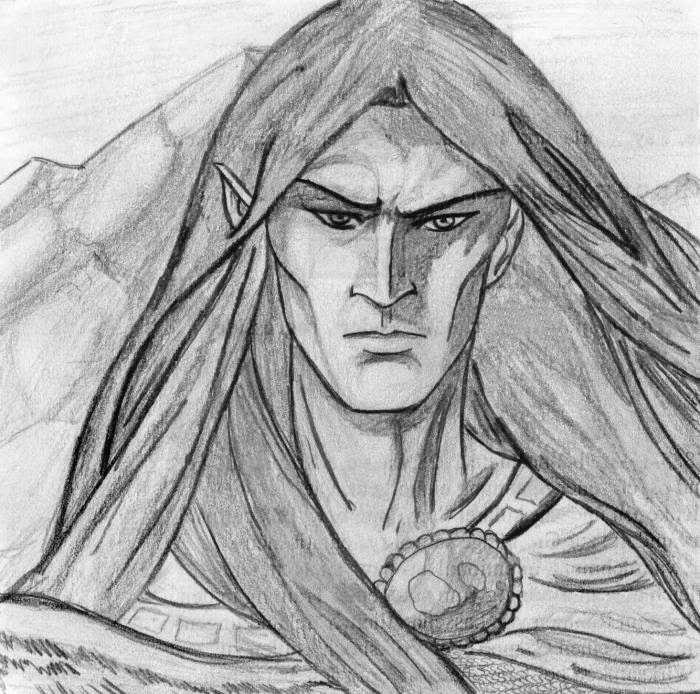
Maass, a commanding figure in the agenting world (his agency sells over 150 titles a year) is actually a trim, compact man in person. He is soft-spoken and unassuming (one reviewer even called him “elven").

But that appearance is a ruse. Because he is, in truth, a pain-inflicting torturer-demon of the novel and its writer.

http://commons.wikimedia.org/wiki/File:Elvenlord.jpg#mediaviewer/File:Elvenlord.jpg
"Elvenlord" by Carmen Haberichter, http://commons.wikimedia.org/wiki/File:Elvenlord.jpg#mediaviewer/File:Elvenlord.jpg

Maass started his keynote by decrying the state of book industry today. “Publishing is a mess,” he said. He went on for cruel minutes, telling the stunned audience of writers all the disastrous things we knew in our hearts to be true: declining sales, declining readership, publishers culled to a trembling few. Pause, sigh.

“Or maybe,” he said, a malicious grin, “I’m an unreliable narrator.” Ouch.

In the first session, he urged the audience to “write down the thing you are afraid to say,” and then have our MC say it.

Then he asked us to take a “blah scene,” necessary but unexciting. What is the protagonist’s main emotion? What’s the next level of feeling? The one after that? Write the scene from that unexpected and fresh emotional viewpoint.

In Hour Two, Donald asked us to take another transitional scene and describe the setting and its effect on our protagonist, until the character (and reader) is not describing but experiencing it.

He asked us to take a dramatic scene and break it down. Was there a way we could repeat the arc in smaller but impactful ways throughout the manuscript? Do it!

By lunchtime, I was nervously massaging my palpitating manuscript. Sure, Maass wanted me to alter my baby, but these were mostly cosmetic.

After an afternoon of fine but unremarkable presentations (believe me, you do not want to follow Donald Maass), it was 5 pm and time for any normal conference to end.


But no, a good majority of us had signed up for the four-hour extra workshop. The audience was at its most vulnerable: frazzled, dehydrated, over-caffeinated.


That’s when the real Donald Maass appeared. He might have worn a black hood, clad in leather and brandishing a whip, had he not an aversion to clichés. And the things he made me do to my protagonist, my plot, to what I thought to be the end of my novel. I shudder to recall the humiliation, the failure he had me inflict on my hero. He did this with innocent-sounding questions that probed more invasively with each “What if?”

I pinned my writhing manuscript to the table, ripped out its beating heart and stomped it into a greasy spot on the floor. When I looked up, Donald saw the stricken horror on my face and smirked, “It’s not real.”

So, I sit with 191 pages of middle grade manuscript, 130 of them with scrawled notes on the back. The ending I thought a doozy is now just a diving board into fouler, more troubled water for my unlucky protagonist. And, unfortunate writer, I must find a way to drag my hero through disgrace and failure to ultimate triumph. Somehow.

Donald Maass is like a literary personal trainer from Hell. No wait, what’s even worse than Hell?  Can you imagine something more depraved than whatever is two levels worse than Hell? That’s him.

If you ever get a chance to see Donald Maass in person, leap. But beware: your story is not safe.

And that’s great.


Charlie Barshaw is currently stitching together the tattered remains of his middle grade story about a squirrel invasion while fiendishly contemplating major surgery on a YA WIP. He’s also packing for the Big Apple, and co-planning a spring conference with his wife, author/illustrator Ruth McNally Barshaw.


Editor's note: Donald Maass shares his expertise at the Writer Unboxed blog. Read his posts here.

Friday, January 23, 2015

Cool Kids Books in Kalamazoo by Ann Finkelstein

In November, I braved the snow to attend the Kalamazoo Public Library’s Annual Youth Literature Seminar. This year’s conference started with Ed Spicer, first grade teacher and book reviewer extraordinaire. Ed discussed many of his favorite picture books and explained how to use them to enhance first grade subjects. I particularly liked Ed’s suggestion for using The Numberlys (by William Joyce, illustrated by William Joyce and Christina Ellis) and Triangles (by David Adler, illustrated by Edward Miller) to enhance math education. Similarly, social studies must be a kick when Grandfather Gandhi (by Arun Gandhi and Bethany Hegedus, illustrated by Evan Turk), Big Red Lollipop (by Rukhsana Khan, illustrated by Sophie Blackall) and Deep in the Sahara (by Kelly Cunnane, illustrated by Hoda Hadadi) are used to show students non-American cultures. Many of us left Ed’s talk wishing he could have been our children’s first grade teacher.


Author-illustrator Todd Parr gave two inspirational talks in which he discussed his professional journey and his books. Todd writes positive, feel-good books that are funny and accessible to children. He encourages kids to be different and strong. Every book has a straightforward message summarized in his ending letter to his readers. For example, in his book It’s Okay to Make Mistakes, Todd writes, “It’s okay to make mistakes sometimes. Everyone does, even grownups! That’s how we learn. The end, Love, Todd” Todd’s illustrations are simple and appealing, and he is proud that young children can imitate his drawings.


Educator Mary Bigler, Ph.D. spoke on raising readers. She reminded us that the most important thing parents and teachers can do to encourage literacy is read to children. She advocates starting at infancy and continuing “until they leave us.” For reluctant readers, Mary suggests joke and riddle books because laughter makes the reading experience non-threatening. She is a master at tongue-twisters and advocates this form of word play for children who are not fond of reading. Mary encouraged us to listen to the rhythm of the writing and to sing the words, if possible. As she says, “If we’re not passionate, the children won’t be.”

Mary also suggested starting a family diary. Each family member is responsible for writing one sentence each day, every day of the year. For very young children, parents can take dictation. She said this shows children that writing is permanent, and in time the family will create an invaluable heirloom.

Mary’s closing comments summarized the meeting. She reminded us children need to see love, kindness and family in the books they read. 


Ann Finkelstein writes, reads and fools around with her camera in Haslett, Michigan. You can find out more about her at www.annfinkelstein.com. Please stop by her blog, Words and Pixels.


Friday, January 16, 2015

Knitting the Perfect Mitten! (Blog post that is…) By Patti Richards


You break out in a sweat each time you see it on the listserv: the call for (cue scary music)…a BLOG POST! You read the post, look away, wring your hands, shake your head and hit the delete button. “Not you,” your naughty muse laughs! “You’re not a blogger! Why won’t Kristin, Patti and Nina just leave you alone?!” Well like Uncle Sam, I’m here to say, “WE WANT YOU!”

Why Blog?

Writing blog posts offers valuable writer experience. Not only does it provide you with credits for your resume, seeing your name in print boosts your fragile writer ego and gives you the courage to keep going. It’s also a great exercise in working with an editor and under a deadline. Deadlines help move you forward knowing that others are depending on your content to keep the Mitten fresh, new and out on time. Working with an editor (because we will read and ask for revisions when necessary), helps you increase your flexibility and let go of the notion that every word you write is important to the piece. Trust me, it’s not. Blogging also helps you understand the value of writing to a set of guidelines. Just like all picture books are 32 pages, blog posts have word counts designed to keep the reader engaged and on the page.

Blogging Basics

Now that you understand the power of the blog, we really hope you'll give it a try. Here are a few tips to get you started:
  • Use bullet points. (See what I did there?) Bullet points direct the reader’s eyes to important take-aways in your piece. Bullet points get to the meat of the story and entice the reader to come back and digest the entire article later.
  • Use section headings. White space is important in picture books, novels and BLOGS! Section headings help create white space and let the reader know what’s coming. And a blog post with section headings is simply easier to read than a blob of copy with no breaks.
  • Stick to the word count. We like our posts that are 400 to 600 words. Any more than that and you risk losing your reader’s attention.
  • Use hyperlinks. Hyperlinks take the reader to resources you’ve used and websites you recommend. They boost your credibility and the online presence of other writers.
  • Include a bio and picture. A sentence or two about who you are, where you’re from and a bit about your writing history is fine. Here’s an example from a recent article I wrote about getting engaged at Christmas:

"Patti Richards is a full-time freelance writer, children’s book author and blogger. Patti has a recently-engaged son who proposed to his wonderful fiancé at—you guessed it—Christmas! When not writing, she is activity engaged in planning a rehearsal dinner and trying to decide what mothers of the groom wear to weddings. Learn more about her at Sensibility and Sense, A Perfect Blog for Imperfect Writers (pattigail1.com)."  

It’s Your Turn!

Now that you know the basics, it’s time to knit together that perfect post for The Mitten. Write about your experiences, books on craft, conferences you’ve attended, speakers that inspire you, or anything else you think might be of interest to this group. Trust your instincts and send in your best work. I promise you’ll be glad you did.

Send your queries or submissions to:

Friday, January 9, 2015

It's Hugs and Hurrahs Friday here at the Mitten! Hugs and Hurrahs is the Mitten page that’s all about you! Now don’t be shy…you know how awesome you are, and we want to celebrate that awesomeness here four times each year. Today’s hot-of-the-presses edition features a 2014 wrap-up and a bit of New Year’s good news. Click here to learn more!