Friday, August 5, 2016

Writer Spotlight!

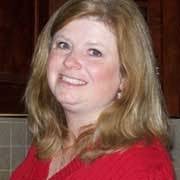
The Mitten is shining today's Writer Spotlight on fellow Michigan writer, Kathy Higgs-Coulthard. Kathy is a Mitten native who’s lived on the Michigan/Indiana border her entire life. She grew up along the St. Joseph River, and some of her earliest writing memories are of disappearing for hours to climb her favorite tree, scoot out on a limb that hung over the water, and write. Kathy claims she still does her best writing when she can hear the rush of water and feel the warmth of the sun filtered through leaves. Kathy has a rich writing journey that’s sure to inspire. So, let’s dive right in. Welcome to the Mitten Kathy!

Mitten: When did you start writing for children or otherwise, and how did you know it was something you wanted to do?

Kathy: I have written for as long as I can remember, but because of a few negative voices (both in my head and in the real world), I didn’t share my work until a friend introduced me to the Hoosier Writing Project, which is a chapter of the National Writing Project. The NWP is a network of educators that supports and deepens the teaching of writing by supporting teachers AS writers. Through the support and friendship I received as part of the Hoosier Writing Project, I gained knowledge of the writing craft, which increased my confidence and allowed me to begin sharing my work.

Mitten: How did you find out about SCBWI and how long have you been a member?

Kathy: I found out about SCBWI through the National Writing Project. I’d been participating in NWP advanced institutes for a few years and joined a critique group with a few other teachers who were working on children’s books. They raved about SCBWI and let me tag along to a conference. I was hooked!

Mitten: What genres are you most interested in and why? Picture books, middle grade, YA, chapter books, poetry, nonfiction?

Kathy: I started off writing picture books and still love that genre, but really found my voice with middle grade and YA.  I also have a few adult pieces that I have written, but those may end up being what Stephen King refers to as “trunk novels.” They’re very raw and represent my earliest attempts at learning the complexity of story and character development.

Mitten: Tell us about your publishing journey. Are you pre-published or published, and if so where?

Kathy: I am thrilled to count myself in the published category. My journey to publication was long—I, like most writers I know, have a family and a day job, so it hasn’t been a direct route. Several years ago, I met an editor from Jack & Jill Magazine at an SCBWI-MI event and pitched him a quirky idea that he loved. That was my first official sale. After that I wrote a lot of nonfiction, just trying to get my name out there—craft articles for Women on Writing Ezine (which is an EXCELLENT resource for writers, by the way!), chapters for projects with Facts on File, and even a memoir piece for Chicken Soup for the Soul’s Reboot Your Life.

Throughout all of that I was sending out my middle grade novel and a few picture books. About ten years ago, I attended the SCBWI New York Conference and participated in the writers’ intensives. An editor that I have always admired (and who had recently rejected my novel) sat at that table. She remembered me and my story and told me to please send her whatever else I was working on. Although we have yet to hit on a piece that fits her needs, her words to me that day helped spur me on to keep submitting.
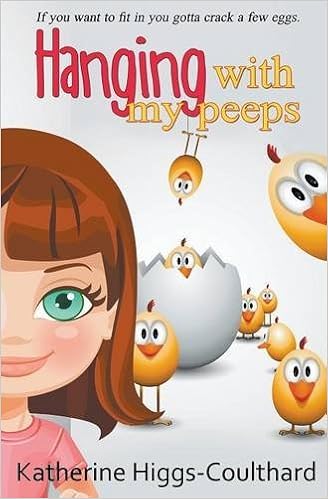


Later that year I had my first offer on that novel. It fell through, but opened a door I didn’t expect. My middle grade novel,Hanging with My Peeps, finally sold this spring to Astrea Press/CleanReads (if you’re keeping track, that’s after ten years of submitting). It isn’t the same novel I wrote all those years ago—it has changed as I gained more knowledge of craft and more insight into the industry. My big advice here is, talk to other writers! I found Astrea Press because I reached out to an SCBWI-MI author to ask why she switched publishers. That conversation led to me realizing my project might be a good fit with that company.


Mitten: Many of us have a job other than writing for children. Tell us something about what you do outside of writing.

First and foremost, I am a mother. My four kids bring joy to my world and make all things possible. Before having my own children I was a preschool and elementary school teacher. Currently I work with future teachers at Saint Mary’s College, Notre Dame and engage young writers through my work at Michiana Writers’ Center. MWC offers summer camps for children in grades 3-12 and a teen writing conference each fall. Information on those activities is available on our website.

Mitten: How does this occupation inform your writing?

Kathy: Writing for children requires a deep understanding of kids—today’s kids. We can’t write characters that today’s readers will engage with if we base our writing on how we were as children or even the books we loved to read as children. We need to know the audience we write for—what they laugh at, what they roll their eyes at, what they avoid at all costs. My work in local schools and with the Michiana Writers’ Center allows me to be around kids and I know that helps me create richer characters. MWC also allows me to talk with young writers about what they love to read, so I get a sense of stories that might work with that age group.

Mitten: Where do you get most of your writing ideas? Do you write them down, keep them in a computer file or just store them in your memory?

Kathy: I can’t even hold a grocery list in my memory, so I write everything down. Ralph Fletcher compares a writer’s notebook to a ditch—he says you never know what might wash up in there after a good rain. Notebooks are such an important part of my process that I have 23 of them and I lug them to every school visit to emphasize to kids that writers WRITE. My notebooks catch more dead frogs and tin cans than sparkly things, but I’ve learned that better stories come from the unexpected anyway.

My ideas come from the world around me—the sound of chicks peeping from behind a half-open door, the sight of a dragonfly lighting on my son’s shoulder, the worried, rolling motion of a man’s hands—I collect these images in my notebooks and if I’m lucky they’re still there when the water drains off and I have a story seed.

Mitten: We all have favorite writers that inspire us. Name two of yours and why you like them.

Kathy: I’ve always loved the secondary definition of “inspire” which is to “breathe in.” To think of inspiration that way makes me think not just about the works that have inspired me, but the heart and soul of the writers who I would like to emulate. Mary Ann Moore is tenacious and fiercely devoted to the craft of writing. She is skilled and committed and has told me at each rejection to put my helmet back on and get back on the field. Her work rings true because she puts a little of her own soul into each character. I hope I have half the strength and skill that she does.

Our own Ruth McNally Barshaw is my other favorite writer. Her Ellie McDoodle series is one I recommend to every young writer I meet because I feel that they will recognize themselves in Ellie’s quirky creativity and every member of Ellie’s family is so well developed I feel like I could run into them at the grocery store and recognize them. Ruth continually reaches out to support other writers by sharing her own struggles and triumphs. Every time I run into Ruth at SCBWI events I try to breathe a little more of her energy and spirit in. I’m going to cheat here and tell you I am blessed to be surrounded by so many inspirational writers—April Pulley Sayre, Barb Shoup, Cynthia Furlong Reynolds, Heidi Sheffield—these strong women, these amazing writers—if you know them, breathe them in!

Mitten: What’s the best piece of advice you’ve ever received as a writer for children? Why?

Kathy: First—Someone, I wish I could remember who, once told me that the difference between writers and people who want to be writers, is that writers WRITE. That is by far the best advice I’ve ever gotten. You can’t get better at something unless you practice it. It doesn’t have to be every day, but it does have to be regularly or the muscles atrophy and it’ll be a struggle to keep going.

Second, I had the immense privilege of attending a whole novel workshop through Highlights a few years ago and working with Stephen Roxburgh. He guided me in looking at each scene of my story to note the emotional reaction I wanted that scene to evoke in the reader. We charted the emotional journey of the reader and rewrote scenes to prevent emotional whiplash. Now when I write, I consider not only how my characters are feeling, but how the reader should be feeling.

Mitten: Thanks so much for stopping by Kathy. I know our Mitten readers have enjoyed learning more about you. Be sure and visit Kathy at her website, www.writewithkathy.com/

Be on the lookout for our next Writer Spotlight! Who knows, it may be you!


Friday, July 29, 2016

From Song to Book: Writing Non-Fiction by April Pulley Sayre

If I had my own jazz band, my 2010 book, MEET THE HOWLERS, would not exist. That’s because I first imagined it as a song. Specifically, it was song sung in a jazzy swing by a finger-snapping Frank Sinatra wearing a silver suit. Yes, I actually imagined that. (Fiction has no monopoly on strange book backstory, folks!)

The book started simply. There we were on a tower in the Panamanian rain forest. My nephews and I were watching howler monkeys and one of my nephews said, “He’s a howler.” It’s an innocent enough phrase.

That’s all it took. One little alliteration can set me off. I started singing. “He’s a howler, dooby, dooby-dee-doh...” This became the refrain. (As you can now imagine, I am one of the world’s most embarrassing aunties.)

Once I had this melody, I needed verses. So, I sang those as well. My nephews contributed an idea or two, but mostly just looked on, skeptically. We often brainstorm book ideas together but the singing was a new thing. Later, at home, I did the major work of crafting the song. This included all the usual nonfiction steps of research and fact checking. Fortunately, though, I’d observed howler monkeys for years and also studied primatology at Duke University.

The song had rhythm and rhyme and facts. After some more struggling it had structure. Sorry, Sinatra, but the perspective of the song shifted to that of a child. My imagined narrator was a child bemoaning all the things wild howler monkeys can get away with a child wishes he/she could. Yet the book doesn’t really have a child as a character. That child is just in my head, the source of the nonfiction voice used in this expository piece about a howler family.


The problem with my song? Well, again, I lack a band. Where IS my band? Every girl needs a band... Anyway, the second problem was this song’s conversion to the picture book form. I’ve often lectured about the connections between song form, story form, and picture book form. (I discovered this song/picture book connection while on a long school visit drive when Loretta Lynn was on the radio. Her songs use a form called the Nashville turnaround which, I noticed, was a classic picture book structure.)

Alas, despite the similarities between songs and picture books, the differences can get you into a pickle during conversion. This, the book’s editor knows. The whole thing had a wild, syncopated jazz rhythm that she and I wrestled to iron out. It was in my head and I could have taught it to you in a minute. But it would have driven a reader mad. Next, we moved on to Woody Miller’s illustrations, which sparked new ideas for structural changes in the original text. And so the process goes!

Sorry, Sinatra, no new song. But we did get a beautiful picture book. And it's full of sounds—howler monkey sounds, not the sounds of swing or jazz. Now, if I could just get that original finger snapping rhythm out of my head!

Of my 34 published picture books, only a couple have this particular kind of origin, an actual song. But it’s not uncommon for the musicality of the language to be the starting point for the book. In fact, I have probably about sixty picture book concepts/ideas, all researched and written with voice, but still waiting for that special spark, that perfect voice to carry them through.

So, that’s a lot of what I teach to writers: how to experiment with voice and new structures to break out of what they thought they could do. After twenty-five years of doing this all day, every day, out of necessity I’ve made up my own processes, tips and tricks to get many of my brain’s roadblocks.

Most of all, if you’re working on something, don’t be afraid to rip it and rearrange it. Rethink and try something in fifteen different voices and rhythms. Also, be prepared to compost it in your files. It may take a decade, but those old manuscripts frequently pop up again, as volunteer seedlings. Suddenly you have the missing piece, the key concept or voice for the piece, the key wording or hook, at last.

For instance, a couple of years ago I was combing over a failed poetry collection I just could not abandon. I had to figure out why. It all hinged on this one poem that I thought was brilliant, that truly tugged at me. I pulled out that poem and researched how it applied to many creatures and processes all over Earth. Conceptually, it kind of blasted off, in this delicious way. As a picture book, it sold. 

Just last week I had to kill off a beloved manuscript that was working because the topic had some issues. But I used that manuscript’s juiciest language to jump start a manuscript about something else, a piece that editors loved but couldn’t quite embrace. Will that work? We shall see. It has happened before! The key to longevity in this career is getting your hands really muddy with your manuscripts and words. I don’t get how you can be tidy and survive.

*Part of this article first appeared on the Interesting Nonfiction For Kids blog.

April Pulley Sayre is the author of over 60 books for young people, including the Slowest Book Ever, the recent ALA Notable Woodpecker Wham! and ALA Notable/Orbis Pictus Honor Book Raindrops Roll. She has also photo-illustrated nine books, including Rah, Rah, Radishes: a Fruit Chant, Raindrops Roll, Touch a Butterfly: Wildlife Gardening with Kids; and Best In Snow (November 2016). Learn more at www.aprilsayre.com 


Safe traveling to everyone attending the SCBWI annual summer conference in Los Angeles this weekend! We'd love to share your experience on the Mitten blog. View our submission guidelines for guest posts here.

Have a great weekend!
Kristin Lenz

Friday, July 22, 2016

The Making of a Book Cover: 3 Stories

This Mitten blog post about book covers was our most popular post to-date, meaning that more people read that post than any other in our nearly two year history. Go Kirbi Fagan! Kirbi's post was so popular partly due to her awesome tribe of supporters and her stunning artwork, but it was also a post that spoke to both writers and illustrators. So, in that vein, let's take another look at book covers with some take-aways for both the writers and illustrators in SCBWI. Here are the cover stories for three of our Michigan Chapter members (starting with my own!):

It wasn’t until my own debut YA novel entered the publishing process that I truly saw the making of a cover. I was fortunate to be involved in many of the decisions, including choosing from four initial cover concepts, all very different.

Here’s what my cover designer, Amanda Schwarz, shared about her initial process with THE ART OF HOLDING ON AND LETTING GO:

"When designing a book cover I search for a way to visually represent the emotion of the novel while not outright telling the audience what it’s about. After reading the book I realized that the heart of the story is the lead character coming to terms with where her life has taken her and accepting change. In particular the Annie Dillard quote at the end of the novel struck me, “Mountains are giant, restful, absorbent. You can heave your spirit into a mountain and the mountain will keep it, folded, and not throw it back as some creeks will. The creeks are the world with all its stimulus and beauty; I live there. But mountains are home.”  

To me, this sums up the feelings of the book. Cara, by the end, comes to realize that no matter where she is in her life, the mountains, along with Uncle Max, will always be a part of her. They are inside of her and a life that she can return to one day. So while not referencing climbing directly, I felt having mountains represented in the covers somewhere is very important as Cara comes to hold on to the important aspects of her previous life, but also learns to let go of others as she grows in the story. It captures the tone but there is also the mystery of what exactly the mountains represent to the story.

While working on the preliminary designs I also decided to use handwritten or script text for the covers. Since we spend the entirety of the book seeing the events from Cara’s perspective, anything that isn’t handwritten felt too impersonal for a very personal story. I choose fonts that have similar characteristics but also contrast to emphasize the emotions of the title especially “Holding On and Letting Go.” 


Heather Smith Meloche's YA novel, RIPPLE, hits bookshelves in September. Heather says, "The cover design was a hard part of this debut publishing process because, when my editor asked me for suggestions to pass on to the designers, I didn’t really have a sense of what I thought should be on the cover. With the title being RIPPLE, I felt like water had to be there somewhere. And I knew there were scenes in a cemetery that were pivotal in the story, so I suggested to the art department that they think “in the graveyard.” But primarily, I knew what I didn’t want more than what I did."

Penguin’s designers came out, first, with a design that I personally loved, since it reminded me of my grandmother’s art, which hangs all over my house. But we weren’t sure if it would hook readers enough. When they came back with a second design that elaborated on the first, I seriously got chills the moment I saw it because I just knew -- THAT was the cover Ripple was supposed to have. It’s dark. It’s edgy. It captures the mood and tone of the book. And I truly couldn’t be happier with the work the design team did.

Cover designer Tony Sahara said this about RIPPLE's cover:

“Here in Penguin Young Readers Design Group, sometimes there are multiple designers working on the same project to create a variation of book cover ideas. Ripple is one of those books. During the initial design stages, my colleagues and I were pretty much working with Tessa in mind, and that was a fun part of our job. We started off with more abstract and type-driven designs in various styles. Some of us physically painted graphic elements, including the book title type, and incorporated them into the layout digitally. I then decided to also create a layout with more human elements. Something that would engage the reader on a very personal level. This became the base of the final cover."

"In terms of the cover concept, I was focusing on the fragile, emotional state of the characters, but visually I tried to maintain the creativity and the spontaneity of the whole cover development process. In the end, my goal is that the author's and reader’s initial reaction to the cover would validate the contents of the story. So, I hope this cover accomplishes that goal when people pick up the book at the book stores.”


Social media has opened up new avenues for publishers to tailor their cover designs, such as Swoon Reads/Macmillan. They ask readers to vote for their favorite of several cover options. Katie Van Ark's debut YA novel, THE BOY NEXT DOOR, was published by Swoon Reads, and you can see the Pick-the-Cover voting process here, including the original four, very different designs.

Katie says, "Having a cover contest was really exciting for me as an author. I was also glad that Macmillan responded to my suggestions on the final cover. (We fixed the characters' hair styles!)" 

To learn more about the crowd-sourced model at Swoon Reads, their cover creations, or vote on upcoming covers, go to their website/blog.


Thanks to Katie and Heather for sharing their book cover process with me!

Want to read more about cover creation? Follow these links:

By the Cover: an ongoing feature at Book Riot.

Cover Evolution: an in-depth look at the process from Chad W. Beckerman, designer and creative director at Abrams. And here's a fun post for picture book author/illustrators: VEGETABLES IN UNDERWEAR! 

Publishers Weekly has a new column devoted to book covers.

Coming up on the Mitten blog: Writing non-fiction, MFA Week, the Sophomore Experience: Your Second Book and More, another Indie Bookstore Interview, and a new Writer Spotlight - it could be you!

Who's going to the big SCBWI conference in Los Angeles next week? Not me. :( We'd love to share your experience on the Mitten blog. View our submission guidelines for guest posts here.

Have a great weekend!
Kristin Lenz


Friday, July 15, 2016

CONQUERING YOUR EVIL ROOSTER by Lisa Wheeler

An evil rooster lives on my road. His owners take free-range to a whole new level as this cocky fellow roams in and out of yards, leading his speckled lady-friends astray. My daily walks are like running the gauntlet, as I keep a keen eye out for this neighborhood bully.

This summer, I found myself going from wary to downright fearful, as attempts to pass my nemesis unscathed became more and more of a challenge.

I nearly stopped walking altogether. I almost allowed my fears to control me and take away one of my joys.

How often does this happen in our writing life? We stop writing because we feel we aren't good enough. We stop submitting because we fear rejection. We stop trying because we fear failure. We let the "evil rooster" stop our journey.

Rather than end my daily walks, I've learned a few tricks to keep that foul fowl at bay:

1. Walk with others. The evil rooster is outnumbered and backs off. Your writing journey need not be a lonely one. Writer friends, critique groups, SCBWI, and Mich-Kids are available to you as you forge your path. It helps to have friends walking along the same road who support and believe in you.

2. Take your dogs. They are well-trained so the evil rooster heads in the other direction. As you travel, you are learning and growing. You are training yourself to be the best writer you can be. Feed your dogs well! Take classes. Read how-to books. Get professional critiques. Go to conferences. With the pooches of pedagogy on your leash, you will walk confidently past that dumb-cluck!

3. Carry a big stick! I can't control my free-range foe and I can't control rejection. But I can control my reaction. There was a time when rejection stopped me in my tracks. The little voice in my head  told me to stop! Don't pass go! Give up! But if I had obeyed that evil rooster, I would've never known the joy of having a career that I love. Your stick should be inked with words like Determination, Talent, Hard work, Education, and Practice, Practice, Practice.  When you're armed with a big stick that paltry poultry gets the message: Back Off! 

I still have days when that evil rooster appears. He jumps out unexpectedly and stops me in my tracks. But then I remember, he's not the boss of me! I hold my head up, stand tall, and crow, sending him scurrying into the shrubbery.

After all, he's nothing but a big chicken.

Lisa Wheeler writes in her head as she takes daily walks in rural Addison, MI. She's been fighting that rooster for a few decades. Her newest books, Dino-Racing (Lerner) and The Christmas Boot (Dial) are her 36th and 37th titles. Read more about Lisa and her books at www.lisawheelerbooks.com


One of Lisa's beloved books just received a wonderful honor. BUBBLE GUM, BUBBLE GUM, illustrated by Laura Huliska-Beith, was chosen for the Michigan Reads! March 2017 One Book One State Children's Book program by the Michigan Library Association. 

Lisa will be teaching her popular Boot Camp for writers on July 23rd. Learn more here.

Kudos, Lisa!


Coming up on the Mitten blog: MFA Week (yes, I know I've been saying it's coming for months now, but it's a group effort with many contributors, so it's been a bit of a wrangle!), the Sophomore Experience: Your Second Book and More, The Making of a Book Cover, Writing Non-Fiction, another Indie Bookstore Interview, and a new Writer Spotlight - it could be you!

Don't miss out on the SCBWI-MI events happening around the state over the next few months, including Shop Talks, a free Scrivener Workshop, and the Fall Retreat in Harbor Springs, MI.

Congrats to Lindsay K. Moore, the winner of the Fall Retreat Logo Competition! See the logo below and learn more about Lindsay and her art career at her website.


Have a great weekend, and see you next Friday!
Kristin Lenz


Friday, July 8, 2016

Nicola's Books: An Indie Interview

Indie bookstores are known for cultivating community. Are you curious about what goes on behind the scenes? Read on to learn more about Lynn Riehl and her job organizing events for Nicola's Books in Ann Arbor, MI.


Tell us about your job and describe a typical day.
It is not all that exciting, checking and answering email, looking for items to use for social media. If an event is coming up, doing promotions for that. The excitement comes when you receive an email from a publisher who says they want you to host an event for them. 

Was there an author event at your store that remains particularly memorable? Something surprising that happened, a wonderful chain reaction, or a day that went terribly wrong? 
Fortunately I have been very lucky that we have not had anything go terribly wrong. We have had some great store events, but the few that stand out in mind was the Jeff Kinney Experience where we had the store packed with Wimpy Kid fans, a disco in the back of the store, a photo booth and other fun stuff. 

I think my favorite comment was from author Christopher Moore. When the signing portion of the event takes place we are always up by the author having the book open to the correct page and moving the crowd along so that the author does not get bogged down. Sometimes you have to be a bit strong with people, but not mean, and Christopher Moore told me that I was the nicest bad cop he had worked with.  

What advice can you give to authors who are preparing for bookstore appearances?  
Do as much promotion regarding your event as you can, the bookstores can only reach so many people and cannot guarantee a crowd for you. Also, you do not have to do a reading at your event. If you do, you want to keep it to just 2-3 minutes. You want to engage your audience, give them a taste of what the book is about and them leave them wanting more, which hopefully will translate into them buying your book. So you can talk for about 10-15 minutes about who you are, the process, how you got published anything like that, do another 10-15 minutes of Q&A (if the audience is really engaged with the Q&A it can run a little longer, but not too much) and then the signing.  

Tell us about some of your upcoming events. 
We are super excited because we had Chuck Palahniuk in for a ticketed, signing only event for Fight Club 2 on July 7th, and NYT bestselling mystery author Elizabeth George will be with us on July 19th. Elizabeth George is the author of the Inspector Lynley novels. Newbery winner Kate Dicamillo has a new novel, Raymie Nightingale, and she will be off-site at the Ann Arbor District Library Main Branch on July 10th. I highly recommend authors of all levels to come to author events to engage with them. You never know what you can learn from someone else, especially if you have not been published yet.  


Thanks to Lynn for taking time out of her busy schedule to answer our questions! We'd love to learn more about all of our great indie bookstores in Michigan. Share your favorite store in the comments below, and if you'd like to interview the owner or a staff member for a future blog post, please send me an email.

Did you notice our new summer-themed blog banner created by Kara Marsee? Did you miss her interview? Learn more about Kara here.

Coming up on the Mitten Blog: The Sophomore Experience: Your Second Book and More, The Making of a Book Cover, Writing Non-Fiction, MFA Week: Everything You Ever Wanted To Know, and a new Writer Spotlight - it could be you!

Have a great weekend!
Kristin Lenz


Friday, July 1, 2016

Featured Illustrator Kara Marsee


MEET KARA MARSEE


This questionnaire goes back to a popular parlor game in the early 1900s. Marcel Proust filled it out twice. Some of our questions were altered from the original to gain more insight into the hearts and minds of our illustrators. We hope you enjoy this way of getting to know everybody.


1. Your present state of mind?
Woo-hoo! It’s summer! Pondering balance of play/work.

2. What do you do best?
Make lists - it helps release the chatter in my head of all the tasks at hand.
In illustration: depicting interaction between characters.

3. Where would you like to live?
Ann Arbor is a great place to live with all it’s amenities, events and culture. That said, I could use a few more trees and less people at times. As long as I’m near trees and access to a great library, I’m happy!

4. Your favorite color?
I love so many colors, but at the moment blue-green is tops, followed by burnt siena.

5. Three of your own illustrations:


6. Your music?
For illustration, something dancey-alternative or Latin (awesome on a winter day).
I also enjoy playing clarinet, and listening to classical for more pensive moments or writing.

7. Your biggest achievement?
Having a piece of artwork accepted into the Toledo Area Artists Exhibition, which hung at the Toledo Museum of Art.

8. Your biggest mistake?
Er, recently forgetting all the sleeping bags for our family camping trip. Oops.

9. Your favorite children's book when you were a child?
Where the Wild Things Are by Maurice Sendak, The Very Hungry Caterpillar by Eric Carle, and A Wrinkle in Time by Madeleine L’Engle

10. Your main character trait?
Systematic in some ways, and spontaneous in others...does that make me a split personality?

11. What do you appreciate most in a friend?
A good listener, and honesty.

12. What mistakes are you most willing to forgive?
Ones that don’t involve cruelty.

13. Your favorite children's book hero?
Hiccup Horrendous Haddock III – faced with incredible perils, bullies, and a challenging sidekick, he prevails and saves the day under inconceivable circumstances!
(By the way, if you only know him from the How to Train Your Dragon movie, you might be surprised at the major differences from the book.)

14. What moves you forward?
Seeing the work of other creatives, and a deadline on the calendar.
Thanks to my friends in our "Artist's Way" gatherings, and anyone who has offered a constructive critique.

15. What holds you back?
Over-thinking things and fear. I like Elizabeth Gilbert’s advice in Big Magic on inviting fear along for the ride, but never let it drive.

16. Your dream of happiness?
All the hatred in the world being replaced with positive energy.

17. The painter/illustrator you admire most?
There are so many!!!!
Eric Rohmann for his compositions,  Mercer Mayer for his characters, Stephen Gammell for his wild lines, and Denise Fleming for her brilliant colors. Jon Klassen for the subdued colors and use of space.
And recently I’m digging Patrice Barton for her squishable toddlers and textures, and Peter Brown for his patterns, and more, more, more!

18. What super power would you like to have?
Flying, or maybe even better...teleporting.

19. Your motto?
“If you think you can do a thing or think you can’t, you’re right.” - Henry Ford

20. Your social media?
My website has recently been updated. I’m taking the plunge with twitter, after an informative talk on social media for writers. It was held at the Ann Arbor District Library by Alex Kourvo (www.alexkourvo.com) and Bethany Neal (www.bethanyneal.com), as part of the Emerging Writer’s Workshop series. Thanks ladies!

@karamarsee
www.karamarsee.com

Thursday, June 23, 2016

Hugs and Hurrahs

Happy summer everyone! It’s time for another edition of Hugs and Hurrahs, and as usual, our Michkidlets have lots to cheer about. So put down that sunscreen and let’s get this party started!


Claudia Whitsitt has a lot to celebrate! In March 2016 her middle grade historical fiction novel, Between the Lines, received an Honorable Mention in the 21st Annual Writers Digest Self-Published Awards in the Middle Grade/Young Adult category. Following this award, Between the Lines, then received the Silver Medal in the 2016 IPPY awards for Middle Grade Multicultural Fiction Juv/YA. Claudia attended the awards ceremony at the Willis Tower in Chicago on May 10th. We’re happy dancing with you Claudia! 


Kathy Higgs-Coulthard is super excited about her debut middle grade novel, HANGING WITH MY PEEPS. Her book was released in April through CleanReads and is available in print and e-book formats through Amazon and Barnes and Noble. So happy for you Kathy!


Neal Levin is excited to announce that The Poetry Foundation has renewed its lease of his poem "Baby Ate a Microchip" for another 10 years, and reprint rights were also purchased by Oxford University Press-India.

In more good news, Neal’s short story "The True Meaning of Hannah Berger" won an Honorable Mention in the 84th Annual Writer's Digest Writing Competition. In addition, his poem "Wam Welcome" was published in the March 2016 issue of Highlights. So excited for you Neal!


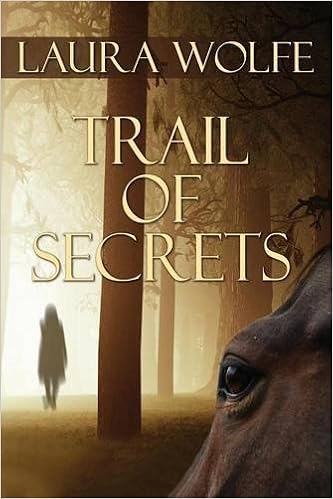
Laura Wolfe is thrilled that her YA mystery, Trail of Secrets (Fire and Ice YA, 2015), was recently named as a Finalist in the 2016 Next Generation Indie Book Awards in the First Novel (under 80,000 words) category. Also, Laura’s long-awaited picture book, Henrietta's Hoof Polish, (illustrated by Eugene Ruble) was also recently released by Guardian Angel Publishing. Congratulations Laura!


A standing ovation goes to Monica Harris for selling 3 pieces to the Data RecognitionCorp-Nebraska and 3 additional pieces to DRC-Wisconsin. That’s awesome Monica!


Three cheers for Rebecca Grabill who recently earned a Sustainable Arts Foundation Promise Award for her middle grade novel in verse, ONE SUMMER. The Sustainable Arts Foundation awards grants to parents of children 18 and under who are pursuing creative work. Congratulations Rebecca!

To learn more about the Sustainable Arts Foundation, visit http://www.sustainableartsfoundation.org/


Lori McElrath-Eslick is the proud recipient of the SCBWI Magazine Merit Award forher illustration that accompanied the poem, “A Strip of Blue,” by Lucy Larcom. The story and illustration appeared in Cricket Magazine. Way to go Lori!  


Our fearless Mitten editor, Kristin Lenz, has something to celebrate! Kristin’s forthcoming YA novel, The Art of Holding On and Letting Go, was chosen as a Junior Library Guild Fall 2016 Selection. So proud of you Kristin!


We’re giving a big round of applause to Alison DeCamp since her first middle grade
book, set in the UP in 1895, MY NEAR-DEATH ADVENTURES (99% True) was named as a Michigan Notable book for this year and was on the shortlist for the New-York Historical Society Children’s History Book Prize. The second book in the series, MY NEAR-DEATH ADVENTURES: I Almost Died. Again. releases on July 5th. Alison will be having a release party in the Harbor Springs area on that date at Between the Covers bookstore. All are welcome, but space is limited. Contact the store at 231-526-6658 to sign up. Way to go Alison!


Hats off to MattFaulkner! Matt illustrated the picture book, ELIZABETH STARTED ALL THE TROUBLE by Doreen Rappaport, which is now is a nominee on the ALA Summer Notable books list. So happy for you Matt!


Lindsey Moore of Ann Arbor recently signed with agent Jill Corcoran at the Jill Corcoran Literary Agency as a picture book writer and illustrator. That’s amazing Lindsey! 


Erin M. Brown recently had two nonfiction texts come out. Simplified Writing 101: Top Secrets for College Success, and
EB Conroy's Simplified Vocabulary Guide are used in high school writing courses, AP English Language and Composition courses, and college freshman composition courses. Way to go Erin!


Deborah Marcero has lots to celebrate! Her debut picture book, Ursa’s Light released April 15, 2016 with Peter Pauper Press and received a starred review from ALA Booklist. Deborah’s second book in the Backyard Witch series, Jess’s Story, will release with Greenwillow, Harper Collins on July 12, 2016. Deborah is the illustrator and the series is co-written by Christine Hepperman and Ron Koertge. And last but not least, Deborah sold the picture book, ROSIE AND CRAYON to Mara Conlon at Peter Pauper Press. The deal was announced on May 5th, 2016; the book is set to release in Spring 2017. You make us proud Deborah!


Shhh! Lisa Rose has sold two stories, WORM VS. EARLY BIRD, and THE VENUS FLYTRAP AND THE BEE to Amazon. Shhh! Lisa is involved in a super secret app which will launch later this summer. Shhh! More details coming soon.


KirbiFagan is currently working on a unique project with the writer of Fight Club & Dark Horse that has just been announced! "Bait" is a collection of short stories by Chuck Palah​niuk, which is illustrated with colorable illustrations. Kirbi and 8 other illustrators are included. ​


Kirbi also just signed with Plum Pudding Illustration Agency for UK exclusive representation, and her work was chosen to be​ featured at the Society ofIllustrators in NYC this month. The show is called "Point of Vision-Celebrating Women Artists in Fantasy and Science Fiction," ​was curated by some of the top art directors currently working in science fiction/fantasy and will be there until August. Such fabulous news Kirbi!


And one more bit of good news from me (Patti Richards:)! I recently signed a contract with Red Line Editorial for a book in their upcoming series on technology for kids. My title is, ALL ABOUT SOCIAL NETWORKING, and the series is scheduled for a spring 2017 release. You many now commence happy dancing with me!

Well, that’s all for this issue, and isn’t that quite a list? We have so much to be proud of here in our great big Mitten. Congratulations everyone!  


Send all of your happy publishing news to Patti Richards at pgwrites5@gmail.com. ​