Showing posts with label Christian publishing. Show all posts

Friday, October 1, 2021

A Quick-and-Easy Introduction to Christian Publishing by Rebecca Grabill

 
Early in my writing career, I decided I wanted nothing to do with Christian publishing. 

I spent years laboring over a fantasy series, placed with the first two books in the series in a notable writing contest for Christian authors, and made a handful of connections in the publishing industry, but fantasy was a tough sell to Christian publishers, and the one published fantasy author I knew said it had taken her 27 (twenty seven!) years to place her first book. I was young, impatient, and most of the Christian books I had read were gifts from my mother-in-law, who really, really liked pioneer romance. So let’s just say I had a very limited and largely incorrect view of the Christian publishing world. If they didn’t want fantasy, I didn’t want them.

Fast forward more than a decade—it seemed I was on track. I had two books coming out with New York publishers, and more circulating with regular bites of interest. But in my spare moments, I had been putting together a book of readings for Advent because I couldn’t find what I wanted on the shelves. I have an undergrad in Religion and Philosophy and am married to a theologian, so this was natural and easy. It wasn’t a project I ever thought I’d try to publish, until I mentioned it to my agent.
 
She looked at a summary and said, “I didn’t know any of this!” And she set about trying to find a publisher in the Christian Book Universe.

We quickly realized that the Christian book world is very, very different from the ABA (American Booksellers Association). It’s so different, in fact, that my agent released my Christian works to another agent, who works almost exclusively with religious presses. I then began my crash course on writing for the Christian market. What are the key things to know for those hoping to break in? And why would you want to?

Published by Eerdman’s Books for Young Readers


Where are Christian books, anyway?

Those who don’t frequent Christian bookstores might think religious books are a tiny fraction of all books sold. The “inspirational” section of the local bookstore is minuscule and usually populated with self-help or gift book titles (and Eat Pray Love wall signs, amiright?), and when it comes to children’s books, you’ll struggle to find any contemporary Christian titles in stores or at the public library. But roughly 20 percent of all books sold are religious, and that number does not include the bestselling book of all time, the Bible.


How do I get started writing for the Christian market?

I have three words for you, three words that are already familiar to most writers: Network, Platform, Proposals.

Network

Network is every bit as essential in Christian publishing as it is in the ABA. I’ve found both my agents via my author-learner-friend network and not through blind submissions. Likewise all of my books have been hand-sold to publishers by my agent. What are the key ways to build network in the Christian market?
  • Search out Christian bookstores, visit, and ask if they have author groups or events.
  • Attend online and in-person writing conferences.
  • If you do social media (I don’t, but that’s a topic for another day), follow houses and professionals online and interact with them in meaningful ways.
  • Write fan letters to authors you admire, though without the expectation that they will become a new BFF or refer you to their agent (because that’s creepy).
  • Find or create a writer’s group that focuses on Christian literature.
  • Make and maintain friendships.

There’s a little-known expectation in the Christian market that other authors are now doing some of the preliminary vetting. Agent guidelines often ask that submitting authors have a referral. A referral is a published author, one of that agent’s clients, who is willing to say, “Yes, I know this writer and they’re worth looking at.” 

Your network matters. A lot.

Platform

In the Christian world, platform rules. Sure, it’s helpful in ABA publishing (otherwise would we have picture books by Madonna? Hmm), but in religious publishing, you truly need a stellar website, active subscriber base, teaching or speaking platform, or some other method of being known by your niche market. You don’t have that? Not all is lost. Use what you do have, and use it well. Here are some platform enhancers for all of us:
  • Is your career or day job specific to your writing? Highlight it.
  • Are you a teacher, librarian or other book professional? Use it!
  • Do you have a quality website? No? ALL you need is a landing page—no need for an elaborate site, and they’re easy to make through site builders like Squarespace and Wix.
  • Do you have any numbers at all? Your Christmas card list goes back 50 years and has 2,000 names on it, all of whom are blood relatives? That, my friend, is platform.


Proposals

If you write nonfiction, you know this beast and you know it well. If you write fiction for the ABA you’ve probably never so much as considered writing a proposal. 

Start considering. 

Proposals are the golden nugget of the Christian publishing universe, and I’m talking proposals for everything. Book of Lenten devotional readings? Proposal. Historical novel? Proposal. 3-word board book? Yup, proposal. 

You may be thinking it’s absolute insanity to create a proposal for a board book, but I can guarantee a good, well written proposal is the industry expectation. So if you’re interested in writing for the Christian book market, learn to write, and learn to love writing proposals. I could write at length about the benefits of proposals that go far beyond book submissions, but here ends your introduction.

That fantasy series I mentioned at the start is still languishing on my hard drive, but rewriting it (and creating a proposal) are high on my writerly to-do list.


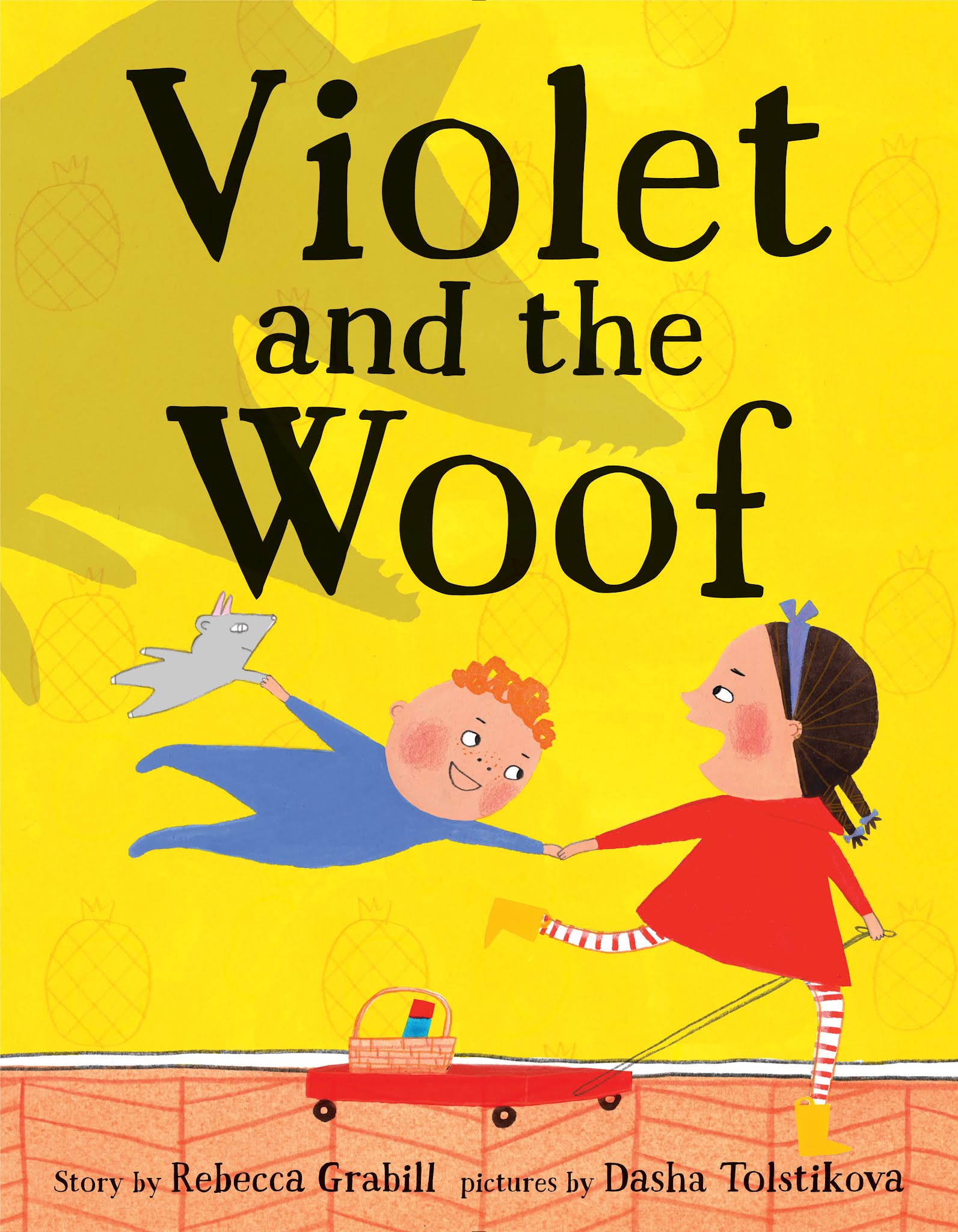
Rebecca Grabill is an award-winning author of a collection of poetry (Sweetened Condensed, Flying Ketchup Press) and two picture books published by ABA houses (Halloween Good Night, Atheneum; Violet and the Woof, HarperCollins) and one picture book, A Year with Mama Earth, with Eerdman’s Books for Young Readers. She balances writing with homeschooling some of her six children and lives in rural Michigan with kids, husband, sixteen chickens, and high-maintenance cat. Discover more about her at her website www.rebeccagrabill.com.


Here's a peek at more of Rebecca's books:


https://bookshop.org/books/halloween-good-night-9781481450614/9781481450614


https://bookshop.org/books/violet-and-the-woof/9780062441102


https://www.flyingketchuppress.com/sweetened-condensed-rebecca-grabill


BONUS! 

To celebrate her most recent release, Rebecca created a printable poetry journal and printable bookplates as a gift to readers. You can download them for free here: https://mailchi.mp/8539bd427a5a/mtamg8r3hz


Coming up on The Mitten Blog:


Website tips, writing craft tips, Equity & Inclusion Corner, Book Birthdays, and more!

The Mitten Blog is looking for a new editor! Learn more here, and email current editor Kristin Lenz with any questions.


Coming up in SCBWI-MI:


This is an hour dedicated to sharing your ideas and hanging out with our new E&I Team Coordinator. We welcome your thoughts for continued growth as we work together to celebrate and create quality content for young readers.  

Bring your questions, comments, and your favorite candy. We may have a few tricks up our sleeves and some treats too!

SCBWI-MI members: Check your email for more info and the Zoom link.


Friday, July 2, 2021

Ask the Editor by Katherine Gibson Easter

 
Welcome to our quarterly Ask the Editor feature! Katherine Gibson Easter is an editor at Zonderkidz and was previously at Eerdmans Books for Young Readers. She's collecting questions from SCBWI-MI members and sharing her answers with our community. Did you miss her previous Q&As? See the link at the end of this post.

Here's Katherine:

Hi there! Thanks so much to everyone who sent me their questions! I’ve answered them to the best of my abilities, and I hope you find this post helpful and informative.

As with my previous Ask the Editor posts, I humbly ask that you take my comments in the spirit in which they’re intended. The advice here is meant to be friendly and helpful; I sincerely hope that no one finishes reading this post feeling vulnerable or discouraged.

Also, a general disclaimer that my thoughts are my own; I do not speak on behalf of my publisher or the publishing industry in general. I would not be at all surprised to learn that you’ve heard an editor or agent say something that directly conflicts with my perspective. Everyone in publishing has their own views and preferences, and I can only be honest about my own.

If you have any questions about writing, editing, or publishing that aren’t addressed here, please reach out to me. I’m always happy to gather questions for my next post!

Thank you, and happy reading!


I recently paid for a critique, which was very helpful in revising the manuscript. However, in the comments, the author expressed the opinion that fiction is very hard to sell right now. She implied that agents/editors are not seeking fiction stories like they did in the past. Do you think that’s true?
 
Interesting! The author may have been referring to the fact that there’s been increased market demand for juvenile and YA nonfiction since the start of the pandemic, so many agents and publishers have been paying special attention to acquiring new nonfiction content. But of course, children’s fiction still outsells nonfiction, and in fact it’s growing now that the nonfiction market is starting to cool off a bit. So I wouldn’t worry about children’s fiction going away anytime soon.
 
Or maybe the author meant that there’s a glut of fiction manuscripts circling around right now. Agents would feel this more than editors, so I’m making a bit of an educated guess here, but with so many people staying indoors last year with newfound time on their hands, many of them probably spent their time writing manuscripts and are now trying to sell them. It wouldn’t surprise me at all if agents were being inundated with queries right now.
 
All that being said, I think the writing world is always going to be competitive. You can try to time your submissions based on trends or circumstances, but I personally feel that what matters most is simply having a good manuscript that hits a felt need. If you have a polished manuscript that you really believe in, I’d say send it out. Life is short, and even if this author is correct and everyone you query tells you no, you’re no worse off trying than you’d be if you’d left the manuscript in a drawer. 

 
I'm having a hard time finding agents to query who are Christians. Do you have any suggestions or website resources?
 
I’d definitely recommend checking out The Christian Writers Market Guide. They come out with a new edition every year, and it’s a great list of agents, publishers, periodicals, etc. that specialize in the Christian market. 
 
Another good thing to do is to look at the Christian books you’ve read and loved and find out who the publisher and agent were. (You can usually find the agency listed in either the copyright page or the acknowledgments page.) Then look into that agency and publisher and see what else they acquire to see if you’re a good match.
 
Really though, I think there are lots of agents out there who don’t specialize in the Christian space who would still be willing to take on a religious manuscript if they felt that it was the right project. Try looking for books that address the same themes as your manuscript, then see if the agents who represented them would be willing to consider your project as well.


How do American publishers decide which foreign titles are worth translating into English?

Often if it’s a bigger publishing company that has imprints in multiple countries, the American publisher will simply look at their foreign imprints’ best performing titles and translate those books into English for the American market. For smaller publishers (ones that don’t have affiliated foreign imprints) looking to license the English rights to a book, subject matter is key. Since the original author and/or illustrator probably won’t be available for many marketing and publicity efforts (since they likely don’t speak English/won’t be in-country), publishers have to make sure that the book gets attention another way, usually by tapping into a strong felt need in the market. 

For picture books, the illustration style matters a lot too. Foreign picture books tend to be more avant-garde with their artwork than American picture books, which could be off-putting to readers who are used to seeing books crafted especially for the American market. Sometimes unusual or striking illustrations help the book to pop on the shelf, but generally, the more the artwork falls in line with what readers expect to see, the more likely it is that people will pick up the book.


I just finished writing my first picture book and I want to secure an agent. Do you have a list of reputable agents who specialize in children’s books?
 
Great question! There are lots of great resources out there for finding agents, but I’ll list some of my favorites here. First up is (of course) SCBWI’s The Book. Not only do they have a great directory for publishers and agents, but they also include tips on how to put together a query, how to publicize your book, and so much more. 
 
I also love the Children’s Writer’s and Illustrator’s Market. It’s got lists for agents, publishers, magazines, fellowships, etc., and there are multiple indices in the back to help you find what you’re looking for. 
 
And since you’re specifically looking for an agent, I’d recommend spending some time looking through Manuscript Wish List and QueryTracker. Those are great tools to help you find out what specific genres/subjects agents are looking for, whether or not they’re currently accepting queries, and how to pitch them. Lots of luck to you!


Katherine Gibson Easter is an editor for Zonderkidz, having previously worked for Eerdmans Books for Young Readers. She graduated from the University of Denver Publishing Institute in 2013 and has spent the last eight years editing and publishing award-winning children’s books, including Sibert Medal and Caldecott Honor book The Right Word: Roget and His Thesaurus and Plume, which was a New York Times Best Illustrated Children’s Book.

Thank you, Katherine!

To submit a publishing question, email Mitten blog editor Kristin Lenz with "Ask the Editor" in the subject line, and she'll forward your question to Katherine. Or, stay tuned on the SCBWI-MI MichKids listserv – Katherine will ask for questions a few weeks before her next post.


If you missed any of Katherine's previous Ask the Editor posts, go HERE to browse through all the questions and answers.


Coming up on The Mitten Blog:

Another thoughtful post from our Equity and Inclusion Team, and then VACATION! We're entering our summer slowdown season when the SCBWI-MI Blog Team will be enjoying time off with our families and friends. Keep sending us your queries and Book Birthday requests—we'll still have occasional posts throughout the summer, but not every week. We'll continue to alert you to new posts via the listserv and social media.