
Society of Children's Book Writers and Illustrators, Michigan Chapter Blog
Showing posts with label Back to School: MFA Week. Show all posts
Showing posts with label Back to School: MFA Week. Show all posts
Thursday, September 1, 2016
Back to School: MFA Week, Day Seven. That's a wrap!
Welcome to Day Seven of our special Back to School: MFA Week! Six SCBWI-MI members (representing three different MFA programs) answer a question a day for seven days. It's everything you ever wanted to know about getting your MFA.
Just joining us? Go here to read the first post in our MFA series. Day Two. Day Three. Day Four. Day Five. Day Six.
Team MFA: Jennifer (Jay) Whistler, Diane Telgen, Anita Pazner, Erin Brown Conroy, Rebecca Grabill, and Katie Van Ark.
The final question: Would you do it again?
Erin: Absolutely. No question. The learning was phenomenal. My writing leaped miles ahead of where it was before. And now I have an incredible support system of other WSCU graduates who I can call on, night or day, who are also professionals in the field. Invaluable.
Jay: I am considering doing a post-grad semester with VCFA. They allow you to choose a focus area that you want to work on, and you also get to choose your advisor.
Diane: When I graduate, they’ll probably have to drag me onto the plane out of Vermont, that’s how much I’ve loved my time there. It’s the best investment in myself I’ve ever made.
Rebecca: Honestly, I sometimes wish I could have a do-over. I’d love to go through the program again, now that I know what it’s like and what to expect. I sort of hate that it’s a once-in-a-lifetime experience. Hamline also offers post-grad semesters, so maybe…. But I love how Diane says, “It’s the best investment in myself I’ve ever made.” So 100% true.
Katie: The skills I gained and the connections I made were worth every penny of tuition. I would do it again - and in a way, I still am. VCFA allows graduates to continue accessing their lecture database and recently updated their library system to also make student theses available. I plan my own personal "residencies" where I listen to lectures from the database at home and I also exchange feedback with other members of my graduating class.
Anita: Do it again? You mean I have to graduate and leave? I was hoping to go back every six months for the rest of my life. I have become so vested in the work and camaraderie that I have a tough time thinking about graduating and leaving it all behind. So to answer your question- yes. I would absolutely do it again.
And that's a wrap! Thanks to Team MFA for answering all of our questions for seven straight days! And now, the Mitten blog team is officially on vacation! We'll be back on Friday, September 9th with an indie bookstore interview.
Enjoy the holiday weekend!
Kristin Lenz

Wednesday, August 31, 2016
Back to School: MFA Week, Day Six
Welcome to Day Six of our special Back to School: MFA Week! Six SCBWI-MI members (representing three different MFA programs) answer a question a day for seven days. It's everything you ever wanted to know about getting your MFA.
Just joining us? Go here to read the first post in our MFA series. Day Two. Day Three. Day Four. Day Five.
Team MFA: Jennifer (Jay) Whistler, Diane Telgen, Anita Pazner, Erin Brown Conroy, Rebecca Grabill, and Katie Van Ark.
What is the most important thing you learned?
Jay: I learned that if you call yourself a writer, then you have to write everyday. But you also have to read. A ton. Everything you can get your hands on. Ask yourself why something works. Is it because the author uses the three-act structure perfectly? Does the picture book master the art of the page turn? Learn from what these authors do well. But also ask yourself why something doesn’t work. Has the writer failed to make the stakes high enough, or the concrete desires obvious enough? Real writers don’t just read it and forget it. They deconstruct and use what they learn to reverse engineer their own stories.
Erin: I agree with Jay. I never read as I do now (and I considered myself to be a reader, before the MFA). I’m constantly evaluating others’ works, listening to books on audio to hear the rhythms and tones that make an author successful, and analyzing how a character is introduced, to glean more skills. The MFA gave so many “whys” that I can now see in others’ works, and it all informs my work. Also, I have to say, I learned the value of outlining the beats of your work before writing -- which not only saves time but also makes sure you’re including the emotional moments that readers crave. Having a frame to write within only strengthened my scenes, the conflict within each scene, and the pacing of the work.
Rebecca: I totally agree with Jay and Erin. Read, read, read some more. I also learned the vastness of what I *don’t* know, which in one way is humbling, in another invigorating. I’ll never stop being curious. There will always, and I mean ALWAYS be new things to discover.
Diane: Learning to read books with a critical eye is crucial, I agree, but more important for me was to really develop that eye when looking at my own work. It can be so difficult to spread the guts of your story all over the table and assess what it needs without feeling inadequate. Now I have tools to consider things like voice, stakes, structure, language, metaphor, point of view, etc., and diagnose not only what needs improvement but how to fix it. So perhaps the most important lesson I’ve learned is that revision isn’t a sign of failure, but an opportunity to make your story the best it can be.
Anita: I learned all the things that my esteemed colleagues mentioned, but I also learned a great deal about myself. I learned that I can do this. That I am a writer and a pretty good one, at that. But most of all, I learned that even when things are ridiculously hard and I want to give up, I can keep going one word at a time. And then, I can go back and revise and edit until my words are no longer a pile of gibberish, but a group of well thought out sentences that shine and stir emotion.
Writing a book is not a sprint, but a marathon that needs the kind of stamina that only a program like VCFA could help me develop. In essence, it gave me permission to write badly and just get words on the page. That was the toughest part for me. I had to metaphorically bind and gag my inner editor and toss him in the closet and keep him there until a first draft was complete. Come to think of it, I better go check on him. He’s been there far too long.
Go Team MFA! Only one day left in our series. Please join us tomorrow for the grand finale, Back to School: MFA Week, Day Seven. The big question: "Would you do it again?"
Just joining us? Go here to read the first post in our MFA series. Day Two. Day Three. Day Four. Day Five.
Team MFA: Jennifer (Jay) Whistler, Diane Telgen, Anita Pazner, Erin Brown Conroy, Rebecca Grabill, and Katie Van Ark.
What is the most important thing you learned?
Jay: I learned that if you call yourself a writer, then you have to write everyday. But you also have to read. A ton. Everything you can get your hands on. Ask yourself why something works. Is it because the author uses the three-act structure perfectly? Does the picture book master the art of the page turn? Learn from what these authors do well. But also ask yourself why something doesn’t work. Has the writer failed to make the stakes high enough, or the concrete desires obvious enough? Real writers don’t just read it and forget it. They deconstruct and use what they learn to reverse engineer their own stories.
Erin: I agree with Jay. I never read as I do now (and I considered myself to be a reader, before the MFA). I’m constantly evaluating others’ works, listening to books on audio to hear the rhythms and tones that make an author successful, and analyzing how a character is introduced, to glean more skills. The MFA gave so many “whys” that I can now see in others’ works, and it all informs my work. Also, I have to say, I learned the value of outlining the beats of your work before writing -- which not only saves time but also makes sure you’re including the emotional moments that readers crave. Having a frame to write within only strengthened my scenes, the conflict within each scene, and the pacing of the work.

Rebecca: I totally agree with Jay and Erin. Read, read, read some more. I also learned the vastness of what I *don’t* know, which in one way is humbling, in another invigorating. I’ll never stop being curious. There will always, and I mean ALWAYS be new things to discover.
Diane: Learning to read books with a critical eye is crucial, I agree, but more important for me was to really develop that eye when looking at my own work. It can be so difficult to spread the guts of your story all over the table and assess what it needs without feeling inadequate. Now I have tools to consider things like voice, stakes, structure, language, metaphor, point of view, etc., and diagnose not only what needs improvement but how to fix it. So perhaps the most important lesson I’ve learned is that revision isn’t a sign of failure, but an opportunity to make your story the best it can be.
Anita: I learned all the things that my esteemed colleagues mentioned, but I also learned a great deal about myself. I learned that I can do this. That I am a writer and a pretty good one, at that. But most of all, I learned that even when things are ridiculously hard and I want to give up, I can keep going one word at a time. And then, I can go back and revise and edit until my words are no longer a pile of gibberish, but a group of well thought out sentences that shine and stir emotion.
Writing a book is not a sprint, but a marathon that needs the kind of stamina that only a program like VCFA could help me develop. In essence, it gave me permission to write badly and just get words on the page. That was the toughest part for me. I had to metaphorically bind and gag my inner editor and toss him in the closet and keep him there until a first draft was complete. Come to think of it, I better go check on him. He’s been there far too long.
Go Team MFA! Only one day left in our series. Please join us tomorrow for the grand finale, Back to School: MFA Week, Day Seven. The big question: "Would you do it again?"
Tuesday, August 30, 2016
Back to School: MFA Week, Day Five
Welcome to Day Five of our special Back to School: MFA Week! Six SCBWI-MI members (representing three different MFA programs) answer a question a day for seven days. It's everything you ever wanted to know about getting your MFA.
Just joining us? Go here to read the first post in our MFA series. Day Two. Day Three. Day Four.
Team MFA: Jennifer (Jay) Whistler, Diane Telgen, Anita Pazner, Erin Brown Conroy, Rebecca Grabill, and Katie Van Ark.
Just joining us? Go here to read the first post in our MFA series. Day Two. Day Three. Day Four.
Team MFA: Jennifer (Jay) Whistler, Diane Telgen, Anita Pazner, Erin Brown Conroy, Rebecca Grabill, and Katie Van Ark.
Do you think having those three little letters--MFA--after your name will really make a difference in your career?

Diane: VCFA has a great reputation, so it can help you stand out from the slush, but more important are the skills I’ve acquired during the program. With what I’ve learned, I can polish my manuscripts to present my best possible story. As a bonus, the alumni and faculty are so supportive of fellow graduates that it will be extremely helpful in terms of social media, once I reach publication stage. Plus this MFA is considered a terminal degree, so it gives me teaching qualifications should I decide to try that route. As I tell my friends who wonder why I bothered going back to school, as a way of confronting a mid-life crisis, an MFA is much more useful than buying a Corvette!

Anita: I’m not quite finished with the program, so I can’t speak to the difference the letters will make for my publishing career. What I can address is the difference the program has made for my writing. For me, it’s not about the letters, but about the knowledge that I’ve gained. I also feel more confident regarding my manuscripts, and the connections I’ve made with other authors is invaluable. I have no doubt that I will find the perfect agent once I’ve completed this program. One thing I have noticed is that agents take those three little letters seriously. An MFA graduate has put in the time and effort to be a serious writer. Not that you can’t be serious without them. I’m not saying that or in anyway diminishing the hard work of writers who have not gotten an MFA degree. I know exceptional writers that enjoy success without an MFA. But I needed to be in this program to move forward and to have the excuse to scream at the top of my lungs, “I can’t do your laundry or be at everyone’s beck and call. I have a deadline, for goodness sake!”
I also agree with Diane. The degree is so much more practical as a mid-life crisis purchase than a corvette, a motorcycle or even a hot new pool man. I would say pool boy, but that would be icky, at my age. And affairs are too destructive and plastic surgery could go horribly wrong. That left me with only one option, a masters degree.
Thanks, Team MFA! I love how we are not only receiving honest, useful information, but we're also getting a feel for your voice, personality, and sense of humor through these short answers.
Only two days left! Join us tomorrow for MFA Week, Day Six. Team MFA will answer the question, "What is the most important thing you learned?"
Thanks, Team MFA! I love how we are not only receiving honest, useful information, but we're also getting a feel for your voice, personality, and sense of humor through these short answers.
Only two days left! Join us tomorrow for MFA Week, Day Six. Team MFA will answer the question, "What is the most important thing you learned?"
Monday, August 29, 2016
Back to School: MFA Week, Day Four
Welcome to Day Four of our special Back to School: MFA Week! Six SCBWI-MI members (representing three different MFA programs) answer a question (or two) a day for six straight days. It's everything you ever wanted to know about getting your MFA.
Just joining us? Go here to read the first post in our MFA series. Day Two. Day Three.
Team MFA: Jennifer (Jay) Whistler, Diane Telgen, Anita Pazner, Erin Brown Conroy, Rebecca Grabill, and Katie Van Ark.
How did you research MFA programs to find the best fit for you?
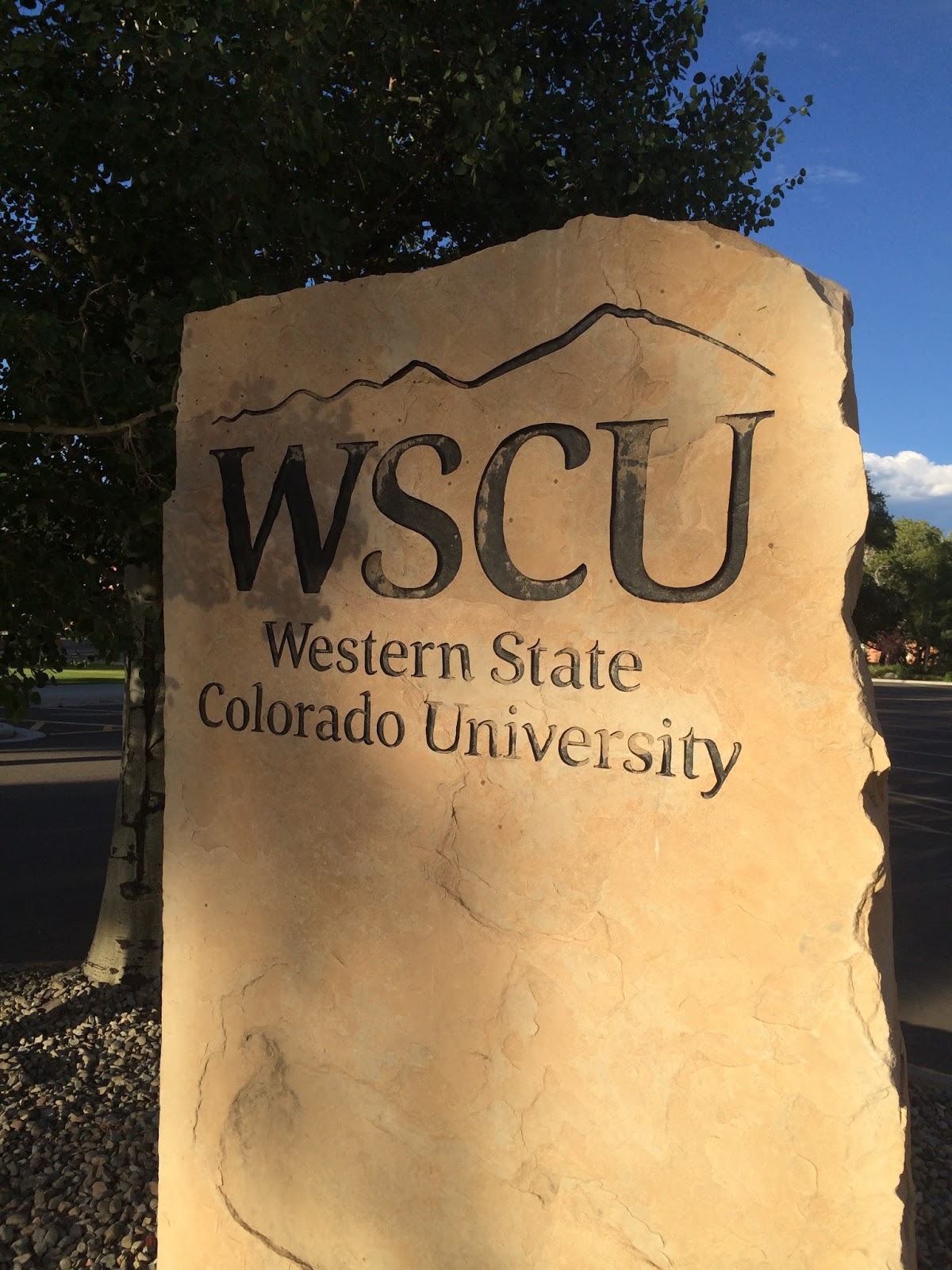
Erin: Before Googling the basics, I set out my criteria. I wanted a small program (didn’t want to be a number); instructors who were still currently releasing books/continuing to be published; and a once-a-year residency, instead of two (because of logistics with kids). That made the list smaller. Then I called the places, to talk with the directors and at least one instructor. If one or neither had the time of day for me (and quite a few didn’t), they were immediately scratched off the list. Then I applied to the four remaining on the list. I was accepted into two and chose the one with the teachers from which I believed I could gain the most - Western State Colorado University.
Jay: I live in a community with a well-respected state school that does have an MFA program, and one of the faculty is actually a National Book Award winner. But the children’s writing program did not have any children’s writers on the faculty. So that was a no right from the start. I knew I couldn’t go away to school, so I started with the entire list of low-residency MFA programs for children’s writing in the country and narrowed down based on factors such as when/where the residencies were, faculty, and national rankings. Once I had a list of four, I investigated the program details itself. One program was very academic, which I liked, but the generative portion of creative seemed to be lacking as a result. I felt like I would basically be getting a lit degree, not a writing degree. Once I had it narrowed to two campuses, I made plans to visit them both, but cancelled the second tour after I visited VCFA. After five minutes on campus, I knew this was the right fit.
Rebecca: I googled like crazy, ordered brochures from everywhere, and actually applied to and got accepted to both Hamline and Vermont, and I spent time on the phone with alumni and faculty of both. While I LOVE Vermont’s program and love that it was the First of its kind, I felt Hamline had a more commercial vs. literary focus, which was what I wanted. Plus some of the faculty at Hamline, well, I was crushing out on a bunch of them (their books!), so the decision was (fairly) easy.
Anita: I also Googled programs and even looked at the University of Michigan’s combined masters and PHD program, but it was not specifically geared toward writing for a young audience. When I discovered the Vermont program was a terminal degree in writing for children and young adults, I was intrigued. Mainly because Oakland University, near my home, recently created a new undergraduate program focusing on writing for children and young adults. And they need professors. But the biggest reason for me to attend VCFA was the people. Deb Gonzales, a former SCBWI regional advisor and VCFA graduate, held an event in Ann Arbor and brought in a few other graduates, instructors and some students. I was sold.
Please join us tomorrow for MFA Week, Day Five! Team MFA will answer the question, "Do you think having those three little letters--MFA--after your name will really make a difference in your career?"
Just joining us? Go here to read the first post in our MFA series. Day Two. Day Three.
Team MFA: Jennifer (Jay) Whistler, Diane Telgen, Anita Pazner, Erin Brown Conroy, Rebecca Grabill, and Katie Van Ark.
How did you research MFA programs to find the best fit for you?
Erin: Before Googling the basics, I set out my criteria. I wanted a small program (didn’t want to be a number); instructors who were still currently releasing books/continuing to be published; and a once-a-year residency, instead of two (because of logistics with kids). That made the list smaller. Then I called the places, to talk with the directors and at least one instructor. If one or neither had the time of day for me (and quite a few didn’t), they were immediately scratched off the list. Then I applied to the four remaining on the list. I was accepted into two and chose the one with the teachers from which I believed I could gain the most - Western State Colorado University.
Jay: I live in a community with a well-respected state school that does have an MFA program, and one of the faculty is actually a National Book Award winner. But the children’s writing program did not have any children’s writers on the faculty. So that was a no right from the start. I knew I couldn’t go away to school, so I started with the entire list of low-residency MFA programs for children’s writing in the country and narrowed down based on factors such as when/where the residencies were, faculty, and national rankings. Once I had a list of four, I investigated the program details itself. One program was very academic, which I liked, but the generative portion of creative seemed to be lacking as a result. I felt like I would basically be getting a lit degree, not a writing degree. Once I had it narrowed to two campuses, I made plans to visit them both, but cancelled the second tour after I visited VCFA. After five minutes on campus, I knew this was the right fit.
Rebecca: I googled like crazy, ordered brochures from everywhere, and actually applied to and got accepted to both Hamline and Vermont, and I spent time on the phone with alumni and faculty of both. While I LOVE Vermont’s program and love that it was the First of its kind, I felt Hamline had a more commercial vs. literary focus, which was what I wanted. Plus some of the faculty at Hamline, well, I was crushing out on a bunch of them (their books!), so the decision was (fairly) easy.
Anita: I also Googled programs and even looked at the University of Michigan’s combined masters and PHD program, but it was not specifically geared toward writing for a young audience. When I discovered the Vermont program was a terminal degree in writing for children and young adults, I was intrigued. Mainly because Oakland University, near my home, recently created a new undergraduate program focusing on writing for children and young adults. And they need professors. But the biggest reason for me to attend VCFA was the people. Deb Gonzales, a former SCBWI regional advisor and VCFA graduate, held an event in Ann Arbor and brought in a few other graduates, instructors and some students. I was sold.
What’s available after you graduate?
Diane: I’m really looking forward to the Alumni Mini-Residencies that VCFA hosts each year for program graduates. It’s a long weekend with faculty workshops, readings, and a masterclass with a visiting writer, but they also host agents and editors and you have an opportunity for one-on-one consultations with these industry professionals.
Rebecca: Hamline has a vibrant alumni network. We have grads in every area of publishing: illustrators, authors, agents, editors. We have a FB group that is a tremendous resource. Whether I want to know, “Hey, what MG novels involve boys and dogs?” or “Has anyone worked with DogBoy Press?” I’ll have an answer in minutes (or at worst, hours). Plus every residency holds an alumni weekend at the start with workshops and lectures involving publishing professionals Just for grads. Since I had babies #4 and #5 after graduating, I’ve yet to make it for an alumni weekend. But I want to!
Please join us tomorrow for MFA Week, Day Five! Team MFA will answer the question, "Do you think having those three little letters--MFA--after your name will really make a difference in your career?"
Saturday, August 27, 2016
Back to School: MFA Week, Day Two
Welcome to Day Two of our special Back to School: MFA Week! Six SCBWI-MI members (representing three different MFA programs) answer a question a day for the next six days. It's everything you ever wanted to know about getting your MFA.
Just joining us? Go here to read the first post in our MFA series.
Team MFA: Jennifer (Jay) Whistler, Diane Telgen, Anita Pazner, Erin Brown Conroy, Rebecca Grabill, and Katie Van Ark.
Just joining us? Go here to read the first post in our MFA series.
Team MFA: Jennifer (Jay) Whistler, Diane Telgen, Anita Pazner, Erin Brown Conroy, Rebecca Grabill, and Katie Van Ark.
Why did you decide to pursue an MFA?
 |
| Vermont College of Fine Arts |
Anita: Much like Diane, I wanted more in the way of workshops than could be found at SCBWI conferences. I attended a Highlight’s summer workshop and then did an online class with agent Wendy Goldman Rohm of the Rohm Agency located in New York and Paris. That’s when I realized I craved an academic setting to work on my novels. I highly recommend searching out writing classes locally or specific online courses to further your knowledge. The biggest reason I felt I needed an MFA program was that I was painfully unaware of gaps in my knowledge. In essence, I didn’t know what I didn’t know.
1. The college where I was working (teaching online writing classes) wanted me to have more credentials for their impending regional certification process.
2. I knew I wanted to transition from nonfiction to fiction writing, and I wanted to learn fast. An MFA appeared to be the way to steep myself into the skills, to jump ahead -- and I can’t tell you how much it did. Story is so incredibly powerful, reaching hearts and souls in a way that nothing else can. You can say the power of story wooed me. I still write nonfiction, but a piece of my soul is now complete with fiction writing.
 |
| Hamline University, Minnesota |
Thanks, Team MFA! Come back tomorrow for MFA Week, Day Three. Our team will answer the question, "What's it like to spend a semester in your program?"
Friday, August 26, 2016
Back to School: MFA Week, Day One. 7 Reasons You Might Want an MFA by Rebecca Grabill
Introducing our special Back to School feature: MFA week! Six SCBWI-MI members, three MFA programs, seven days of posts, all of your questions answered, everything you ever wanted to know about getting your MFA.

Here's Rebecca Grabill to kick off our special event:
I hid brochures for MFA programs in my bottom desk drawer. Every few months I’d take them out, page through, dream a little… Until finally in 2009 I enrolled in Hamline University’s MFA in Writing for Children and Young Adults. The program took two years of concentrated study at home, and for 60 days, spread over five residencies, I lived in the Twin Cities, away from children and family. It was a significant investment in time, energy, never-over-abundant funds, but now, five years after graduation, I can say without question, the MFA was worth every dollar, every hour in the MSP airport, every frantic trip to the library to pay my fines so I could pick up yet more holds. Hamline’s MFA gave me far more than I spent (or bled) to earn it. Like…
1. An MFA filled my toolbox with New Writing Tools and showed me how to better use the tools I already had.

Was I pounding in nails with a screwdriver? What could I do with a jigsaw? I learned about psychic distance and filters, I re-learned plot and characterization and so much more. Could I have broken through my plateau on my own? I’m not sure. Maybe, with enough time and enough reading. And if an MFA only provided tools, then I might question the value. But the MFA gave me more than a single workshop or another book on writing. It gave me more than tools.
Pre MFA my reading was all over the place. I’d go to the library, check out books based on recommendations or labels on the spine: Oh, Mystery! I want to write a mystery, too! As if I were looking through the lens of my DSLR set to manual with the focus ring turned the wrong way, all the world’s books looked the same. I never knew what new books were worth reading, or what old books were true classics I couldn’t live without.
2. An MFA provided Focus.
Before my first residency I began on Hamline’s Required Reading List—120 curated books spanning all genres and age groups which provided us a grounding in the literature we were learning to write and a common vocabulary. Plus each residency added several must-read books for different topics we'd study that semester. Even now I can post to my alumni group, “What’s a good middle grade novel on bullying?” and get a dozen relevant titles, sometimes in a matter of minutes. Which leads to another perk…
I came into my program set on writing young adult (YA). It’s what I’d always written, what I always read, but,
3. My MFA program helped me Become a More Versatile Writer.
I spent an entire semester working the the amazing Phyllis Root on picture books. Another semester ignited a love for poetry that grew and influenced my graduating thesis—a novel in verse for middle grade readers, and my first two published books will be—not YA—but picture books. Speaking of publication…
I once dreaded writing query letters. I agonized over the hook, wrote and rewrote a bio that sparkled while still being…true. Because while it looks great in a bio, I’m not a celebrity, don’t have a doctorate, and don’t have one single superpower. Unless Able to Scale Mountains of Laundry counts.
4. The MFA gave me a Credential, and with it Credibility.
A degree from a good institution is noticed. It is respected. An MFA qualifies me not just to lead workshops (and get paid for them), but to teach. At the college level. The credential proves I put in time, tears, and money, that I’m committed to being an author. It proves to me, on those days when I’m cleaning up one toddler-tornado disaster after another that I am a writer. A real writer. Because sometimes it's easy to forget...
I’d worked at this writing thing so long and so hard and had so many Close Calls (“I brought this to committee, but unfortunately…” “I love your work, but this book just isn’t quite…”), I truly believed I’d be stuck in the slush pile forever.
5. An MFA Can Open Doors to the Publishing World.
When I began the MFA I had no idea one of my classmates would go on to become an editor with a big house. I had no idea other classmates would find an agent who would happen to be a good friend of my agent. The industry is an interconnected web, and I wouldn’t be surprised to learn that my network of alumni stretches, somehow, to every publishing house on the planet. Alumni, faculty, we all work together, sharing knowledge, names, connections and yes, even stolen carrots.
Speaking of carrots, I once felt isolated on this writing journey. Sure I had a critique group and I had a few writer friends, though out of necessity most overlapped with Mommy Friends or school-pick-up friends. My segmented life had only a small hole carved out for Me as Writer.

Friendships I’ll treasure forever. Each residency became a celebration: These are my people. They understand me, care about the same things, share my passions and dreams. I still remember many late-night conversations with my first-residency roommate—our instant connection that continues to this day. And remember the carrots? Late-night pick-up games of Dixit, glasses of wine at the hotel bar. I forged memories, shared life with people who, five years later, continue to share life and inspire me, goad me to keep at this exhausting art. Because…
When I began the MFA I thought I knew everything. I’d read all the books (hadn't I?), I knew all the rules (didn’t I?). I was a great, or, um pretty good writer (wasn't I?). Beneath the bravado a crippling terror whispered that I was a pretender, a hack.
7. Hamline’s MFA in Writing for Children and Young Adults Gave me Confidence. And Humility.
Learning always builds confidence. But there’s nothing quite like seeing a whole universe of expertise—faculty, visiting writers and publishing professionals—to make me acutely aware of how much I didn’t know. Yet. Because I now have the tools, community, and support to continue learning as long as there are new things to learn.
Which would be, in case you're wondering, forever.

Rebecca Grabill graduated in summer 2011 and has two forthcoming picture books, Halloween Goodnight (S&S 2017) and Violet and the Woof (HC 2018). She lives and writes in Michigan. Find out more about Rebecca and her writing at www.rebeccagrabill.com/blog
Come back tomorrow for day two of MFA Week. Graduates and current MFA students Diane Telgen, Jennifer Whistler, Anita Pazner, Erin Brown Conroy, Rebecca Grabill, and Katie Van Ark will answer your questions. First up: "Why did you decide to pursue an MFA?"
Come back tomorrow for day two of MFA Week. Graduates and current MFA students Diane Telgen, Jennifer Whistler, Anita Pazner, Erin Brown Conroy, Rebecca Grabill, and Katie Van Ark will answer your questions. First up: "Why did you decide to pursue an MFA?"
Subscribe to:
Posts (Atom)