Showing posts with label Suzanne Jacobs Lipshaw. Show all posts

Wednesday, February 25, 2026

Book Birthday Blog with Suzanne Jacobs Lipshaw


Welcome to SCBWI-MI's Book Birthday Blog!

Where we celebrate new books from Michigan's authors, illustrators and translators.


Congratulations to Suzanne Jacobs Lipshaw on the release of Decoding the Moon


How did you come up with the idea for your book?

I knew I wanted to write a story about an avid rock climber who developed a fear of heights after a fall, but I hadn’t figured out the particulars yet. One night, I had a dream about an older brother using secret codes to connect with his autistic younger brother. As a special education teacher this resonated with me. I decided to mix the two ideas, throw in a mother who passes away, a move to the Upper Peninsula (one of my favorite places), the perfect outdoor climbing route, and voila, I had a recipe for success!  

What is something you hope your readers will take away from your book? 

I hope my readers find a takeaway that resonates with them whether it be navigating the loss of a parent or loved one, the many gifts of a child with autism, the complexity of connecting to a sibling with autism, the importance of the mental aspect when conquering fears, and the deep satisfaction that comes from reading a good book. 

What was the most difficult part of writing this book? 

As an author transitioning from nonfiction picture books to a middle grade novel, I had a lot of craft to learn. Through many critiques, it was clear my biggest struggles were including interior thoughts and adding movement to dialogue. I still need to continue to develop these skills so if anyone has any books, webinars, or courses to recommend please comment below! On the flipside, was the realization that I still needed to do a lot of research for a fiction book and this one included two amazing trips to Marquette, Michigan! 


What are your marketing plans for the book and where can we find it? 

The publisher’s marketing team and I have been focused on a media campaign through reviews, bookstagrammers, interviews, videos, etc. Additionally, we are planning a two-week Northern Michigan/Upper Peninsula book tour which I am beyond excited about. Prior to that, I am hosting an interactive book launch party at my workout gym “Grit Obstacle Training” on Friday, March 13. I plan on turning the gym into Marquette by using my artistic teacher talents to transform the rock-climbing wall and other obstacles into the sites and activities featured in my novel.  

In the meantime, you can find the book on the Warren Publishing website as well as Bookshop, Barnes and Noble, and Amazon. Also requests for the book at independent bookstores and libraries are much appreciated!

What's next for you? 

I am taking some time off writing to focus on marketing my two recent launches: Rugged RAX: The Little Satellite that Could and Decoding the Moon. Waiting in the wings is additional research for my next nonfiction picture book, a first draft of my next middle grade novel that needs lots of revisions and honoring a request for a sequel from a group of fifth graders who read Decoding the Moon—best compliment ever!  

More about the book . . . 

And that’s when lightning struck. Could he get Zack to climb?
Doing so could get him closer to the moon to say goodbye to Mom. 
 

Twelve-year-old Levi’s family is fractured when his mom dies unexpectedly. To escape painful memories, his dad moves their family from the Detroit suburbs to a small town in Michigan’s Upper Peninsula. There, Dad dives into work, leaving avid rock climber Levi stuck at home with his spy-code-obsessed brother Zack. When Zack tells Levi it’s like their mom went to the moon and never came back, a baffled Levi promises to take his autistic brother closer to the moon to say goodbye. Over the summer, Levi learns that facing his fears might just be what provides his family with the closure they desperately need. 

Winner of the 2024 Fictionary Book of the Year Award, Decoding the Moon explores how one family navigates loss with love, determination, hope, and just the right amount of grit.  

Published by: Warren Publishing

More about the author . . . 

Suzanne Jacobs Lipshaw is a children’s book author and former teacher passionate about growing young minds, engaging readers, and empowering student leaders. In addition to Decoding the Moon, her writing credentials include the true-story-picture books I Campaigned for Ice Cream: A Boy’s Quest for Ice Cream Trucks, Mighty Mahi, The Super Volcano: The Hidden Hero Below Yellowstone National Park, and Rugged RAX: The Little Satellite that Could. The proud momma of two grown boys, Suzanne lives in Waterford, Michigan with her husband and furry writing companion Ziggy. When she’s not dreaming up new writing projects, you can find her reading, kayaking, hiking, or practicing yoga.
 
To learn more about Suzanne visit her website at
 http://www.suzannejacobslipshaw.com/

https://www.facebook.com/suzanne.lipshaw/ 

@suzannelipshaw.bsky.social  

https://www.instagram.com/suzannejacobslipshaw/ 


Thursday, January 22, 2026

Book Birthday Blog with Suzanne Jacobs Lipshaw


Welcome to SCBWI-MI's Book Birthday Blog!

Where we celebrate new books from Michigan's authors, illustrators and translators.


Congratulations to Suzanne Jacobs Lipshaw on the release of Rugged RAX


How did you come up with the idea for your book? 

My son, Josh, while a junior at the University of Michigan, introduced me to CubeSats, when he joined the Michigan eXploration Laboratory (MXL) in 2013. CubeSats are miniature satellites built from 10xm x 10cm x 10cm cubic units and are extendable to larger sizes. They are much cheaper to build and deploy than larger satellites and provide an immense amount of information about space in a tiny package.
 
During Josh’s two years at MXL his team designed, built and tested three CubeSats. I was enthralled with every step of the process. Once I began my writing journey, I contacted MXL’s director, Professor James Cutler, and through discussion I decided to write a book about MXL’s first CubeSat—Radio Aurora Explorer (RAX). 

What is something you hope your readers will take away from your book? 

a.     Failure is difficult but it is an essential part of the scientific process and life.
b.     You don’t have to be big to do extraordinary things. 

What was the most difficult part of writing this book? 

Making sure the science was accurate was particularly daunting due to the complexity and technical aspects of space, space weather, and spacecraft. I also wanted to assure the illustrations portrayed the science correctly. Rugged RAX’s illustrator, Mesa Schumacher, went beyond the massive amounts of photos, charts, diagrams, etc. I sent her via my publisher, by doing her own research and willingly tweaking even minor details. 

What are your marketing plans for the book and where can we find it? 

I am doing an early marketing push but mostly plan on working on an evergreen campaign since this book has a high appeal for the education market as well as STEM and space-oriented kids. 

What's next for you? 

The launch of Decoding the Moon—my first venture into fiction and my first venture into middle-grade—on February 25, 2026! This one is literally and figuratively a dream come true! 

Here’s the blurb: Avid rock climber Levi Manes thinks his newfound fear of heights is enough to shake up his twelve-year-old life. What he didn’t realize is, three months later, the tragic death of his mother would fracture his entire world. To make matters worse, Levi’s dad, unable to face his grief, moves their family from their home in the Detroit suburbs to a small town in Michigan’s Upper Peninsula. Can the combination of some secret codes, rock climbing, and the Supermoon pull Levi’s family together and bring them the closure they each desperately need? 

More about the book . . . 

Imagine you are part of an engineering team tasked with designing and building a mini but mighty satellite—a CubeSat named RAX. Your CubeSat’s mission? Gather space weather data to help scientists prevent massive blackouts caused by solar storms. But this team failed during its first attempt; will it succeed this time? Rugged RAX is the true story of CubeSat RAX and is packed with a payload of space science and engineering for STEM enthusiasts. 

Published by: Fifth Avenue Press 

More about the author . . . 

Suzanne Jacobs Lipshaw is an award-winning children’s book author and former elementary special education teacher passionate about growing young minds, engaging readers, and empowering student leaders. In addition to Rugged RAX, her writing credentials include I Campaigned for Ice Cream: A Boy’s Quest for Ice Cream Trucks, Mighty Mahi, and The Super Volcano: The Hidden Hero Below Yellowstone National Park. The proud momma of two grown boys, Suzanne lives in Waterford, Michigan with her husband and furry writing companion Ziggy. When she’s not dreaming up new writing projects, you can find her reading, kayaking, hiking, or practicing yoga. 

Facebook: https://www.facebook.com/suzanne.lipshaw/ 

Bluesky: https://bsky.app/profile/suzannelipshaw.bsky.social 

Instagram: https://www.instagram.com/suzannejacobslipshaw/ 


Friday, January 2, 2026

Writer Spotlight: Suzanne Jacobs Lipshaw

 5 Ws, Jeckyl Island, swatches, CubeSats, and New Year's resolution: author Suzanne Jacobs Lipshaw

Charlie Barshaw coordinates our regular Writer Spotlight feature and interviews writers of SCBWI. In this piece, meet author and SCBWI-MI Events Coordinator Suzanne Jacobs Lipshaw.


Was it always your plan to teach? When did you find you had a knack of writing for students?

I didn’t decide to go into teaching until my sophomore year of college. Growing up I always thought I’d be a writer. In elementary school, I was that kid who when assigned a two-page paper, wrote ten. I received my first rejection letter from Western Publishing Company (they published the Little Golden Books) for my manuscript Boogie the Snail when I was twelve. 

In high school, I was co-editor of the school newspaper and co-wrote articles for the “High School Happenings” page of the Royal Oak Tribune. As a freshman in college, I majored in journalism, but, possibly ignorantly, decided I need to be pushy to be a journalist and that wasn’t part of my personality and rethought my major. 

I focused on things I found the most rewarding and being with kids as a day camp counselor kept topping the list. I took my first education class that year and never looked back. Now as a nonfiction Kid Lit author, I have combined both passions!


Do you remember your first teaching assignment? Ultimately, you crushed this teaching thing, but what were the early classroom days like?

I do! My sophomore year at MSU, I was selected for The Elementary Intern Program, which provided a lot more hands-on classroom experience than the traditional track had. 

My first internship was with a fourth-grade teacher at an elementary school in Okemos. I spent one day a week there and mostly helped students who had questions while working independently. 

One day, my mentor teacher was introducing a writing lesson and out of the blue called me up to teach. I was the type of person who liked to be prepared, and this was way out of my comfort zone. She told the students I used to major in journalism, so I was the perfect person to teach them how to write a newspaper article. 

There I was up in front of twenty-some kids all waiting for wisdom from me. I shot an apprehensive look to my mentor teacher who suggested I start with the basics of good journalism. That was all the info I needed. 

I did a lesson on using the five ‘W’ questions and the students were off and running. She was one smart lady. She knew I was nervous to get up in front of the classroom, so she threw me in using something I was familiar with and good at.

What was it about Special Education, kids with reading and other challenges, that drew you into the field?

I know it’s cliché but watching the lightbulb turn on for students who struggle shines a light across the entire room and the warmth filled my heart.

What were some of your most rewarding moments in your long career in the classroom?

When you work with kids there are so many rewarding moments. Overall, the aspect of my teaching I am most proud of and brought some unpredictable rewarding moments was the unique teaching program I developed. 

My mission as an elementary resource room teacher was to motivate, engage and empower my students to realize that even though they struggle in some areas, they are destined to do great things. Beginning in the 2013-14 school year, I started teaching my developing readers through a program I created called “Themed Project Based Learning Approach” (TPBLA).


The projects all centered on a high interest yearlong theme.
The theme for the 2014-15 school year was Oceanography. That year my students boarded an imaginary yellow submarine from Northville, Michigan and embarked on a yearlong journey to explore the undersea world!


Their adventure began on Jekyll Island, a small island off the Georgia coast with a virtual field trip to the Georgia Sea Turtle Center. Our tour guide, Kira, taught us basic facts about sea turtles and how those found sick or injured are cared for in the center’s hospital. One of the first turtle patients we met was Mahi, a juvenile green sea turtle who was missing her right front flipper.

She also taught us about the dangers sea turtles face because of human disregard. This was when Kira helped me carry out a secret mission—to inspire my students to advocate for and help these endangered creatures. 

Kira explained that Mahi’s care was expensive. To help with the costs, people could symbolically adopt Mahi for fifty dollars. Without hesitation one of my fourth graders jumped out of his chair, pumped his fist into the air and shouted “Yes! We can do that!” 

Students decided to inform our school community about the threats to sea turtles. To accomplish this, they chose to put on a taped “virtual assembly” informing our school community about the threats. 

While researching, students discovered that cold weather stranded many Kemp Ridley sea turtles along New England beaches. This news further motivated my students to make a difference. These leaders decided to sell reusable collapsible water bottles for donations of $5.00 or more to help with the plastic problem that is plaguing our oceans. 

They designed a logo with “Protect Sea Turtles” imprinted on the water bottles and introduced the fundraiser at the end of their virtual assembly.

The assembly was successfully received, and donations came pouring in. My readers were thrilled to donate $1,711.38 to the center! Watching my students become leaders in our school and contributing to a cause that became dear to us all was heartwarming.

In your bio, there’s a line about comparing paint swatches at the local Sherwin Williams. Do you like to paint the walls in your home often? Or do you have another use for different hues of paint?

Ha! In light of this question, it’s obviously not a great line to imply my love of interior design. Looks like I’m going to be tweaking my bio. . .

Between teaching gigs, I stayed home to raise my sons Josh and Jeremy. When Jeremy, the youngest, was going into kindergarten I entered a bit of a mourning period. What was I going to do when both boys were in school? I knew I would volunteer in their classrooms, but it wasn’t going to be enough to keep me busy when Jeremy entered first grade. I started thinking about what I could do part time.

One of my friends suggested I go back to school for interior design since I was always helping my friends decorate their homes and I took her sage advice. Two years later, I had an associate’s degree in interior design and had secured a position as a part time designer.

Fast forward to Jeremy in middle school when I felt something missing in my life. After pondering, I realized it was working with kids as the middle school didn’t need parent volunteers in the classroom. 

So, I quit my interior design job and started substitute teaching. My second job was covering for a resource room teacher. It was a two-week assignment that lasted six months. I was back in my element, and it reaffirmed my true passion was teaching. The following year I got a job with Northville Public Schools and the second half of my teaching career began. 

I still dabble in interior design for my friends and enjoy seeing our mutual vision for a room in their home come to life. Also, I’m great at picking paint colors if I do say so myself.


Your newest title RUGGED RAX: The Little Satellite that Could, will be out in the world before this interview publishes. What can you tell us about your latest picture book?

Rugged RAX launched (pun intended) on December 10, 2025. Publishing, like many NASA launch dates get scrubbed. That’s what happened to RAX—twice. But RAX has now landed on bookstore shelves. Here’s the blurb.


Imagine you are part of an engineering team tasked with designing and building a mini but mighty satellite—a CubeSat named RAX. Your CubeSat’s mission? Gather space weather data to help scientists prevent massive blackouts caused by solar storms. But this team failed during its first attempt; will it succeed this time? RUGGED RAX is the true story of CubeSat RAX and is packed with a payload of space science and engineering for STEM enthusiasts ages 5-9.


What was the impetus that launched you into the world of satellites?

My son, Josh, while a junior at the University of Michigan, introduced me to CubeSats, when he joined the Michigan Exploration Laboratory (MXL) in 2013. CubeSats are miniature satellites built from 10xm x 10cm x 10cm cubic units and are extendable to larger sizes. They are much cheaper to build and deploy than larger satellites and provide an immense amount of information about space in a tiny package.

During Josh’s two years at MXL his team designed, built and tested three CubeSats. I was enthralled with every step of the process. Once I began my writing journey, I contacted MXL’s founder and director, Dr. James Cutler, and through discussion I decided to write a book about MXL’s first CubeSat—Radio Aurora Explorer (RAX).

Additionally, I am revising my first middle-grade fiction novel inspired by an experience my younger son Jeremy had rock climbing and my fascination with the moon. Is this the middle grade novel you ended up writing and getting published?

The launch of Decoding the Moon—my first venture into fiction and my first venture into middle-grade—is on February 25, 2026! This one is literally and figuratively a dream come true! (A story for another blog.)

Here’s the blurb: Avid rock climber Levi Manes thinks his newfound fear of heights is enough to shake up his twelve-year-old life. What he didn’t realize is, three months later, the tragic death of his mother would fracture his entire world. To make matters worse, Levi’s dad, unable to face his grief, moves their family from their home in the Detroit suburbs to a small town in Michigan’s Upper Peninsula. Can the combination of some secret codes, rock climbing, and the Supermoon pull Levi’s family together and bring them the closure they each desperately need?

Currently, I have four informational fiction and nonfiction picture book manuscripts out for query (these are now published – several of my nonfiction manuscripts, one which was from my weather unit, never found a publishing home – I currently do not have any manuscripts out for query), three of which were inspired by one of my yearlong science themes. Did you enter each year with a plan to use your science themes to create books, or did the book material present itself as the project gained steam?

My yearlong themes were born from a combination of my passion for the topic and their high interest level for kids. Additionally, it was created at a time when the Common Core was first conceived and the requirement for teaching nonfiction had increased. 

I chose four themes since I had some of my students for four years: space, oceanography, national parks, and weather. My goal was to inspire my students and engage them in science material I was passionate about and that would motivate them to read and learn more about the topic. Once I took my first nonfiction picture book course, I realized using ideas from my units was a natural progression.

What’s the common thread in these non-fiction works?

Continuing my mission to inspire, educate and motivate students and show them they can make a difference in our world.

Is it true that your writing career began with a New Year’s resolution?

Me in fourth grade

Yes! Eight years ago, I decided if I didn’t make a concerted effort to carve out time to write I was never going to accomplish my dream of becoming a children’s book author. 

So New Year’s Eve 2016, I made a resolution to make writing a priority and it was the first resolution I’ve ever kept! I picked up a manuscript I started years back—a fiction middle-grade version of what eventually became my first published picture book I Campaigned for Ice Cream—and continued with it. 

I also resolved to take classes to further my craft. One of the first courses I enrolled in was Kristen Fulton’s Nonfiction Archeology. The idea of writing nonfiction strongly resonated with me because I taught developing readers by immersing them in a different science theme each year and I saw nonfiction as a natural progression from my method of teaching to my writing. The course inspired me to try the ice cream truck story in a nonfiction picture book format, and it worked. And from there I was hooked!

What’s next for you?

I am currently revising the very crappy draft of my second middle grade novel and researching another nonfiction picture book. Stay tuned…

Please share any social media:

Website: http://www.suzannejacobslipshaw.com/

Instagram: https://www.instagram.com/suzannejacobslipshaw/

Facebook: https://www.facebook.com/SuzanneJacobsLipshawAuthorEducator/

BlueSky: https://bsky.app/profile/suzannelipshaw.bsky.social


Tuesday, November 5, 2024

Book Birthday Blog with Suzanne Jacobs Lipshaw


Welcome to SCBWI-MI's Book Birthday Blog!

Where we celebrate new books from Michigan's authors, illustrators and translators.


Congratulations to Suzanne Jacobs Lipshaw on the release of The Super Volcano: The Hidden Hero Below Yellowstone National Park


How did you come up with the idea for your book?

In 2012, my family and I took a summer vacation to Montana, Wyoming, and South Dakota. One of our stops was Yellowstone National Park. Journeying through the park, I was in awe of the spurting geysers, gurgling mud pots, and colorful hot springs. As an elementary school teacher, when I discovered these incredible sites were created by a volcano lying below the park, I knew I had to share these wonders with my students. That year, I transformed my classroom into a miniature Yellowstone and immersed my students in books, videos, and projects revolving around the park. This was a new method of teaching for me and sparked a fire under my students by motivating and engaging them. Wanting to continue to spread the wonder of Yellowstone to more children, I penned my manuscript.

What is something you hope your readers will take away from your book?

I want readers to learn about and appreciate Yellowstone’s amazing water features, animals, plants, and of course its supervolcano. Additionally, I offer readers to take a pledge and become stewards of not only Yellowstone, but also our beautiful planet. I hope readers embrace the pledge. Our world could use more superheroes championing the need to keep our environment clean, our animals protected, and our planet preserved for future generations.

What was the most difficult part of writing this book?

Actually, this was the only book I’ve ever written that flowed out of my head and onto the page in close to the same form it is now. I credit award winning author Patricia Newman and the writing wisdom she imparted to me during my SCBWI-Michigan nonfiction mentorship experience with her.

What are your marketing plans for the book and where can we find it?

Science, Naturally and I have been focused on a media campaign through reviews, bookstagrammers, interviews, videos, etc. We have passed the first couple of hurdles to get the book into Yellowstone and are hoping we pass the last one. Send good thoughts please. In the meantime you can find the book on the Science, Naturally website https://www.sciencenaturally.com/product-page/the-super-volcano as well as the Barnes and Noble and Amazon websites.

What's next for you?

In 2025, I have another nonfiction picture book coming out from Fifth Avenue Press. For the past few years, I have switched my concentration from nonfiction picture books to fiction middle grade and will be shopping publishers soon for my first fiction novel DECODING THE MOON.

More about the book . . .

A secret superhero lies beneath Yellowstone National Park…
 
In a wonder-filled trip through an iconic destination, discover the spectacular powers of the supervolcano hidden below the ground. WHOOSH! SIZZLE! BLOOP! Visit the volcano’s exploding geysers, boiling mud pots, and much more.
 
But what does a hero do best? Help others! The Yellowstone Supervolcano doesn’t just dazzle tourists. Learn how its superpowers support a thriving ecosystem, helping feed and protect the unique wildlife year after year.

Publisher: Science, Naturally

More about the author . . .

Suzanne Jacobs Lipshaw is a children’s book author and former teacher passionate about growing young minds. Her writing credentials include the true-story picture books I Campaigned for Ice Cream: A Boy’s Quest for Ice Cream Trucks, Mighty Mahi, and The Super Volcano: The Hidden Hero Below Yellowstone National Park. Suzanne enjoys speaking at schools about writing, leadership, and how kids can make a difference. When she’s not dreaming up new writing projects, you can find her kayaking on the lake, hiking the trail, practicing at the yoga studio, or comparing paint swatches at the local Sherwin Williams. To learn more about Suzanne visit her website at http://www.suzannejacobslipshaw.com/


Friday, January 13, 2023

National Novel Writing Month (NaNoWriMo): Much More than Writing 50,000 Words in November

 In the last of three blogs, author Suzanne Jacobs Lipshaw introduces the NaNoWriMo “Now What?” Months. 

 When I typed the words “THE END” to the initial draft of my first middle grade novel, I couldn’t contain my excitement. But, as a picture book author, revising a middle grade novel was daunting at best, and the question “now what?” was soon racking my mind. Fortunately, NaNoWriMo had the answers with the “Now What? Months.”


NaNoWriMo provides an “I Wrote a Novel, Now What?” workbook on the “Now What?" section of their website. The workbook outlines a ten-step revision and editing resource process. I will outline the steps that resonated with me, but everyone is different, so I suggest taking a look at the workbook to see what best fits your needs.


Wait

For the entire month of December, put your novel away. Taking time away from your manuscript will give you the chance to look at it with fresh eyes in January. Done! Who was I to turn down a well-deserved break?!


 Re-Read Your Entire Manuscript

Invest time refamiliarizing yourself with your manuscript. Read it like a reader—no editing, no revising! But it is okay to jot down simple thoughts like “love!”, “????”, or “ick!” Definitely a struggle for those of us that can’t handle seeing a blue and red underline in our Word documents, but I am a rule follower and held myself back. I found this step to be valuable as I hadn’t read the entire manuscript over prior to this.


 Revise

Since the rest of the steps in the workbook weren’t as concrete as I needed, I chose to wait for NaNo’s four-part revision workshop series which began at the end of January. “Revise Your NaNoWriMo Novel” webinars introduced me to the “Level Down Revision Process.” Hosted by Jessica Brody (author of Save the Cat! Writes a Novel and founder of WritingMastery Academy) and Kristina Stanley (CEO and founder of Fictionary:Book Writing and Editing Software), the information moved fast but was exceedingly valuable. Fortunately, the workshops are recorded and stored on YouTube. 

Sticky Note Storyboard

These workshops were the catalyst my revision process needed!

The four webinars broke the process into five steps:


Step 1: Complete a Hands-Off-Read Through and Take Notes – the difference between this reread and the one mentioned above is this time you take comprehensive notes as you reread, and organize your notes by revision level (I found this step extremely valuable!)


Step 2: Build your First Draft Storyboard – this can be done with sticky notes or through Fictionary – see photos (I did both and found benefits to each. If you have a chance to input your story arc into Fictionary, it’s a must do. It will amaze you!)

Fictionary


Step 3: The Story-Level Revision (also known as the “developmental edit”) – introduced how to analyze a story for problems with structure, pacing, character development, and worldbuilding/setting (I found Jessica Brody’s Writing Mastery Academy videos were very helpful at this level.)


Step 4: The Scene-Level Revision –illustrated how to treat the scenes of a novel like mini stories and analyze each scene for problems with structure, pacing, point of view, transitions, etc. (This is where Fictionary shines by not only giving you the software to outline the “38 Fictionary Story Elements” but providing free videos and webinars with instructions on how to do so.)


Step  5: The Page Level Revision (also known as the “line edit”) – discussed how to analyze a manuscript page by page and line by line, improving it even further by identifying problems with paragraph structure, word choice, dialogue, etc. (I haven’t gotten here yet…revising a novel takes a LONG time!)


Initially, during the webinars, I paid more attention to Jessica Brody—learning a new software didn’t hold any appeal—but somewhere along the way Kristina Stanley pulled me in. After the webinars, I signed up for free trials of both Writing Mastery Academy and Fictionary. I benefited significantly from the Writing Mastery Academy videos that further instructed me through the “Level-Down Revision Process.” And surprisingly, I found myself blown away by the Fictionary software. By analyzing a manuscript form start to finish using the “38 Fictionary Story Elements,” Kristina Stanley has created an efficient, visual way to revise.


Find what resonates with you and good luck revising!


You can read Suzanne's post on planning her NaNoWriMo novel here and drafting her novel during NaNoWriMo here.

Suzanne Jacobs Lipshaw is an award-winning nonfiction children’s book author and former elementary special education teacher who is passionate about growing young minds. Suzanne’s first nonfiction picture book, I Campaigned for Ice Cream: A Boy’s Quest for Ice Cream Trucks, debuted in April 2019 from Warren Publishing. Her second book Mighty Mahi launched from Doodle and Peck Publishing in March 2022. Suzanne enjoys speaking to schools about writing, leadership, and how kids can make a difference in our world. Her blog, Dynamic Book Duos, features two books that pair together in a meaningful way along with coordinating educational activities to strengthen reading skills.

You can visit Suzanne online at:

v    www.suzannejacobslipshaw.com

v    https://twitter.com/SuzanneLipshaw

v    www.facebook.com/SuzanneJacobsLipshawAuthorEducator

v    https://www.pinterest.com/SuzanneJacobsLipshaw/

v    https://www.instagram.com/suzannejacobslipshaw/

Friday, October 28, 2022

National Novel Writing Month (NaNoWriMo): Much More than Writing 50,000 Words in November

In the second of three blogs, author Suzanne Jacobs Lipshaw relays her experience writing 50,000+ words in the month of November


Life doesn’t go as planned…

Suzanne's writing space
I thought 2021 was the perfect year to participate in National Novel Writing Month. I was a newly retired teacher and an empty nester. A diligent writing student, I completed my NaNo Prep. I set up my office to inspire and facilitate my writing. Research and mentor texts easily accessible. Inspirational stickers and mementos from the UP, where my novel is set, artistically placed on my notebook and hung on my bulletin board. Lake Superior and pine scented candles to set the mood. “Moon Bear,” an important object in my story and my writing mascot cheering me on. Writing 50,000 words in November (that’s 1,667 words per day) was challenging, but I was ready to roll.

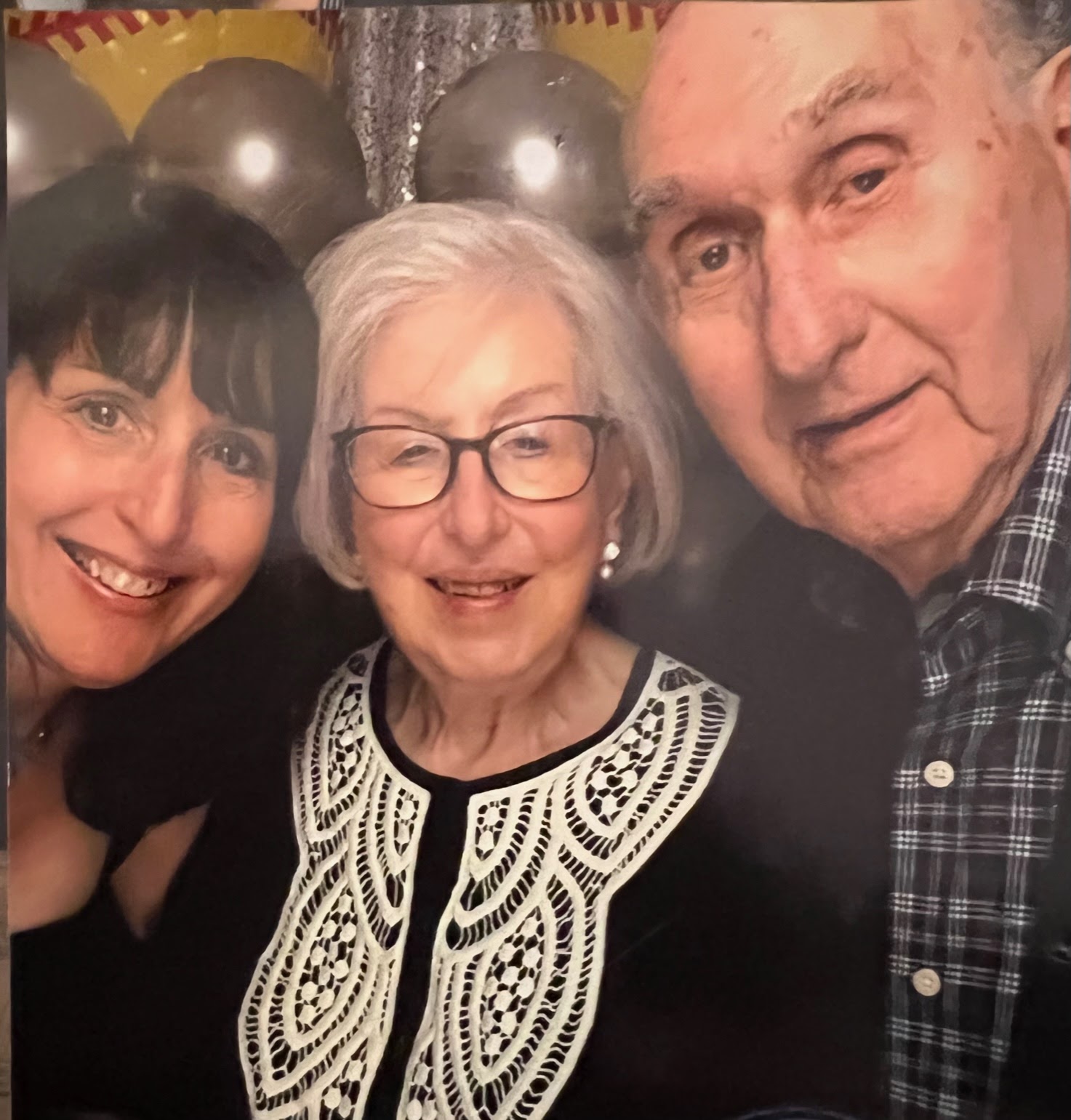
Suzanne with her parents

Days one and two went smoothly. Then came day three. My father was taken to the ER by ambulance. The hospital was still under Covid procedures and only one family member could be with him. My mom asked me to go. Assuming I’d be there a good portion of the night, I somehow had the presence of mind to grab my laptop. Once my dad was settled in and asleep, I wrote 2,000 words. The next day we found out my dad needed surgery and was sent to Henry Ford Detroit. Each day I picked up my mom and drove her to the hospital where we spent the day with my dad. At night I went home, had dinner with my husband, went into my office, lit my candles, and wrote. I soon realized that writing from 7:00 -10:00 each night was therapy for me—an escape. On the weekends, my brother went to the hospital with my mom (only two people allowed in the room due to Covid). I spent the weekends taking advantage of the writing boot camps offered by NaNoWriMo Michigan and made up any missed words.

Eventually, my dad left the hospital under hospice care. We knew his time with us was short. Yet, each day my mom asked me “Did you get your words?” And when my dad had the presence of mind he’d ask, “Did you write yesterday?” This was no longer a solitary goal, and their encouragement kept me going.

Sadly, prior to Thanksgiving, my dad passed. My writing time was spent drafting his eulogy and sitting shiva. The final weekend of NaNo, I did a major writing push. On November 30, I hit 50,836 words and typed “THE END” with only hours to spare. During shiva, one of my friends mentioned how my dad’s eyes always twinkled. When I finished writing, I went outside, looked up at two twinkling stars and said aloud, “I finished Dad.” And I could hear him say, “I knew you would. Love you honey.”


Suzanne Jacobs Lipshaw is an award-winning nonfiction children’s book author and former elementary special education teacher who is passionate about growing young minds. Suzanne’s first nonfiction picture book, I Campaigned for Ice Cream: A Boy’s Quest for Ice Cream Trucks, debuted in April 2019 from Warren Publishing. Her second book Mighty Mahi launched from Doodle and Peck Publishing in March 2022. Suzanne enjoys speaking to schools about writing, leadership, and how kids can make a difference in our world.

You can visit Suzanne online at:

v    www.suzannejacobslipshaw.com

v    https://twitter.com/SuzanneLipshaw

v    www.facebook.com/SuzanneJacobsLipshawAuthorEducator

v    https://www.pinterest.com/SuzanneJacobsLipshaw/

v    https://www.instagram.com/suzannejacobslipshaw/


Editor's Note: