Showing posts with label Picture Book Mentorship. Show all posts

Friday, March 31, 2023

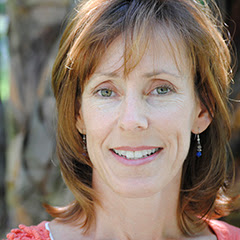
Interview with Picture Book Mentor, Leslie Helakoski

Welcome to part two of our SCBWI-MI Mentorship Interviews! If you missed it, click here to read part one, in which we interviewed Kim Rogers, our PB prose mentor. For this installment, we talk with Leslie Helakoski, our PB verse mentor.

What is the mentorship, you ask? Great question. Every year, SCBWI-MI provides an opportunity for our members to work with a published author or illustrator who will help you not only improve your current work-in-progress, but the goal is to help you hone your craft overall. This year, we are focusing on prose and verse picture books. To learn more about our mentorships, click here.

Many of you may be familiar with Leslie, who is a former co-RA for our region. She’s also the author and illustrator of over a dozen picture books. Check out her bio on her website here.

Without further ado, enjoy this more personal glimpse of Leslie and her writing.

-Jay Whistler, Mentorship Coordinator


Mentorship Interview with Leslie Helakoski


What do you like best about writing picture books? 

I’ve been playing with words ever since I was very young and I’d find the word puzzle page in Reader’s Digest. I continued to play with words while working in advertising. I even like designing with words. I love that certain words can define, set a mood, show character, or make me laugh.

What do you like least? 

Marketing and self-promotion.

Describe a typical writing day.

In the morning, I tend to exercise (pickle ball, anyone?) and answer email, which includes answering questions at the national help-desk for SCBWI. That leaves me free to write creatively in the afternoon. I’ve tried many times to do creative work first, but I have to trick my head into believing I’ve got nothing else pending and am free to write for myself. I’ll often write until I notice I am uncomfortable sitting or my eyes are tired. If I am illustrating a book, I will paint all day. For weeks. I’m not fast.

Which of your books was the most fun to write? Why? 

That would be…BIG CHICKENS. The story came easily—maybe because it is based on a true story—I was a very big chicken when I was young! Plus, the editor was sharp and easy to work with. It was also my first book with a major publisher (Dutton—remember them?). I met the illustrator, Henry Cole, and we became fast friends, which made creating the second two chicken books a lot of fun. The editor, Henry, and I all met in New Orleans, since the last book was set there, and took photos of settings around the city. I love collaborating on a book, especially with an illustrator whose work I adore.

When you’re reading for pleasure, what features of a book typically impress you the most?

In novels, it’s when I notice that I LOVE the character already, and I have to stop and look back to figure out HOW the author made me feel that way. In picture books, it’s the story. I always look for the story first.

What brings you joy?

Family, being in the woods, talking about books with writing friends.

What inspires you?


Well, sorry to be so obvious but….children, of course. I’ve always been drawn to young children. I love to watch them play and see them learn and hear them speak. When I’m writing, I imagine specific children listening, and it keeps me focused on addressing the child.

If you could travel anywhere in the world, where would it be and why?

Every time I read this question, I come up with a different place I’d love to see. Most recently I’ve been dreaming of Greece—the sun, the water, the sheer antiquity everywhere…

If you could have dinner with any person throughout history who would it be? What would you discuss?

The impressionist painter Mary Cassatt has always interested me. Not only her gorgeous work but how she navigated her career as a painter in a field of men who didn’t always recognize women, much less their artwork. She defied her father’s wishes and pursued her painting in Paris, eventually joining the impressionists. She helped open doors for other women. I think we might have tea in a flowering garden and perhaps invite her good friend Edgar Degas to join us.

What aspects of being a picture book mentor are you most looking forward to? 

I’m always happy to hear new and original voices and stories. I have missed our Michigan writer’s community over the past few years, and I’m delighted to feel connected to it again in this way.

Can you tell us about any upcoming projects?

My newest upcoming book, WHEN THE RAIN CAME DOWN, with FSG, is about a community’s response to flooding on the Gulf Coast, where I grew up. It was inspired by losing our family home to high water and storms. The illustrator, Keisha Morris, is working on the art now, and it will release next winter. AND I am happy to report that I pulled a project out of my drawer a couple of weeks ago, where it’s been wallowing a loooonnng time. I revised it and sold it to a small press! GATOR’S GOOD IDEA was originally written ten years ago. The text is filled with playful Southern language. I’m already working on the illustrations and having lots of fun including all the small details that make illustrating fiction so much fun.


Friday, June 3, 2016

SCBWI-MI Picture Book Mentorship and Interview with Mentor, Deborah Diesen

SCBWI-MI is offering a twelve month picture book text mentorship with the amazing Deborah Diesen. Submission guidelines, eligibility rules, and FAQs can be found on the SCBWI-MI websiteThe submission window is June 24-July 15, 2016.

Ann Finkelstein, Mentorship Coordinator, is here to tell you all about author/mentor Debbie Diesen. Here's Ann:

Debbie has a way with words, a brilliant rhyming mind and tells fantastic stories. Her manuscript critiques are both insightful and empowering. She is the author of the New York Times best-selling picture book, THE POUT-POUT FISH and its three companion books: 
THE POUT-POUT FISH IN THE BIG-BIG DARK
THE POUT-POUT FISH GOES TO SCHOOL
THE NOT VERY MERRY POUT-POUT FISH. 

She has also written three Pout-Pout Fish mini-adventures for babies and young toddlers: 
SMILE, POUT-POUT FISH
SWEET DREAMS, POUT-POUT FISH
KISS, KISS POUT-POUT FISH. 

Debbie’s other picture books include: 
CATCH A KISS
PICTURE DAY PERFECTION
THE BARE-FOOTED, BAD-TEMPERED BABY BRIGADE. 

Two additional Pout-Pout Fish mini-adventures will come out next year, and we can look forward to three more hardcovers in 2017-2018, all published by Farrar Straus Giroux.

I asked my friends, including Debbie, to help me think of interview questions.

AF: What do you like best about writing picture books?
DD: My favorite aspect of writing picture book stories is that the requirements of the format inspire my creative side. A picture book story has to appeal to both children and adults; has to be told in a way that lends itself to being repeatedly read aloud; and has to be told in about 500 words or fewer.  Limitations are a writer’s friend: in learning and embracing the requirements of a particular writing genre, one’s writing becomes freer and fuller.
Plus, in what other genre can you write about a talking fish and still be taken seriously? I’d pout-pout if I were writing anything else.

KG: How long did it take from when you started writing to getting published?
DD: I’ve always loved writing, but I didn’t try my hand at writing picture book stories until my kids (now 17 and 14) came along. After dabbling a bit, I began to write more seriously by around 2000, and I started submitting stories in 2001. Spread across multiple stories, I received 99 rejections before I received my first contract in 2005. That book, The Pout-Pout Fish, was published in 2008. An eight-year timeline from start to book is not atypical in this industry. Holding tight to the right combination of persistence and patience (call it persipatience, perhaps?) is a real necessity.

KG: How many drafts or revisions do you typically do before you submit?
DD: I go through a lot of drafts and revisions. I start my stories longhand on paper, and then when I feel I have enough clay to throw on the potter’s wheel, I enter my chicken-scratches into a word processing document. I prefer to have a pen or pencil in my hand when I’m revising, so I print the story out and then sit down with it, away from the computer, to read it out loud to myself numerous times and to mark up my changes. I then head back to the computer to enter my changes and reprint, then back to my Barcalounger to revise. Some revisions are of the Start Over nature; others are micro adjustments. By the time a story is “done” (anywhere from the rare case of a month or so after I began it, to the more likely case of a year or five or more), I’ll usually have two to four inches of drafts of it in my file.
(Note that I don’t actually have a Barcalounger, but it’s a fun word to say, so let’s pretend.)

RMB: How do you know when a manuscript is both good and done?
DD: In fact, I’m never certain of either good or done; but I’ve learned how to triangulate the position of a manuscript by taking multiple measurements. The first is an internal measure. I keep revising until a story has a certain resonance or vibration within me when I read it. When I’ve gotten a story to that point, or when I’m stuck because I can’t find a way to get it to that point, I bring the story to my critique group for a reality check. Their collective wisdom and their individual perspectives help me assess whether the story is good and/or done.

TG: How much money is in this gig?
DD: The field of children’s book writing and illustrating is populated with tens of thousands of hard-working, devoted, and talented individuals, some of whom are able to make a living at it; some of whom have hit-or-miss income from it; and some of whom will never make a dime, despite having great stories and doing everything they can to get published. Money can happen, but it’s impossible to predict or guarantee. It’s best to enter the field for the love of it rather than for its lucrativity (which is not really a word, but when you’re sitting in an imaginary chair, you get to be Queen of the Dictionary).

BS: I know the plot and characters are supposed to drive the story. How often does the rhyme change the story?
DD: Writing in rhyme tends to bring out my playful side, so typically for me rhyme has a positive impact on my exploration of a story’s plot and characters. It makes more things possible. It also makes me more likely to try out and experiment with word choice and wordplay. But a story has to want to be in rhyme, or it’s no good to impose rhythm and rhyme on it. If it’s not meant to be in rhyme, writing in rhyme will limit the story’s characters, plot, and potential. Forcing a story to fit into a garment that doesn’t suit it is not going to work, no matter how many times you try on or accessorize the stanzas.

AH: What is the most important thing you’ve learned about writing picture books?
DD: The most important thing I’ve learned from my writing experience is that I’ve still got a lot to learn! Every story I write teaches me something new about writing (and I usually learn it the hard way).

AH: What will the mentor expect of the mentee?
DD: I don’t have any particular expectations, other than that the mentee have an enthusiasm for writing, a willingness to learn, and enough of a sense of humor to put up with my quirkiness.  (Barcalounger not required.)

DD: What have I gotten myself into?
DD: I’m actually looking forward to serving as a mentor. But since I’ve never been a mentor before, I’m a bit nervous at the prospect! The stereotype of a mentor is guru-like and wise; but I can’t rock the guru-robe look, and I’m definitely still working on the wisdom thing.

That said, I guess I’ve learned a few things along the way, and so I look forward to sharing what I know and learning some more. It’ll be an enjoyable growth experience for both of us!


Coming up on the Mitten blog: Mentorship coordinator Ann Finkelstein will be back next week with explanations, endorsements, and enthusiasm. Until then, read the guidelines on the SCBWI-MI website, or email Ann directly.

Nina Goebel is preparing to announce our new Featured Illustrator on July 1st, and Patti Richards is gathering your good news for another round of Hugs and Hurrahs. To be included, email Patti by June 19th.

Have a great weekend!
Kristin Lenz