Friday, March 4, 2022

Writer Spotlight: Robin Pizzo

 By Charlie Barshaw

Robin Pizzo on Nine Years of Twitter, How She Prepares for TV Appearances, Law School and Weaning for L.A.

Robin at work at MSU


You’re the Director of Education at WKAR. What does your job entail?

As director of education, I lead the education outreach efforts of WKAR Public Media at Michigan State University, the PBS and NPR affiliate serving Michigan's capital region.

This includes convening partnerships and coordinating station initiatives such as WKAR Family and Ready to Learn to provide direct family engagement workshops, learning experiences, and other resources to help kids be resilient, lifelong learners.

I oversee the newly launched Michigan Learning Channel, cultivate partnerships with organizations that work directly with families and children and consult on locally produced documentaries such as Right to Read.

I love my job and some of my favorite responsibilities are curating robust education content for the WKAR Family newsletter including my blog, Mrs. Pizzo’s FAQ and giving away thousands of new books to kids at every event we host and participate in each year.

You’ve moderated some panels and done some story times on air. What preparations do you need to do before appearing on TV? You appear cool, but are there butterflies?

I rarely get nervous or have butterflies because I have an amazing team of colleagues that help me prepare for each appearance and event. Just to give a sneak preview behind the curtain, there are several drafts of scriptwriting taking place before most events and panels to make sure I’ve prepared well before cameras are on.

I try to rehearse even when simply reading a Storytime book. When rehearsal isn’t possible, I rely on being a natural extrovert and exude the energy I get from working with others.

Being a career-long educator of middle schoolers means I’m used to being ‘on’ for six hours and performing. It takes a lot to motivate and engage a classroom of adolescents.

I’m a big fangirl though. If I’m working with Daniel Tiger for a Be My Neighbor Day Event or even Clifford the Big Red Dog, I’m usually in awe.

Robin with Clifford


You previously worked at Lansing Community College as a Student Success Coach. How did you help college students find success?

I taught English Language Arts, American History and Creative Writing for almost 15 years in K-12 Education. At the same time in the evenings and online, I taught at the postsecondary level First Year Writing and Reading.

I loved teaching but wanted to broaden my supports with a two-generation lens. This means the parent receiving supports at the same time as the child to decrease the negative impact of socioeconomic disparities.

This led me to leave the classroom and take a position as Director of CCAMPIS (Child Care Access Means Parents In School) and Student Success Coach at Lansing Community College. CCAMPIS is a federally funded grant that supports parents who are college students to persist and complete their college education while funding high-quality childcare.

I provided early education, literacy, financial aid and advising workshops toward their academic success while administrating 1.3 million dollars in grant funds for their children to attend high quality childcare programs. In this role, I became a community leader with ASCEND at the Aspen Institute. This really broadened my understanding of how important it is for organizations to hear from those they support. And I discovered how to scale resources by building networks of collaboration.

You earned a B.A. in English Lit from Wayne State University and a Master’s in Education from Marygrove College, two fine Detroit educational institutions. What challenges did you face along the way to achieving your educational goals?

Detroit was very good for my educational pursuits. From kindergarten on up, I was educated in Detroit Public Schools, from Golightly Education Center to Cass Tech and they fostered a love of learning that bloomed in me from the age of two from my earliest recollection. I was adopted out of foster care, and I have records kept by the social worker, that said I was reading at three. But that’s a story or book for another day.  

Anywho, I have loved school my entire life and found very little challenge in it until I attended Law School at Michigan State University. Perhaps here was my only challenge, because I didn’t like it and that was a real blow for me. It was cutthroat competitive, and I felt out of my element. It was also a culture shock being away from home.

And to add to it I was a new mom. I was struggling to find my niche and writing picture books while I was supposed to be studying. I also had very limited resources because as a first-generation college student, no one I knew had gone that far in their education.   

After two years, I was out because I had a misstep in the order in which I took my courses. I think back and realize it happened the way it was supposed to because while in law school, I fell in love with education as a substitute teacher and started writing for children. A world opened for me that would not have if I’d not attended law school and failed at it.

You’re very active on Twitter. A recent post celebrated “9.” Was that nine years active on Twitter? What are the rewards and pitfalls of Twitter in your experience?

Yes, nine whole years. 

I started Twitter because at a writer’s conference, an editor said Twitter was where agents, editors and authors hang out. And this is very true. Twitter does have a lot of rants and disgruntled folks spewing all sorts of vitriol but I’m all about the light, love and laughter found on the platform.  Please follow me @PizzosPages

I promote and celebrate writers and books widely and love all those I’ve connected with as followers. I really have cultivated a wonderful community on Twitter and learned so much about craft, networking and all things publishing.

I credit the reader and writer I am today to Twitter. My three top twitter tips: aim to be authentic, block freely and celebrate your community.

One post showed an alarm clock meme, where you lamented all the projects you have going. Just what’s on your heaping “plate”?

Ughhh, heaping is exactly right. I’ll focus here on my writing life, because work is an ever-present avalanche. Last month, I submitted a poetry collection and a short story collection to small university presses. Both feature young characters.

My agent, Sara Megibow, of KT Literary had the short story collection on submission with the big 5 publishing houses but alas, no one was interested. It would’ve been nice to have at a larger house, but I have a specific dream for this book, and this allows me to pursue that dream.

I completed a memoir short story for a contest due December 31st, which was new for me but also something I have known I would do.

I completed a YA novel, and am currently outlining a companion novel, I plan to begin drafting by June. I have a completed middle grade novel I need to revise before submitting to my agent which I will begin the first of February.

And I’m ever submitting picture books. Yes, I have over 25 completed picture books collecting virtual dust. I get ideas everyday but the day job, mom life of four and wife life, keeps the growth in my writing craft moving slow.

The Pizzo Family

That worries me some because I have a depth I want to reach in my writing skill that is nudging me with my next, next book. It’s going to be epic, and the main character keeps whispering in my ear lines for her story on my walks, in my sleep and during my other projects. If only time would stand still.  

As if I didn’t have enough on my plate, I started a small business called POLISHED PAGES, LLC a sage for the written page, supporting writers at every stage. I offer manuscript review, editorial services, education consulting and grant writing support.

What was your early life like? Who influenced you to be a writer?

My early life was an amazing, God-ordained experience that was full of love, crisis, and community. I won’t go in much detail other than what I’ve already stated and that I was in foster care until the age of five. My mother who adopted me is an amazing force to be reckoned with and her faith and fortitude saved my life many times over.

I’m not sure if there was a ‘one person’, or one event influencing my writing, but my mother says I was writing stories at four. I know my first published poem was one I wrote for my grandmother when she passed, and my mother published it in the obituary. I was eleven.

In seventh and eighth grade, I was a student reporter for the Detroit Free Press and remember the editor telling me I had real talent. I have always been a big reader, so the writing marries well with that. My mother always encouraged me in both.

Recently, I asked a little guy if he liked reading? “I did before they told me I was doing it wrong," was his response. Somedays, I feel that same way about writing because I can’t believe I still not published. LOL.

What were some of your favorite books as a young reader? What are you reading now?

Oh, I loved and devoured everything. I would receive a stack of books each Christmas and by New Year’s Day, they would all be finished. This is still true today.

I loved everything Mildred D. Taylor wrote and still do. Her Logan Family series with Roll of Thunder, Hear My Cry, Let The Circle Be Unbroken and Song of the Trees were all-consuming for me. I also devoured Judy Bloom, Encyclopedia Brown, Nancy Drew and classics.

My sixth-grade teacher had us read Shakespeare and a Tale of Two Cities and there was no turning back after that. I couldn’t believe a book could be so immersive. I seek that feeling every time I read a book. When I find it, it’s like falling in love with reading all over again.  

I finished three novels this month and several picture books. Jesmyn Ward’s Men We Reap is a gut punch yet inexplicably beautiful. She is my all-time favorite literary author; I can’t stop reading her work once I start.  

The Invention of Wings by Sue Monk Kidd called my name in the night. I ignored it because I knew it reflected the level of skill, I need to write the before mentioned epic book. I decided to dive in anyway and wowzer what a read. I still think about it and will definitely use as a mentor text for my idea.


In picture book land, I read Soul Food Sunday by Winsome Bingham and C.G. Esperanza. It is deliciously vibrant. And finally I read Change Sings by Amanda Gorman and Loren Long. Talk about heart warmer that is full of light and love.


How did you find SCBWI? How did you find the regional Shop Talk?

Sixteen years ago, my third child was nearing two and would not wean. (I know, just stay with me.) I had been researching how to get my picture books published and found some article about SCBWI. My husband, who is uber supportive, suggested I go to the LA Summer Conference and that would wean my little guy and I’d learn about the publishing process. That is exactly what happened and so much more.

I met Walter Dean Myers, Linda Sue Park, and heard Jacqueline Woodson speak. I also met a ton of rock star editors. I even roomed with Jennifer D. Chambliss who wrote the amazing Book Scavenger Series.

Pre-pandemic, I attended a writing conference or retreat every year which led me to the Regional Shop Talks.

I’m a part of the SistaLoc Writing Group. We’re five, professional black women who write in a variety of genres. We’ve met monthly over food, works-in-progress, and tea for over ten years. All are published in some form. They write mostly in adult genres so for me the Regional Shop Talks are great for checking in with writers who focus on children’s literature.

I enjoyed the outdoor gathering you and Ruth hosted in September so much, I talk about it often. It was a perfect mix of social distancing, fall foliage, nature, kidlit creators, snacks, writing journey, a quinceanera, and book talk.

What does the future hold for you?

A prolific publishing career with titles in a variety of genres and more interviews like this because this was truly enjoyable. Thank you for allowing me to share and reflect. 

Tuesday, March 1, 2022

Book Birthday Blog with Anita Pazner


Welcome to SCBWI-MI's Book Birthday Blog!

Where we celebrate new books from Michigan's authors and illustrators. 


 Congratulations to Anita Pazner on the release of The Topsy-Turvy Bus


 How did you come up with the idea for your book?

When I was a kid, I had a tough time riding on school buses. The smell from the diesel-fuel exhaust gave me headaches. So, when Wren Hack, the executive director of Hazon-Detroit, took me for a ride on the Topsy-Turvy Bus to deliver compost and vegetable seeds to area residents, I was smitten. A bus with no carbon footprint and no “stinky bus” smell? That was a school bus I could get behind. It didn’t take long for me to realize a book on sustainability and alternative energy sources was necessary to empower kids to think differently about energy use and pollution.

What is something you hope your readers will take away from your book?

Kids see all sorts of scary things in the news. They hear their parents discussing topics like global warming, poisoned water, or massive amounts of garbage floating in the ocean. It’s tough for kids and they often feel as though there is nothing they can do. That’s where the Topsy-Turvy Bus comes in. This upside-down and right-side-up school bus runs on bio-diesel fuel in the form of used veggie oil. But that’s not all. The kids get to join Maddy and Jake as they learn out-of-the-box thinking and get to travel to unlikely destinations like a worm farm. I hope readers come away feeling empowered. I want them to know they can make a difference with the small choices they make and that they have the ability to transform the world.

Reuse, Recycle, Renew, and Rethink is the tag line of the story. I honestly believe it’s that easy. We can all make the world a better place one good idea at a time.

What inspires you to write?

My inspiration comes from being a mother, a daughter, and a global citizen. I want to open minds and tear down barriers. I want to see corporate responsibility. I want to help educate people by providing different perspectives. I grew-up with a mother who lived through a war complete with bomb shelters, food shortages, political strife, and disappearing neighbors in the night. Her stories were my bedtime stories. They shaped me. She also gave me stories of survival and of finding kindness in the most unlikely places. She gave me hope and that’s what I want to pass on to the next generation. Hope and possibilities for a better, kinder tomorrow. 

What was the most difficult part of writing this book?

Honestly, this book was far easier to write than nearly any other project I’ve undertaken. I have a journalism background that allowed me to write this creative non-fiction book rather quickly. Plus, the subject matter was fascinating because the bus actually exists. I was lucky enough to experience it first-hand. That’s not to say my journey to publication was easy. I’ve been a member of SCBWI for over a decade. During that time, I attended numerous SCBWI conferences, several Highlight’s workshops, and I earned a master’s degree in Writing for Children and Young Adults from the Vermont College of Fine Arts. I’ve worked hard to hone my craft. In the process, I’ve written many manuscripts that will never be published. The best part of my journey has been the people I’ve met. I’ve been a member of several critique groups over the years. I can’t tell you how fortunate I am to be part of such an incredibly supportive and talented group of writers here in Michigan, especially my Ann Arbor group. 

What are your marketing plans for the book?

That’s an interesting question. I’m preparing a Shop Talk in Ann Arbor titled, “So you’ve published a book? Now the real work begins! A comprehensive look at publicizing your book for maximum exposure.” I’ll take attendees through the steps I’ve discovered from my own journey and that of the many published authors I know. We’ll start with what to do six months before your book comes out right up until you host a launch party at a local bookstore. I’m planning a launch party scheduled for mid to late March. The exact date hasn’t been decided, but the location is tentatively set at a locally owned toy store in my area. There are no independent bookstores in the town where I live where once existed a Barnes and Noble and a Borders Bookstore. Both closed years ago. So, like the Topsy-Turvy Bus—I’m trying something outside the box.


The bus will be joining me during the launch, and kids can tour it, checkout the compost worms and do a few activities. After that, I have my first virtual school visit scheduled for Earth Day in April. I reached out to one of my favorite independent bookstores, McClean and Eakin, in Petoskey to do a pre-sale promotion several months before the book released. They offered to schedule, promote, and coordinate my virtual visit to more than 500 elementary school students in the Petoskey area. Indie bookstores are the best!

Checkout my website fo
r updated details regarding my launch next month and stop by if you are in the area. 

A little bit about the book . . .

The world often feels Topsy Turvy, and kids feel it, too! When the Topsy-Turvy bus comes to town, Maddy and Jake embark on an adventure where barrels of used cooking oil become fuel and worms eat garbage to feed the earth. Hop on board to get a glimpse of small ways kids and adults can make the world a cleaner, healthier, kinder place—one small step at a time. Reuse, Recycle, Renew, and Rethink!

A little bit about the author . . .

Anita earned an MFA in Writing for Children and Young Adults from the Vermont College of Fine Arts and a Master Gardening degree from Michigan State University. She’s created picture-book workshops for kids of all ages, ranging from second graders to high school students. She continues to volunteer for SCBWI events and Hazon-Detroit, one of the largest sustainability organizations in the country. She spends her free time with her husband, training a rascally dog, named Finn, and playing in the dirt, adding plants to every square inch of her suburban habitat. Her four children have all flown the coop.


Website: https://anitapazner.com/

Facebook: https://www.facebook.com/anita.pazner

Twitter:    https://twitter.com/AnitaPazner 


Book Birthday Blog with Suzanne Jacobs Lipshaw


Welcome to SCBWI-MI's Book Birthday Blog!

Where we celebrate new books from Michigan's authors and illustrators. 


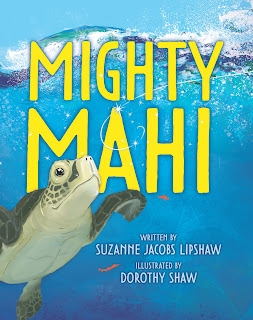
 Congratulations to Suzanne Jacobs Lipshaw on the release of Mighty Mahi


How did you come up with the idea for your book?

During the 2014-15 school year, my elementary reading students boarded an imaginary yellow submarine from Northville, Michigan to Jekyll Island, Georgia for a virtual field trip to the Georgia Sea Turtle Center. There, they were introduced to Mahi a juvenile green sea turtle who was missing her right front flipper. My students adopted Mahi and we followed her journey—researching her rescue, receiving monthly updates on her rehabilitation, and seeing video of her release. Mahi’s tenacity was inspiring, and I knew then her story needed to be shared beyond our school community.

What is something you hope your readers will take away from your book?

I hope readers will be inspired by Mahi’s strength and persistence and realize that with hard work, effort, and support from others, they too can overcome challenges.

What inspires you to write?

I am inspired by a mix of the subjects and values I am passionate about: family, education, space, making a difference, oceanography, national parks, leadership, birds, persistence, weather, finding your strengths, relationships, nature, and pursuing your dreams.

What was the most difficult part of writing this book?

After 23 years teaching upper elementary students, my writing naturally has a middle-grade voice. This would be great if I wrote the story of Mahi as a novel, but as a picture book reinventing my voice proved a challenge, but one I was grateful my publisher gave me the opportunity to tackle.

What are your marketing plans for the book?

First and foremost, is the realization that while writing tends to be solely a creative experience, like any other job, being a published author includes tasks I prefer not to do—put marketing at the top of my list! For Mighty Mahi, I am diving headfirst into Instagram and Pinterest and am hoping I don’t hit bottom. Additionally, I am emailing my press release and one-sheet to aquariums across the world and connecting with local media, bloggers, and podcasters. I look forward to school visits and interacting with the kids—that’s when the moments happen!

A little bit about the book . . .

THIS IS A TRUE STORY: A green sea turtle spots something shiny and sparkly. But when she swims over to investigate, the stringy stuff gets wrapped around one of her flippers. She can’t get loose! Soon she’s too weak to dive for food or swim to the ocean surface for air. Exhausted, the young sea turtle struggles on to the beach to rest. She doesn’t realize there are more obstacles and bigger challenges awaiting her outside of her ocean home.

A little bit about the author . . .

Suzanne Jacobs Lipshaw is a children’s book author and former elementary special education teacher who is passionate about growing young minds.. Suzanne enjoys speaking at schools about writing, leadership, and how kids can make a difference in our world. The proud momma of two grown boys, Suzanne lives in Waterford, MI with her husband and furry writing companion Ziggy. When she’s not dreaming up new writing projects, you can find her kayaking on the lake, hiking the trail, practicing at the yoga studio, or comparing paint swatches at the local Sherwin Williams.

You can visit Suzanne at:

http://www.suzannejacobslipshaw.com/   

https://www.facebook.com/suzanne.lipshaw 

https://twitter.com/SuzanneLipshaw 

https://www.instagram.com/suzannejacobslipshaw/ 


Monday, February 28, 2022

Book Birthday Blog with Lindsay Gizicki


Welcome to SCBWI-MI's Book Birthday Blog!

Where we celebrate new books from Michigan's authors and illustrators. 


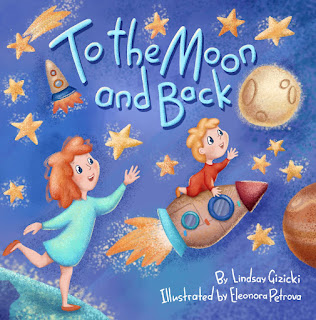
 Congratulations to Lindsay Gizicki on the release of To the Moon and Back


How did you come up with the idea for your book?

My family and I were eating breakfast one day and we were discussing how mischievous my son can be. My daughter made a comment about him ending up on the moon one day because he’s so naughty. I told her that even if he did, I would go get him and bring him right back home. My husband replied that it sounded like a cute book idea—and I agreed! 

What is something you hope your readers will take away from your book?

The book revolves around a mother’s love. I hope readers can relate to the power of that love—whether it be with their children or the love they felt from their own mothers. It would be an honor if readers were using my own words to express the magnitude of their love for their children. I hope this book helps families connect during bed or reading time.


What inspires you to write?

My children! One of the most beautiful parts about having children has been watching their little imaginations at work. It’s amazing to me how creative they can be at such a young age. One of the things I started doing with my daughter was to have her tell me a bedtime story every night. Her stories inspire stories of my own. I like to think this book, and every book I write, will have pieces of my children in them. My life these days revolves around my children so it felt very natural to enter the world of children’s books.

You are the Michigan-representative for The Book Fairies Worldwide. How did you find this organization and what is it about?

I stumbled upon The Book Fairies one day while reading an article about Emma Watson. She had just helped The Book Fairies launch in London during Women’s International Month in 2017. I visited London the following July and was disappointed when I couldn’t find one of their hidden books. When I got back to the States, I emailed their CEO to see if I could help with Michigan efforts. She informed me that they didn’t have anyone stationed in Michigan yet and asked if I would like to be the official rep. The Book Fairies are an organization dedicated to promoting reading. We hide free books for readers—brand new or used. We work with many publishers, authors, and bookstores to promote new and upcoming books. We’ve done campaigns with movie production companies as well to celebrate upcoming movies adapted from best-selling novels. Think of it as a revolving Little Free Library, but you can find a book anywhere!

What are your marketing plans for the book?

I’ve been trying to come up with ways to connect with parents and teachers. Members of my mailing list receive free activities every month sent right to their inboxes. These activities promote various motor skills for children ages 2-6. I’ve been trying to grow my subscribers through this. I’ve also been sharing free coloring pages and doing giveaways on our social media. I’ve looked for out-of-the-box ways to get To the Moon and Back to potential readers. I have various collaborations in the works. For example, I have the book lined up to be included in a subscription box service. It’s also going to be sold along with Play-Doh sensory kits (which are space-themed). I have several author events planned at bakeries and craft stores, all while featuring goodies that match characters from the book. I found that reaching out to small businesses has been very successful. If you can sell your product along with someone else’s product you’re both profiting and reaching new customers.

A little bit about the book . . .

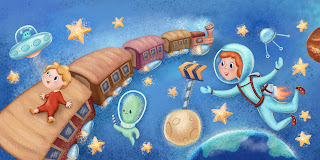
Join a mother and her child on an epic adventure through space. Our mischievous child keeps finding themself in space through many wrong doings—their balloon carried them too high, their homemade rocket went too far. Their mother, desperate to bring them home, chases after them by her own silly means. Witness the depth of a mother's love and just how far that love can take you—if you just believe.

A little bit about the author . . .

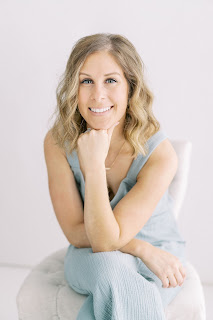
Lindsay Gizicki graduated from Central Michigan University and pursued her passion for journalism. She is currently the editor of an architecture magazine based in Troy, Michigan. Lindsay is an avid book lover and the Michigan-representative for The Book Fairies Worldwide, leaving hidden books for potential readers all around the state. In her spare time, she can be found on Lake St. Clair with her husband, Cyle, and their 4-year-old daughter, Harper, and 2-year-old son, Henry.  

Facebook:  https://www.facebook.com/hankarooreadings

Instagram:  https://www.instagram.com/hankarooreadings/ &

https://www.instagram.com/elle_gizicki/

LinkedIn:  https://www.linkedin.com/company/hank-a-roo-readings/


Friday, February 25, 2022

Ask the Editor by Katherine Gibson Easter

Hey everyone! A huge thank-you to all the people who sent me their questions! I’ve answered them to the best of my abilities, and I hope you find this post helpful and informative.

As with my previous Ask the Editor posts, I humbly ask that you take my comments in the spirit in which they’re intended. The advice here is meant to be friendly and helpful; I sincerely hope that no one finishes reading this post feeling vulnerable or discouraged.


I’d also like to add a general disclaimer that my thoughts are my own; I do not speak on behalf of my publisher or the publishing industry in general. I would not be at all surprised to learn that you’ve heard an editor or agent say something that directly conflicts with my perspective. Everyone in publishing has their own opinions and preferences, and I can only be honest about my own.


If you have any questions about writing, editing, or publishing that aren’t addressed here, please reach out to me. I’m always happy to gather questions for my next post!


Thank you, and happy reading!


If an established children's author (who’s been traditionally published) had a relationship with an editor, do you think the editor would look at their manuscripts, even if the author was currently without an agent? What if the editor's house was closed to unsolicited manuscripts?


I would guess that for most editors the answer’s probably yes (I know it would be for me!). Even if the publishing house doesn’t normally accept unsolicited manuscripts, if an editor has a relationship with an author, especially one who’s already been published, then I’d think they’d be happy to look at the author’s manuscripts as long as they’re a fit for what they publish.


If you’re still unsure, it definitely doesn’t hurt to reach out to the particular editor and ask if they’d be willing to take a look at your new project. My guess is that they’ll probably answer in the affirmative.


Is there a way for an author to know how their book is doing? Short of pestering their publisher, is there a place to find out a book's sales totals?


Excellent question, but asking your publisher is actually going to be your best bet for accurate sales numbers. Publishers keep careful track of how well/quickly their books are selling, so they should have that information handy for you. Across the entire book industry, NPD BookScan provides the most comprehensive look at sales data, but it’s still not perfect—it only captures about 85% of print book sales, so your BookScan numbers will almost certainly be lower than your actual copies sold—and a BookScan subscription can be prohibitively expensive.


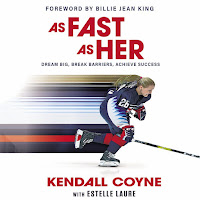
If you don’t want to keep repeatedly asking your publisher, I’d recommend checking your book’s product details on Amazon. While it doesn’t tell you how many copies you’ve sold, it does show how your book ranks against comparative titles. For example, we just released Kendall Coyne’s book As Fast as Her, and it’s currently #1 in Hockey Books, #1 in Teen & Young Adult Hockey, and #2 in Teen & Young Adult Sports Biographies. (It helps that she just won a silver medal at the Olympics!) Again, this formula isn’t perfect, since it only reflects Amazon sales, but with Amazon being the largest book retailer, it’s a pretty good benchmark, and it’s free! 


I've been hearing since the first of the year that editors are even more backed up than last year, and that often there's not enough time to even read a query/pb manuscript through to the end, unless it piques their interest in the first couple sentences. Would you say that’s accurate? As writers, we'd like to think our manuscripts get read, but as an editor, what's your reality?  


Other editors will probably have different stories, but for me, the first few months of the year are usually busy just because everything seems to ramp up post-holidays. So, the pace is definitely fast these days, but so far it doesn’t feel markedly different from previous years (knock on wood!).


As for how much time we get to dedicate to queries, every single editor is juggling multiple priorities and deadlines, so we all have to be extremely judicious with our time. Editors and agents receive so many submissions, and they can only say yes to a small percentage of the queries that come in. So reading every single word of every single query usually just isn’t feasible.


Personally, I tend to skim through the query letter—gathering the essential details but not lingering over it—and then turn my attention to the manuscript itself. For picture books, I do read the whole manuscript, unless it’s poorly written or clearly wrong for our list. Some editors will change their approach depending on how busy they are—skimming through manuscripts when they’re swamped that they’d normally take their time with—but my approach is usually the same regardless of what else is on my desk. I’m just slower to respond when I’m busy!


The effects of the pandemic seem to be ongoing and never-ending. Can you comment on how things stand currently? It would help to get an insider's viewpoint regarding issues, problems, and silver linings if any.


As far as issues go, publishing’s been hit hard by supply chain issues and the rising cost of product, just like so many other industries. Because books tend to be more price-sensitive than other consumer products (you need bread and eggs, but you don’t need a book), publishers are trying to navigate their way through the extra costs while passing as little of that burden on to the consumer as possible.


But there is a strong silver lining that comes with that: the book industry has actually been seeing record book sales since the pandemic started. After an initial drop in March 2020, book sales started to climb as people remained at home and suddenly had more time on their hands, with noticeable jumps in eBooks and children’s nonfiction (since schools were closed). Sales are starting to plateau across the industry now, but the numbers are still higher than they were pre-pandemic. I like to think it’s because people are rediscovering a love of reading!


Are certain areas of the market oversaturated right now? What are you wishing you'd see more of, if anything?


We’ve seen demand for children’s nonfiction and educational books dropping off since its surge in the early days of the pandemic. Those books are still getting published (and sold), but I don’t think publishers are clamoring for them like they were a year ago.


I’ve been seeing a lot of books (for both children and adults) centered around mental health hitting the shelves, with topics covering anxiety, stress, coping, mindfulness, meditation, self-care, etc. Unfortunately, with the extra burden people are shouldering these days, I think that’s a felt need that’s going to stick around for a while.


Speaking just for myself—and voicing what could very well be an unpopular opinion!—I’m sort of burned out on gritty YA books, especially dystopian and/or fantasy novels. Right now I’d much prefer a contemporary coming-of-age middle grade story, or a clean teen romance, ideally with a charming cast of diverse characters. A couple of recent favorites of mine: The Beatryce Prophecy by Kate DiCamillo and Sunny Song Will Never Be Famous by Suzanne Park.  


If you've written a nonfiction manuscript that's most appropriate for readers ages 8-10, but your topic can be supported with lots of available photos, graphs, maps, drawings, etc., and you see it coming to life in a traditional 32-page picture book format, is it okay to let the editor know what you're imagining, or is it better to let the manuscript stand on its own and hope the editor sees what you see?


Great question! Let’s start by looking at the age range; generally speaking, 8-10 is a bit too narrow for publishing standards. Ages 8-12 is the standard range for middle grade, and though 4-8 is the standard age range for picture books, it’s not uncommon for publishers to use 6-10 as well, especially if it’s nonfiction and extending beyond the usual 32 pages (I’ve published picture books with as many as 48 pages for 6-10 year-olds, like The Amazing Age of John Roy Lynch by Chris Barton, ill. by Don Tate). Of course, middle grade nonfiction often makes use of illustrations and images as well, so I don’t think you’d be forgoing using visuals if you decided this manuscript was more appropriate for older readers.


I’d suggest looking at your word count and subject matter; if the manuscript is text-heavy and can’t really be condensed, or if the subject matter isn’t very kid-friendly (addressing something violent or technical, perhaps), then I’d suggest using a middle grade age range and letting the publisher know that you have visuals that could be included. But usually, nonfiction picture books sell better than middle grade nonfiction, so if you could make your manuscript fit into a picture book that’s appropriate for 6-10 year-olds, it may increase your odds of getting published.


Either way, it’s totally fine to let the editor know how you envision the book in your query letter. I will say though that sometimes an editor will have a different vision for the book, based on what they think will sell, so it’s best to know before you send out your queries how much you’re willing to change things, in case someone asks. Good luck!!


Katherine Gibson Easter is an editor for Zonderkidz, having previously worked for Eerdmans Books for Young Readers. She graduated from the University of Denver Publishing Institute in 2013 and has spent the last eight years editing and publishing award-winning children’s books, including Sibert Medal and Caldecott Honor book The Right Word: Roget and His Thesaurus and Plume, which was a New York Times Best Illustrated Children’s Book.

Thank you, Katherine!

To submit a publishing question, email Mitten blog editor Sarah LoCascio with "Ask the Editor" in the subject line, and she'll forward your question to Katherine. Or, stay tuned on the SCBWI-MI MichKids listserv – Katherine will ask for questions a few weeks before her next post.

If you missed any of Katherine's previous Ask the Editor posts, go HERE to browse through all the questions and answers.

Friday, February 18, 2022

Illustrator Intensive Take-Aways by Kara Marsee

SCBWI-Nevada’s Illustrator Intensive took place virtually in November 2021 with Senior Art Director Mallory Grigg of MacMillan Books for Young Readers. I registered because I wanted to hone character design and visual storytelling skills and to get a feel for what its like to work with an art director.

After registering, in August I received two options for the assignment:

   create a PB dummy with the manuscript provided, or

   design a YA cover for The Great Gatsby.


I chose the PB dummy. The assignment had two deadlines/parts:

-     PART 1) Develop the characters, choose a trim size and create a loose dummy due in 5 weeks. (mid-September)

-     PART 2) After receiving feedback (mid-October) on initial sketches, tighten the dummy and take two spreads to full color, due in November for the Intensive Virtual Workshop.


It was a considerable challenge. What follows are my steps and take-aways.

PART 1: BRAINSTORMING - CHARACTERS - INITIAL COLOR - SIZE/THUMBNAILS - PACING


BRAINSTORM

Consider all possibilities. The manuscript featured robots and dinosaurs. I considered:

1.     literally robots and dinosaurs

2.     kids dressed as robots and dinosaurs

3.     toys

I went with literal robots and dinosaurs because that would be the most fun for me to illustrate, but I kept the “toys” idea as a final reveal because I really liked playing with the story that way.

READ BETWEEN THE LINES

Mallory’s manuscript left a lot open for illustrators to define. There was a hint at music, putting on a show, creativity, and friendship, so there was plenty to figure out in terms of developing those themes.

CHARACTER DESIGN

Steps and decisions:

1.     Research and sketching a LOT brings the characters to life. Knowing them from all angles & emotions is a huge asset before starting a dummy.

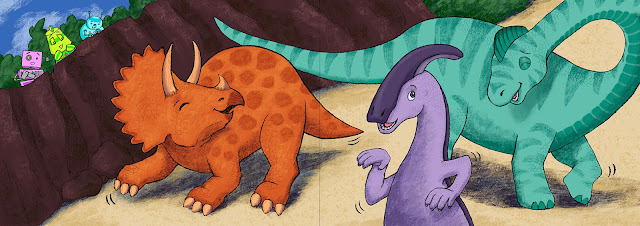
2.     I kept the number of characters to a minimum: 3 robots - square, triangle, and circle-based, and 3 dinosaurs with varying shapes.

3.     Character lineups help define size and color relationships.

4.     Simplifying characters avoids burnout, but do season with interesting detail.


INITIAL COLOR

I tried a very primary color palette for the robots, and secondary palette for the dinos to begin with. The character line-up also showed me that these colors together were similar in value –something I hadn’t noticed when drawing them separately.


SIZE/THUMBNAILS

Characters/topic will help define page size. I based my trim size on a PB by Steve Light - I wanted a large landscape to hold large dinosaurs. The size defined my thumbnail ratios, and I created a template for the dummy thumbnails using InDesign. I have a few different thumbnail templates on my website’s resources page for anyone to download.

PACING

The text provided wouldve fit neatly into 32 pages, but considering uneven sections, and a wordless spread/pause gave me the ability to add more interest and an end reveal.


PART 2: FEEDBACK- COLOR/VALUE STUDIES - FLOW - BACKGROUNDS - LEAVING ROOM FOR TEXT - FINAL ART & THE VILLAGE


Overall, the feedback I received was positive. Mallory liked my perspectives and wanted me to push the characters a little more, such as adding expressive eyebrows to robots, and to explore a completely different color story. She suggested 80’s neon for the robots, and I loved that idea. It was fantastic to have Mallory’s input to move forward.

COLOR/VALUE STUDIES

In order for my characters to work well in the composition, I did some value studies, and then tried new colors for the characters. The values didn’t always translate, but it did help me see shape placement.


FLOW

Images should flow from left to right to guide the reader to the next page. I know this, yet my characters don’t always want to go in the direction of the page turn. Mallory pointed out the following page, which needed to flip, and I made that change.


LISTEN TO YOUR GUT

The following spread was also recommended to be flipped. But after trying it, my gut told me to keep it this way, so that the readers land on those sad robots before the page turn.


BACKGROUNDS

I love characters, and backgrounds have been a challenge for me. Thinking of the background as a character sometimes helps, but in this case, I used the backgrounds as design elements and composition footholds. I removed a drawing of a shrub with hibiscus flowers on it because it was too interesting and detracted from the characters, especially in this character relationship story.

ROOM FOR TEXT AND GUTTER

I learned not to get too far finished with a drawing until I knew that compositionally it worked with the amount of text for that page. I did my own text layout in InDesign, and some pages needed illustration edits to make room for text.

Mallory told us that gutter size depends on trim size and page count, but to plan on a half inch to an inch for the gutter.

FINAL ART & THE VILLAGE

While knee-deep in final art, adding details like checkerboard teeth kept it FUN! 

The day of the virtual intensive itself Mallory critiqued all of our dummies on the spot. There was a lot to learn.


 It’s so inspiring to see the work of my illustrator friends - shout out to Rebekah Start of Michigan, Anne Awh of Illinois, and Hannah Krueger of New York. I also was inspired by artists new to me, Cynthia Cliff, Tim Hantula and Denise Taranov. Seeing their work reminds me that truly the possibilities are endless! I loved seeing all the different takes on the same manuscript. Also having “the village” of fellow kids’ book creators is so helpful when you need to bounce something off of someone who understands the challenge of creative work. And dinosaurs and robots are great content for portfolios!


My two biggest take-aways:

 - Do what brings you JOY! A book project is extremely time intensive and if you don’t love what you’re working on, it will be even more difficult.

- Books are a collaborative creation. Listening to feedback, trying new things, and communication are essential. What can you bring to the story to add dimension?


Thanks to SCBWI Nebraska’s Illustrator Coordinator Chloe Burgett who did a ton of work  organizing this productive event, and to Mallory Grigg for her insights and critiques.


Kara Marsee is an author/illustrator living in Ann Arbor with her family and house rabbit. She serves SCBWI-MI as one of the Communications Co-Coordinators, and she works in the office of a public elementary school. Kara loves the challenge of creating dummies, as well as drawing personalities and animals. When shes not drawing, writing, or reading, you can find Kara volunteering for a literacy program, practicing yoga, hiking, or enjoying a warm cup of tea and sudoku/colorku.

Website: karamarsee.com         IG, Twitter, FB: @karamarsee