Friday, February 26, 2016

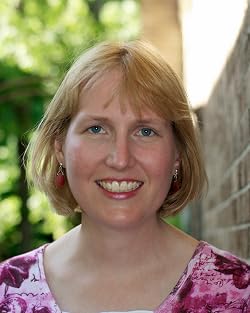
YA Success Story: An Interview with Author Patrick Flores-Scott

At the back of your novel Jumped In, your bio says you live in Seattle. What brought you to Ann Arbor? 
My wife got a job at the University of Michigan in the Rackham Graduate School, and I went from being a public school teacher to being a stay-at-home dad to our two toddlers. 

Tell us about your book and your journey to publication. 
I started writing in 2005. I got my agent in 2009. The book sold in 2011 and came out in the summer of 2013. It was a long process. My agent believed in me as a writer, but he wasn't sure about my draft. He decided to just send it out to a couple editors at a time. When the rejections came in, we'd look at the feedback and he'd say, "Whattaya think?" I'd tell him what I thought I should work on next and then I'd go do rewrites. It was a slow, but positive way of dealing with rejections. When Christy Ottaviano bought the book, it was way better than it had been after that first round of rejections. 

How did you get your agent? 
When I thought my draft was ready, I went to the library in search of a book that looked and felt like Jumped In. I thought, "If an agent liked this, they might be into my book." I picked up S.A. Harazin's Blood Brothers, and found out that her agent was Steven Chudney. I sent him a query letter and pages of the novel. He liked it. It happened really fast and I consider myself extremely lucky. 

What has been surprising or challenging about your experience? 
I think the most challenging thing has been how long everything takes. In terms of surprises, I'd say just selling the book and the smoothness of the editorial process and the fact that the final product has been pretty well received... a series of happy surprises.

What's next for you?
I just had a short story published in the MacMillan collection, I See Reality, Twelve Short Stories About Real Life. And my second novel, (tentatively titled) American Road Trip, which I started in 2009 (!), is finally scheduled to be released January of 2017. 

Patrick is a stay-at-home dad and early morning writer. His short story, The Good Brother, appears in I See Reality (Farrar, Straus and Giroux), and his second YA novel (Henry Holt/Christy Ottaviano Books) is scheduled for a 2017 release.


Patrick kept his answers short at my request, but here's a little more: he was a theater major in college, his debut YA novel Jumped In is full of poetry, and when he says he's an early morning writer, he means he sets his alarm for 4:30am!

Jumped In was named to the 2014 YALSA Best Fiction for Young Adults list, a Walden Award finalist, a Washington Book Award winner, an NCSS/CBC Notable Book for the Social Studies, and a Bank Street College Best Books of 2014. Learn more at:
 http://patrickfloresscott.com/index.html

Coming up on the Mitten blog: On the Scene in 2016 - support for debut picture book authors and illustrators, take-aways from the SCBWI New York conference, and another round of Hugs and Hurrahs. To be included, please send your good news to Patti Richards at pgwrites5@gmail.com by March 20th.

Have a great weekend!
Kristin


Friday, February 19, 2016

Commissioning a Book Cover For Self-Published Authors by Kirbi Fagan


You wrote the book, you're planning your big splash, but what you need is a cover!

The Fairy Tale Series written by Shanna Swendson
Find a great illustrator.
Checking out SCBWI portfolio’s is great place to start. Look for an artist who has done self-published at book fairs, try hiring a super star illustration major at the local art school. Avoid agented portfolio websites as those illustrators may not be interested in self-published commissions. 

Drop the Pitch!
You do not need to “pitch” your story to an illustrator. Illustrators don’t need to be sold a story, they need to be compensated. This is YOUR dream project. Check out this example of how to approach an illustrator.

Dear Kirbi,
I saw your work on SCBWI and I thought you would be a good fit for my book cover! It’s a middle grade story about a witch and a panda! I’m in need of artwork for the front cover (6x9). I'm looking to spend about X. I’m hoping to have the book out in April. Can you also do the type for the front and back? 

Thanks!
Eager Self-Pubber

Get it in writing!
If an artist does not provide or mention a contract after agreeing to collaborate with you it’s a bad sign. Understand their working process and have a detailed schedule to keep you on track. Here is a look at my collaboration process:

Contract. Deposit. Concept sketch. Sketch revisions. Written approval of sketch. Create final art. Delivery of final art. Final payment.

Provide the Facts.
Make sure you include crucial elements of your story. Visual details can take hours to find in the book. Help your illustrator by providing them with basic visuals. If your story does not have visual details, don’t make it up! Let their creativity surprise you. 

Don’t Take it Personally… 
if your illustrator doesn’t read your book; their time should be spent on the artwork. Illustrators are not editors or writing critics, asking them for their opinion puts them in a difficult spot. In addition, reading a long manuscript from a computer can be very uncomfortable. Consider sending the manuscript in print. 

Damsel in Distress written by Lee French
Hit your Budget.
A great cover is an investment and it is a crucial part of marketing your book competitively. Check out Graphic Artist’s Guild, “Pricing and Ethical Guidelines” to see industry pricing. Many authors fear they will offend an illustrator when they tell them their budget. An illustrator may be able to offer limited complexity at a lower rate. 

Don’t Bribe.
Chances are if you are self-publishing your social media following is small. DO feature the illustrator on your blog and give them free copies of the book, but DON'T consider it compensation. 

Know your numbers. 
DPI, bleeds, spines and trims! Talk to your printer and get your measurements right! It is your responsibly to provide these details. If not, you could end up dishing out more money to fix your problem, or worse poorly printed books. Yikes!


Trust the professionals.
Writers sometimes provide very specific directions about their cover. An illustrator is more than just a hired hand, they are a creative problem solver! By providing specific directions you could miss out on many creative options.

About that Type…
Breaking typography “rules” could make a designer cringe and make your book scream “self published.” Use a graphic designer or graphic design student. If you are doing it yourself, ask your illustrator where they would recommend placing type. Unless your name is "Nicholas Sparks" or "George R.R. Martin" your name shouldn't be HUGE. Don’t forget there are legal issues when it comes to type. You must have permission. Many “free” websites include stolen designs. Learn the difference between font and typeface. Here is a great article on the subject. 

Give credit and team up!
Schedule your cover reveal with your illustrator and invite them to spread the news! Always include the name of the artist whenever the art is used. Learn about some of the setbacks illustrators face in the industry on Sarah McIntyre’s website.


Kirbi Fagan is an award-winning, Detroit based book cover illustrator who specializes in creating art for young readers. Her illustrations are known for their magic themes, nostalgic mood, bright colors, and powerful characters. Recent clients include, Capstone Publishing, Marvel Comics and The Book Smugglers.


Kirbi's artwork is amazing! See more on her website.

Coming up on the Mitten blog: On the Scene in 2016 - support for debut picture book authors and illustrators, a YA Success Story, take-aways from the SCBWI New York conference, and another round of Hugs and Hurrahs. 

Never miss a post: enter your email at the top of the right sidebar to follow the Mitten blog.

Have a great weekend!
Kristin


Friday, February 12, 2016

Literary Rambles: Behind the Scenes with Natalie Aguirre

Literary Rambles is one of the best known blogs in the kidlit publishing community, but did you know it's managed by one of our own SCBWI-MI members, Natalie Aguirre? Casey McCormick created the blog in 2008 and began the popular Agent Spotlight series the following year, but Natalie has become the engine behind the weekly features to-date. She took time out of her busy schedule to give us the backstory and how the blog continues to be an award-winning, go-to source for writers.


Natalie Aquirre
How did you get started with Literary Rambles?

I knew I wanted to start or join a blog in 2010 and secretly wanted to be Casey McCormick’s blog partner, but was too scared to ask her about it. When she put a call out for a blog partner, I jumped at the chance. I’ll have been on the blog for five years on March 7th.

How has the blog grown and changed over the years?

Casey made a name for the blog with her fantastic agent spotlights that have helped many aspiring authors find an agent. When I joined the blog, I knew I wanted to spotlight mostly debut middle grade and young adult authors with book giveaways. That has really grown, and I am able to offer a spot to many fantastic debut authors each year. I’m glad we’re getting known for this as well as the spotlights.

The focus on debut authors has really helped the blog grow. Since I’ve been on the blog, I’ve mostly been the one blogging, and we’ve grown from about 1000 followers to over 5000 and have many more comments by followers on the blog posts.

I’ve also started to offer a regular feature where authors and their agents do a guest post, often with a query critique by the agent as well as a book giveaway. Casey just went on sabbatical—maybe permanently—and I am also taking over the agent spotlights because they are such a great service to writers. I’m starting to do them in an interview with the agent with a query critique giveaway instead of Casey’s format.

What are your hopes for the blog down the road?

I hope to maintain what I’m doing—the Monday debut author series, a book giveaway hop with book blogs most months, agent and author guest posts, and the agent spotlights. For me, my hope is to keep some sense of balance where I don’t blog too much. It already takes quite a bit of time each week to do what I’m doing, and I don’t want it to take up more of my free time. I know it could grow into a big book review blog where I would work with more authors and publishers like from Penguin and Harper Collins, but I really do not want the work. I want to provide a good service while maintaining a good balance in my personal life.

I love how you share just a little bit of personal information at the beginning of your posts before getting down to business. Regular readers have learned about joyful times with your daughter as well as difficult times such as the loss of your longtime legal job and your husband passing away last year. In addition to this sharing, you've also grown many relationships by regularly visiting and commenting on other blogs. How do you manage your time to accomplish all of this on top of full-time employment and parenting?

Well, I’m a total work in progress with all of my life changes. I have had to be really purposeful and hard-working to accomplish everything I’ve done, especially when I worked full-time as an attorney, was a swim mom and almost single mom, and a caregiver to my husband before he died. Basically as soon as I get up in the morning, I start my computer and coffee. I read many blogs before I start my work day. I squeeze in reading more blogs when I can and work on the blog after work and on weekends. I have cut back my reading of blogs to mostly Mondays, Wednesdays, and Fridays because I wanted more of a limit on how much blogging overtakes my life.

Since the fall, 2015, my daughter is in college at University of Michigan, and I live alone and work part-time. For the first time in over 40 years, I have free time and less stress. I’m slowly trying to figure out how I want to use this extra time.

You do such a wonderful job supporting authors, tell us more about your own writing. What are you working on?

I have a part-time job writing non-fiction articles for attorney websites and write 15 to 20 articles a week. Like any writing job, it takes more time than it should. Between that and my blog, it takes all of my writing time. I haven’t written creatively since my husband died, and I’m not sure if I will. 

I like providing the service I do through the blog. I don’t want a second job and more writing deadlines with all the writing deadlines I have every week. Plus I’m going through the challenges of working at home alone that any writer has with the added challenge of living home alone after the heartbreak of losing a spouse. I’m thinking of doing some volunteer work where I work with people on a regular basis may be a better use of time than writing a manuscript, especially with all the other writing I do daily. I’ll have to see what I decide to do as I go through this changing journey of my life.

Thank you for sharing your time with us, Natalie. You have a large team of appreciative supporters cheering you on!

Coming up on the Mitten blog: Illustrating Book Covers, a YA Success Story, and much more! To be included in our next Hugs and Hurrahs feature, please send your good news to Patti Richards at pgwrites5@gmail.com by March 20th.

Have a great weekend!
Kristin

Friday, February 5, 2016

Writer Spotlight!

Introducing Tracy Bilen! 


Happy Friday everyone! It’s time for another Writer Spotlight here on the Mitten. And today I'm excited to welcome YA author Tracy Bilen. Tracy is the author of the book, WHAT SHE LEFT BEHIND (Simon Pulse May 2012). When she’s not writing novels for young adults, Tracy teaches French and Spanish at Detroit County Day school in Beverly Hills (Michigan, not California:). So let’s give a big Mitten welcome to Tracy!  

Mitten: Tell us a little bit about you. Where you’re from and your history in our great big Mitten! 

Tracy: I was born near Milwaukee, Wisconsin, but also lived in Mississippi, Oklahoma, and Pennsylvania before moving to Michigan as a freshman in high school. We lived in Onsted, a town with one blinking red light, which is about an hour south of Ann Arbor. My first novel is set in a fictional version of this town. I went to Adrian College (in Adrian, Michigan) and Penn State. After working at a boarding school in Vermont, I moved back to the metro-Detroit area.

Mitten: When did you start writing for children or otherwise, and how did you know it was something you wanted to do?

Tracy: I started writing novels soon after leaving high school, so a young adult perspective was my mind-set at the time and today it still seems to be the right fit for me.

Mitten: How did you find out about SCBWI and how long have you been a member?

Tracy: I’ve been a member for about eight years. I found out about SCBWI just by cruising the internet looking for local writing events. At my first conference, I met a fantastic critique partner. After that I won the SCBWI-Michigan YA mentorship competition with the awesome Shutta Crum, which led to the sale of my debut novel.

Mitten: What genres are you most interested in and why? Picture books, middle grade, YA, chapter books, poetry, nonfiction?

Tracy: YA fiction all the way! Because the teen years are such an emotional part of our lives and I love the rich and varied voices you find in YA literature.

Mitten: Tell us about your publishing journey. 

Tracy: My debut novel, What She Left Behind, was published by Simon Pulse/Simon & Schuster in 2012 and also sold to Germany and Taiwan. It’s a YA romantic thriller about a girl whose mom disappears…and her dad is the most-likely suspect.

Mitten: Many of us have a job other than writing for children. Tell us something about what you do outside of writing.

Tracy: I teach high school French and Spanish at Detroit Country Day School. I studied/taught for two years in France, and once took students to Quebec in 50 below zero weather. Okay, that might have been the wind-chill, but in any case, my boots were no match for the frigid temperatures!

Mitten: How does this occupation inform your writing?

Tracy: Teaching keeps me in touch with young adults, my target audience, and keeps me constantly involved in working with language. I run a World Language Week contest and the creativity of the students (in writing, art, and singing) awes and inspires me.

Mitten: Where do you get most of your writing ideas? Do you write them down, keep them in a computer file or just store them in your memory?

Tracy: I could walk around for days or even years and never think of a single idea! So I have to sit at the computer and tell myself to write something, anything! And I think it’s my subconscious that then takes over and does the work.

Mitten: We all have favorite writers that inspire us. Name two of yours and why you like them.

Lauren Oliver, because I love her mastery of both plot and prose in Before I fall, and Stephanie Oakes, because of the lyrical quality of The Sacred Lies of Minnow Bly.

Mitten: What’s the best piece of advice you’ve ever received as a writer for children? Why?

Once you start querying agents, start working on your next project. I followed that advice after I finished a manuscript that I was querying. That one never sold…but the one that I wrote while I was waiting to hear back from agents? It ended up being my debut novel!


Thanks so much for stopping by Tracy! Wow, Quebec in 50-below-zero temps! You are officially my hero. Tracy's website is currently down for maintenance, but you can follow her at twitter.com/TracyBilen or on Facebook at www.facebook.com/tracybilenbooks.


Friday, January 29, 2016

3 WAYS TO CREATE DISCIPLINE IN YOUR DAILY WRITING AND ILLUSTRATING ROUTINE by Amy Nielander

We make the commitment to write or draw something every day purely by profession. But, what happens when a manuscript or illustration is just not working?  Do you switch gears – pursue ideas for a new story or drawing and leave your wordy/scribbly quandary for another day? Maybe you polish queries, browse upcoming conferences or… eat some chocolate?

For some, this sticking “point” can be paralyzing. When that unresolved story problem makes moving forward too difficult, writing or drawing could come to a screeching halt. If you haven’t been formally published, this momentary block could brew discouraging havoc on your thoughts. But for those seasoned in story making, this is -  THE PROCESS.  Keeping busy at writing and drawing (no matter what!) will unstick you. Discipline is key and below are 3 ways to ensure you write and draw yourself out of sticky stories or scenes and never lose momentum (or consume extra calories) again.

1.     CREATE A CURIOUS COLLECTION

Stuck? Take a break and try this. Grab a piece of paper and pen. Now find a container of some sort.
         
          If you are an illustrator:
  • List 10 things you never draw/or avoid drawing (i.e. vehicles, architecture, hands, bugs)    
  • List 10 things you would like to know more about(Steampunk? Scandinavian architecture?  Butterfly wing patterns?)
  • List 10 favorite memories

          If you are a writer:
  • List 10 people that fascinate you (inventors, zoologists, playwrights, etc.)
  • List 10 questions an interested editor/agent might ask you (i.e. Why did you query me?  Who are some of your favorite authors and why? What are your career goals and expectations? Google FAQ pages for ideas if you need to)
  • List 10 favorite memories

          If you are a writer and illustrator:
  • Do all of the above!

Cut your list up so each topic is on one slip of paper. Now fill the jar with your curiosities and memories.  Over time, you may come up with your own lists. Perhaps you even throw actual objects from vacations or special moments that murmured “I am a story nugget” to you when first found. The goal is to grow your collection so you always have material that inspires you to write or draw.

Plant this vessel on your desktop or studio sill.

Whenever you need a reboot, pull a slip from the jar. Set your timer for 15/30mts (you decide). Reflect and research for 5 minutes then… write or draw! If you pulled a slip that listed a fascinating person, prepare an interview. What would you ask them? Create your own answers.

Thoughts should start stirring and hopefully synapses are launching into fireworks. Your mind is taking a break from a problem…but in the form of writing and drawing something else. You are still practicing craft, building your writing/illustrating muscles but most importantly, staying in the game.


2. DOCUMENT THE FUNNY

I read a book called THE HEALING POWER OF HUMOR by Allen Klein a few years ago, and bits and pieces have stuck with me.  One particular quote was “A humorous approach frequently also reveals new insights and possible solutions to our problems.”

Chances are at a random point during the day, we laugh, smile or gaze in some kind of amazement at something specifically. Why not document that moment daily?

As an author/illustrator, I do my best to create a cartoon for myself on slow days. Are they perfect?  No way. Are there times when I can’t come up with…something? Sure. But, a moment is reserved and I do my best to honor that. A quick doodle serves as a nice mental warm up and sets the mood for work ahead. One advantage to creating a cartoon is…it’s sharable! If you are an illustrator - use social media to open up. Let others get to know you and what makes you laugh. Chances are they’ll grin as well. Here’s one I did quickly, then later turned into my FB profile.  


If you are a writer, give the cartoon a go or just describe the scene. A slightly different option is to write an exaggerated letter as Allen Klein suggests in his book. “When we are blinded by our upsets, when they are all we can see, sometimes describing them in highly dramatic or overinflated terms can allow us to see the ludicrousness of our situation." If something is bothering you (rejections, bills, complaints, etc.), relieve yourself from the stress and put a humorous spin on it.    


3.  GIVE THINGS IMPORTANT NAMES

When I needed a reboot after multiple rejections and agent roller coasters in 2014, I decided to make affirmations via my computer folder names. Before my website launched and my book was published, I created a folder called I WILL BE AN AUTHOR ILLUSTRATOR. This was where all work from that point forward would be stored.

It was a mighty name at the time because I was still fighting doubtful inner gremlins but, it was the boost I needed. I had to open it multiple times during the day which meant - I read it, multiple times a day. And, I kind of liked it. Then, really liked it. Within a few months of creating that folder my picture book, THE LADYBUG RACE, was selected as a Silent Book Contest finalist, which then led to my publishing contract.

I currently have a folder called 1000 WORDS A DAY. In an effort to build my daily word count, this teeny twist on folder nomenclature has fueled more consistent word filled pages. Content varies but the goal remains the same. When picture book dummies are not consuming my time, I add to this folder.  Some entries document my day, others may piece together story ideas that aren’t quite flushed out yet. Eventually, I began to see a pattern based on my file names. Here is what the last few days look like:


How does this work for illustrators? Still use words! As an artist, this practice is an excellent opportunity to build a better business. Beyond illustrations there are contracts, interviews, school visits, marketing and website pages to write. Use your 1000 WORDS A DAY to track your goals for the year. Write down all you want to accomplish and each day measure where you are and what you did to get closer to that goal. Pick what word count works best for you and jump in!

If writing or drawing everyday was a 2016 resolution, congratulations on making the commitment to push your creativity! I hope you find these suggestions helpful along the way.  

“You can measure your worth by your dedication to your path, not by your successes or failures.”


Amy Nielander is a picture book author and illustrator residing in Royal Oak, Michigan. Her first picture book, THE LADYBUG RACE (PomegranateKids) was released in 2015 and earned her a spot as a finalist in the 2014 Silent Book Contest. Artwork debuted at the Bologna Children’s Book Fair that year.  

Her weekly blog, THE BLOB BLOG, documents her + her kids adventures in character creating where 796 characters have been birthed collectively! Additional posts can be found on Facebook and Twitter.


Coming up on the Mitten blog: Patti Richards is preparing another Writer Spotlight. Who will it be? Come back next Friday to see.

Until then, surely you've heard about this little conference happening? 


Registration begins in 3 days on Feb 1st! For details about the 40 presenters and sessions (yes, 40!) and 8 intensives, go here.

Presenters such as:


Last year on the Mitten blog, Angie Kidd reviewed Lisa Cron's WIRED FOR STORY. Read the review here.

And start planning your conference carpool because how awesome is this?

http://michigan.scbwi.org/2015/04/16/chicago-or-bust-save-the-date-april-29-to-may-1-2016/

Have a great weekend!
Kristin


Friday, January 22, 2016

Chicago Style: I'm Not Talking Pizza by Dawne Webber


I was a comma neurotic.

neu·rot·ic: often or always fearful or worried about something: tending to worry in a way that is not healthy or reasonable. Merriam-Webster.

Comma rules eluded me. If I couldn’t manage to remember a handful of them, how would I ever memorize the entire comma canon? I wondered if this lack of comma knowledge would affect my writing professionally, as in with potential agents and editors. “Don’t worry about it,” a friend reassured me. “Publishers have editors to do that for you.” I breathed a sigh of relief and went on my merry way.

But I soon learned that, although grammatical perfection is not required in submissions to agents and editors, near perfection should be the goal. Melissa Donovan sums it up perfectly in her post, “10 Reasons Why Writers Should Learn Good Grammar”:

How will you get that short story, essay, or blog post published if you don’t know the basics of grammar, spelling, and punctuation? Sure, some managing editors will go over your work and clean it up for you, but most reputable publishers have enough submissions that they can toss grammatically weak work into the trash without thinking twice. Writing Forward

And Kate S. has a logical answer to the question “Do you have to be good at grammar to get published?”:

The problem is that there are so many people out there trying to get published who ARE good at grammar. If an editor is looking at your MS and at an MS with an equally good story, characterization, writing style, etc., but with better grammar, the editor is going to chose the story with better grammar. Stack Exchange

At least I didn’t need to memorize the comma rules. They were all over the place. I could use the Gregg Reference manual that I’d picked up years ago, or I could Google how to use commas.
There came a point when I began to suspect that I was not, in fact, comma deficient. My memory wasn’t the problem (so much). The problem was that comma rules varied depending on the source, and there were many sources.

If that wasn’t confusing enough, writer friends began dropping words like Oxford comma, AP, and Chicago style. A one-time journalist turned fiction writer was always disparaging one of them, but I could never remember which one. Then to add to the chaos, my daughter’s college courses required her to use the MLA (Modern Language Association) style. Exactly how many styles were there? And which was correct? It was enough to give me nightmares.

To prevent others in my situation from having nightmares, here are the three most common style guides and what type of writing they’re used for:
  • MLA (Modern Language Association) style is most commonly used to write papers and cite sources within the liberal arts and humanities.
  • The AP Stylebook is the prime reference for those in the news and public relations fields.
  • The Chicago Manual of Style is the guide for authors, editors and publishers of books, periodicals and journals.

Easy enough. I’m an author so the CMS would be my guide. But the debates were so intense (violent in some cases) that I decided to check with the experts, my editor friends on Twitter. Only after they agreed that the CMS was the style book for writers, did I rush to order my very own Chicago Manual of Style.

If you’ve never seen one, you cannot imaging the information bursting from its lengthy 1026 pages. It’s amazing. Let me tell you, this baby is not only about grammar and punctuation. Who’d ever heard of rectos and versos, much less knew what they were? It’s fascinating reading (for a little while).

Novelists everywhere owe The Chicago Manual of Style their gratitude. It’s an unsung hero of our times.


Dawne Webber is represented by Steven Chudney of The Chudney Agency. Ask Me to Wait, her YA contemporary novel, is currently on submission. Dawne lives in Troy with her husband and five children. They keep her sane amid the insanity of writing. 

This post was first published on Dawne's blog. Learn more about Dawne and find a wealth of information about writing and publishing at
https://dawnewebber.wordpress.com/.


Coming up on the Mitten blog: Everything you ever wanted to know about MFA programs. We have a team of students and graduates from various MFA/MA programs ready to answer your questions. Send your questions to me at kristinbartleylenz@gmail.com, and I'll forward them to our experts.

Friday, January 15, 2016

Everything I Need to Know About Writing, I Learned From Figure Skating by Katie Van Ark


I skated my way into writing. At first reading, this may seem to imply that writing glided to me, as natural as sleeping and waking. It didn't. Writing came with the bruises of repeated Axel attempts: soaring jumps of hope crashed by rejections from agents. Writing came with the ice burn of editors' criticisms, the pulled muscle torture of a high school English teacher reading the short stories of our entire class aloud. (Two minutes in, I became painfully aware that mine would have been better targeted to a middle grade audience; half a class period later I was scrunching in my seat with the realization that I had written not a short story but a novella.)

No, when I say I skated into writing, I mean it literally. My passion for skating cultivated my passion for writing. Though I played with writing as a child, earning invitations to young author events and winning a poetry contest, my heart belonged to skating. I acted out entire competitions with my dolls, scrutinized the biographies of top competitors, and longed to try it myself. I took ballet and piano lessons, but the nearest ice rink was forty-five minutes from our house and there honestly wasn't money, or, with my competitive swimming and supercharged class load, time for much else.

With the help of adult-learn-to-skate classes, I came to skating as an adult and fell head over skates...in love. I thought I loved skating before; now, I breathed skating. This sounds perhaps like something that might happen to a character in a novel, but the passion was so overwhelming that my husband and I saw a marriage counselor over it. (Success – we just celebrated our ten year anniversary.) Even pregnant with my first daughter, I skated until my seventh month. The evening I realized I was too pregnant to skate anymore, I came home and cried for two hours. What was I going to do? Pouring the intensity of that emotion onto the page, I rediscovered my passion for writing. And realized that everything I needed to know about writing, I learned from figure skating.

  • First, it's okay to start small. I have a favorite childhood memory of building a backyard ice rink with my father. Our city backyard was tiny, and our rink was about six swizzle pumps wide and only a little bit longer. It had giant potholes where leaves from our crabapple tree froze under the surface and then caught the heat of the winter sun and melted the ice. Bumpy at best and treacherous at worst, it was ice. That my father cared enough to help me with this time-consuming, and in fickle west Michigan weather, often futile effort, gave me the seed of the idea that skating was something I could do. It's the same for writing. Even one frozen drop of water can be enough if you want it, really want it. For me, this was when I dared to show my mother, a writer and librarian, the beginning ramblings of my first book. She had lots of advice and areas to improve but, “Sure, this could be a novel,” were the words I took with me as my droplet of hope.
  • Second, however small your start, you must put in the time. It's about repetition. With good daily practice routines, the elements on ice come. With good daily writing routines, the words flow. Practice never makes perfect, but quality practice builds improvement bit by bit. Listen to your coaches, aka your trusted critique group, because whether you like it or not, they're right most of the time. But know that sometimes you have to follow your heart, sometimes you just have to know when it's time to ditch a project. I once completely changed programs three weeks before a national competition, much to the chagrin of my coach. That new program won me a national gold medal. So go ahead, re-write that novel in first person. Cut those scenes. Start over with a blank page. And take comfort in the fact that least in writing you can save all your old versions on the computer and pull out an old routine with the click of your mouse.
  • On the ice or on the page, you will fall down. A lot. All you can do is pick yourself up, the sooner the better. You must try again. It took me almost a year to learn a loop jump, two years for the flip, and five years for the lutz. I'm still working on that Axel and I won't even tell you how many hours I worked at writing, but I try to remember that everyone is afraid sometimes, that everyone struggles with some things. You must believe you can do it.
  • Take advantage of camps, clinics, and retreats. Fresh opinions can help you get over a rut. I had been struggling with a loop jump for months when I attended a skating camp in Aspen. New phrasing and the trick of jumping out of a backspin helped me master the element that week. And when asked for advice, give it when you can. Helping others can help you, too. It's so much easier to see the faults when watching, or in the case of writing, reading someone else's technique. And of course every once in a while you'll happen upon a move you can borrow and make your own.
  • Just like skating, writing is also about acting. To make your characters real to your audience, you need to feel them, get inside their heads. Wear your heart on your sleeve and keep a box of tissues nearby for the tears and runny noses. Because in skating, you only need to do one character per program but in writing you're going to need to do them all.
  • And finally, sweat the small stuff. Yes, pay attention to details in your routines and in your novels but don't forget about your actual real world. I used to have one of those t-shirts proclaiming that “figure skating is life, the rest is just details!” I gave it to Goodwill. Skating, writing, whatever your passions – life is in the details, and not the sequin-covered, rhinestone-studded variety. Don't forget to live.


Katie Van Ark lives in Michigan with two little girls who love mud, a cat that thinks it's a dog, and a very patient husband. The Boy Next Door, a YA figure skating love story, is her first novel. Visit her online at katievanark.com or on Twitter @kvanark.


Katie is one of the busiest people I know - mom, teacher, figure skater, author, and she's about to graduate with her MFA in Writing for Children and Young Adults at Vermont College of Fine Arts. Through all of this, she's been very giving of her time to help other writers. 

A master's degree in fine arts: The best career move? What will I gain from all of that time and expense? Can it be affordable? Questions about MFA programs are often posed to editors and authors at writing conferences. Katie has offered to gather her fellow students at VCFA to answer your questions. What would you like to know about the MFA experience? Leave your questions in the comments or email me at kristinbartleylenz@gmail.com. We'll share the answers in a future post.

Happy New Year!
Kristin Lenz